Jay Papasan:
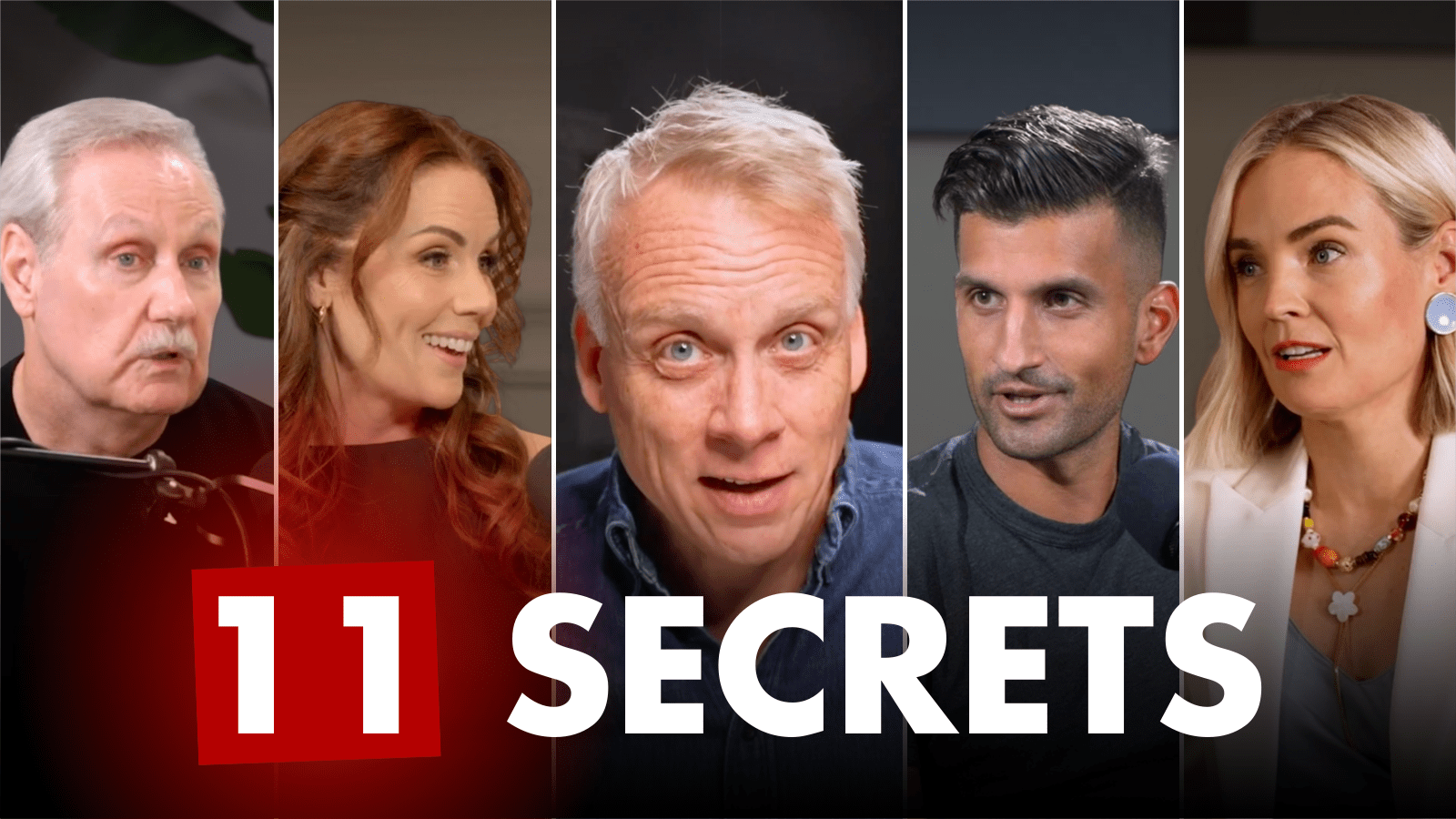
Hey there, ONE Thing family. We’re wrapping up a great year of podcasting with The ONE Thing podcast. It’s actually my first full year behind the microphone for the podcast. I picked it up at the end of 2024. And what I thought we would do – we teach people to do this – is reflect back. What were some of the highlights? What were some of my favorite learning moments from the guests we had on the show this year? So, we’ve selected a baker’s dozen of really nice highlights. They were either favorited by you, and your comments, and your shares, or by me and our team that we felt like were some of the best lessons that we had to learn around two themes: taking action and sustaining action.
Now, as a reminder, if you go to these podcast notes, if you really like anything that you’re hearing, all of these episodes are linked in the podcast notes. You can dive in and listen to the full ones there. And feel free if you hear one that you really think, “Man, I needed that, but I know someone who needs it more,” please share. Please share it with people that need it. These are some of the best highlights of our year. I hope you enjoy revisiting them as much as I did.
———-
Jay Papasan:
I’m Jay Papasan and this is The ONE Thing, your weekly guide to the simple steps that lead to extraordinary results.
———-
Jay Papasan:
All right. So, to set up this episode, we’re gonna do it in two parts. The first half before the break, we will talk about action, taking, action and achievement. And in the second half, the theme is gonna be around, kind of, sustaining action and achievement through the things we do to get in motion and achieve our goals, and they’re the things that we do to stay in motion, so we can continue with our success journey.
And we’re gonna kick this show off with my friend Jenny Wood, author of Wild Courage. Now, this is a clip where she’s talking about the power of fear and some of its unexpected benefits. What I love about Jenny’s book is that she takes a very provocative take on so many of the things that we think aren’t good. And in this case, we were talking about being shameless. which she says can be a good thing. Let’s hear from Jenny Wood, and then we’ll dive into my ahas before we move to the next one.
———-
Jenny Wood:
Oftentimes, what stands in our way of going after what we want is not money or luck or skill or talent or connections. It’s your fear, right? It is the imposter syndrome. But that’s actually such great news because whether it’s fear of failure or fear of uncertainty, or fear of judgment of others, when fear is the root, that means that you have agency to push past the fear because it’s an internal struggle. So, you can push past the imposter syndrome, you can push past the fear, and that’s such great news because that means that if you’re able to push past it, then you can realize the joy and the success on the other side of that fear. So, it’s kind of cool if you think about of all the things in the world you can control, you can control your own fears when you have the wild courage to close the gap between what you want and what you achieve.
Jay Papasan:
I love it. I also think of fear as signaling, “This is important to me.”
Jenny Wood:
Yeah. It’s a compass.
Jay Papasan:
You don’t feel fear around things that don’t matter to you. That also signals like, maybe this is something that’s worth exploring my courage around. I can go find my wild courage . If I have fear, that means there’s something on the other side worth seeing.
Jenny Wood:
It’s so true.
Jay Papasan:
Everything we want is outside of our comfort zone. And if we can get comfortable going there more often, getting a little reckless or it will get down that path, that really helps us. And learning to kind of promote your own work is a skill. And that’s one of the things I loved about your book. They’re called traits. And we tend to think of traits as being innate things. But you turn them all into skills and frameworks. So, I didn’t prep you for this, but I love the framework around power assets. Is it power asset or power portfolio?
Jenny Wood:
It’s both. Your power assets are the three things that make up your power portfolio. And just like your financial portfolio, you wanna have a mix of assets there. You wanna have stocks and bonds. And the mix that I encourage you to have is some business skills and some people skills.
So, for me, my three power assets are people leadership, influencing stakeholders or customers, and building things from startup to scale. But it took me time, Jay, to identify those, to kind of whittle it down from a list of 20 things I enjoyed or felt like I was good at, or various strengths, but also expand it from kind of being like a deer in headlights when an interviewer or a customer or my boss’s boss would say, “Well, Jenny, like, what do you enjoy doing?” and not staring at them with a blank stare.
So, I encourage people to think about what are your three power assets that you bring to the table? And when was the last time you shared those with your customers or with prospects, whether it was to gain a new customer or to upsell or to continue to strengthen a relationship? Because people want to know what you’re good at. And I always wince when someone says, “This is a shameless plug, but.” Like at Google, that happened once in a meeting. Someone said, “This is a shameless plug, but I put together this spreadsheet that’s gonna save you 30 minutes when you do X, Y, Z project.” And like, what’s the shame in that? You know, it’s really about standing behind, like what are those power assets and sharing them with the world because people want to do business with people who are confident.
———-
Jay Papasan:
What I love about Ginny’s clip is she’s reframing fear for us. I’ve often, as I said, fear can also be a sign that it’s important to us. And for her, it’s a sign that we have agency. There’s this series of things that happen. Look, I’m afraid I’m going in. And then, she gives us the tools to realize where our agency lies. She calls it her power assets, her power portfolio.
So, if we combine this in, some of the other lessons we’ll learn from, like when you feel that moment of fear instead of freezing or going into fight or flight mode, it might be a time to kind of reflect, “Hey, you’ve done hard things before. What is this fear? Why am I afraid of it? What’s at stake? And what do I bring to this fight?” because chances are you bring some really powerful tools. And that’s the joy, that’s the beauty of having a power portfolio. What are the things that you bring to work? What are the things you bring to relationship that might make you well suited to deal with this?
———-
Jay Papasan:
So, next up we’ll talk about Pat Flynn. He’s really one of my heroes. This is one of the coolest things I got to do throughout the year was interview him from the studio in Boise around his book Lean Learning, which is also one of my favorite nonfiction reads of the year.
So, he talks about, again, using imagination, which is a theme in this podcast. He calls it the DeLorean experience. How do we use our imagination to travel into the future and look back? Getting that perspective is really, really important. Let’s hear from Pat and then I’ll wrap up this aha.
———-
Pat Flynn:
I think it’s important to, like you said, work backwards from what is meaningful for your future life, not somebody else’s, or not inspiration from all these other things from the outside. But let’s actually go into our DeLorean and travel 88 miles per hour and even just go one year into the future. And a lot of times, for example, if you’re trying to figure out your one thing, hypothetically choose one of those many things that you might consider moving forward with, and then travel to the future. And just for the experiment, consider that everything worked out the way you wanted it to, what’s your day like? Who are you with? Are you enjoying yourself? Do you have any regrets?
Jay Papasan:
What activities are you doing?
Pat Flynn:
What activities are you doing? What are you learning about then? And oftentimes, when I run this experiment with some of my students, tears start to come out because number one, they might find that this thing that they’re so excited about right now in the future actually is not where they want to be. And it’s so, so amazing to discover that now, before you then spend the time, money, and effort to like go down that path-
Jay Papasan:
We’ve met people that have gotten to the destination without doing the thought exercise. It’s not a pure guarantee. It could still show up that way. And then, they realize, oh wait, I’ve built a gilded prison for myself. I have this wonderful opportunity that I really don’t love.
Pat Flynn:
Right. You’ve climbed the ladder, you’re at the top, but you’re at the top is wrong, the incorrect ladder for you. And then, if you have other business ideas that are in there or other options for your one thing, you come back to today, you’re like, “Okay, that was interesting. Let’s go down this time path and do the same thing.”
And then, not only doing that alone. I found that when others are able to then talk to the other important people around them in that situation, like a spouse or a business partner, then you can start to uncover other things that you might not be seeing. You can’t read the label when you’re inside the bottle, even in your own thought experiments. So, amazing discoveries happen.
Sometimes, the opposite of what we just talked about happens. You go there and you’re like, “That’s exactly what I want.” And now, you’re more driven. And so, now, you can be more clear with, okay, these, these resources that I’m learning from, well, they don’t exactly align with this thing that I’m trying to get to. So, why am I even learning about these things?
———-
Jay Papasan:
I think one of the big takeaways I’ve had from this whole year, whether it’d be my conversation with Pat, my conversations with Coach Jordan is that the imagination is a fabulous tool we can use for ourselves and our coaches can use with us. If we remove ourselves from the current moment by traveling into the future and looking back, we often get the gift of perspective. That’s what we’re looking for. Can we get a better perspective? That’s why I have coaches. I want an outside perspective. You can’t read the label from inside the box. So, our imagination, it’s not just flights of fancy and creativity. It’s our chance to step out of the box we’re living in, look at it from a different perspective, and hopefully see insights and path forward that we might be missing.
———-
Jay Papasan:
So, we’ll continue this theme from Pat to the next guest, Sahil Bloom. And we talk in this clip about, again, changing perspective, and we talk a little bit about how our calendar reflects our goals. Sahil presents a thought experiment of what would someone see, a stranger, if they followed you around and kind of watched you do your work. So, let’s hear it straight from Sahil, and then we’ll wrap it up on the other side.
———-
Sahil Bloom:
The way that you more effectively batch that is by leveraging what’s called Parkinson’s law, and this idea that-
Jay Papasan:
Yes, that work will fill the space, the time that you give it.
Sahil Bloom:
I love asking myself these bigger questions that sort of reset my focus. The one that I love right now is this idea of if a third party were to watch you for a week, how serious would they say you are about your goals? I love this idea of the third party because what it does is it forces you to zoom out and see the bigger picture on your own life. And it’s very easy to delude ourselves living in the first person into thinking that we are doing the things necessary to go and build the life that we want. But if someone else were to come and watch you for a week, how serious would they say you are about your goals and.
And be honest with yourself, be able to sort of be that ruthless third party saying, “Yeah, you like to talk about these things, but you’re not showing up and doing the things you said you were gonna do on a daily basis,” and your life will improve alongside your ability to deliver that tough message.
Jay Papasan:
Yeah. And so, like, I’ve had one tough coach when I made an assertion about something that I thought was important. He just asked, “Could you prove that? Could you show me your calendar and prove that?” And a lot of times, our calendar, how we spend our time reveals what’s actually important to us at that moment in time. And it was very convicting. And then, you can start allocating to be in more alignment with what you say you want to be. There’s usually a gap for most people because we’re not aware. So, that’s a good trick. If someone followed me around for a week, how serious would they say I am about being an author, or whatever it is I say that’s important to me.
Sahil Bloom:
Don’t tell me your priorities. Show me your calendar.
Jay Papasan:
Yeah, it’s very revealing.
———-
Jay Papasan:
So, I love this thought experiment. I’ve actually heard it from my coach. I think a lot of times, when we’re the boss, we’re self-employed, we’re in control, the only person judging us is ourselves. So, we allow ourselves to do other things that we might not do if someone we really respected and maybe wanted to impress was hanging around. So, I like this kind of thought experiment of bringing someone we respect and look up to into the room, again, using our imagination to maybe change our perspective on the way things look and change our activities, the actions we take as a result.
———-
Jay Papasan:
So, in this next clip, we’ve got Morgan Housel. He wrote a great new book around how the art of spending money. He’s written about money very eloquently. He’s written about time. He is one of the more thoughtful people I’ve ever gotten the chance to interview and work with. He really sees the world in different ways,
And so, I love this clip where he is talking about maybe why we sometimes get tripped up and coming up with measures of success enough around things that aren’t money. Let’s hear it from him and then I’ll wrap it up on the other side.
———-
Morgan Housel:
Money is so tangible and counting it is so easy that we overestimate its importance. And I use this example, if I said, “I would like to become a 10% better dad,” that’s a very noble goal. It’s a wonderful goal. How do I track that? How do I count that?
Jay Papasan:
Yeah. How do you measure that?
Morgan Housel:
You have no idea. But if I said, “I wanna increase my salary by 10%,” very easy to wrap my head around that, very easy to contextualize that, to track my progress, to compare myself against you. Or if I said “Jay, which one of us is a better father? Me or you?” there’s no way to track that. There’s no metric, even though those are very important things.
And so, because money is so tangible, we put it to the top of the pile of importance of what we’re trying to chase. And if you don’t have a good sense of what you want out of life, one with more money is very easy to attach to. And so, we overestimate its importance. Not to say that it’s not important, but because it’s so tangible, it’s something that is so easy and obvious to track and chase in your life, even if there are so many other things – relationships, health time, whatever it might be – that should be of higher importance.
———-
Jay Papasan:
I think if we don’t have our own definition for success, we’ll always be chasing someone else’s expectations. And that’s a really big idea. Do you know what enough is for you? Do you know what success looks like in the things that are really important to you? It’s one of the things that we work on as we look around the big areas of our life with The ONE Thing, our spiritual life, our health, our key relationships, our job, our business, our finances, that we have big areas of our life that we want to be extraordinary. Have we taken the time to define what success looks like in those areas? This is one of those where a little bit of work, a little bit of journaling, a little bit of reflection can go a long way towards finding more happiness in the things we do. Or in Morgan’s case, like in how we spend our money and use the wealth we have.
———-
Jay Papasan:
Brandon Turner is just a hoot. Like I had so many takeaways from this interview. If you remember, if you listen to it, it’s actually great. He talks about – and I’ve used it again and again – the fact that he had to sell his tools to keep from self-sabotaging himself. But in this little bit, we’re talking about how we get out of, kind of, any of our perfectionist tendencies. How do we get out of planning mode and into action mode? And he talks about an acronym called MINS. Let’s hear from him, then I’ll unpack it.
———-
Brandon Turner:
What’s shocking is how, like, when you don’t identify what that like that next thing is, oftentimes, people call it MINS, like most important next step, and when you don’t identify what that step is, we just don’t do the step. It’s not a hard step. It’s usually like a two-minute step. In fact, I was on Iced Coffee Hour, which is a big podcast with Graham Stephan and his co-host Jack. And I was telling this concept around like the most important next step. Like, what’s the next thing I gotta do to move it down?
So, I asked Jack, “What’s something you want in life?” He’s like, “Oh, I would love to have, like, a family.” This is very much a goal setting to the now. He was like, “I wanna have a family someday and kids. And that Thanksgiving dinner with grandkids running around.” I was like, “That’s beautiful, man. Well, what do you gotta do this year to be on track for that?” And he’s like, “Well, I gotta get a girlfriend.” I’m like, “Okay. So, what do you gotta do to get a girlfriend?” He’s like, “Well, I gotta update my Tinder profile.” I’m like, “Okay. That’s cool.”
Jay Papasan:
Okay. Modern dating.
Brandon Turner:
Yeah, “What do you gotta do to update your Tinder profile?” “I gotta get a haircut.” “What do you gotta do to get a haircut?” “Well, I need to schedule it.” “What do you gotta do to schedule a haircut?” “Well, I need to go on my app and book it.” I’m like, “How long does that take?” “A minute.” So, I’m like, “In other words, that future life you want of kids and Thanksgiving and the beauty and the love of that future all comes down to a one minute action. Why aren’t you doing it right now?” He’s like, “Oh, shoot. I should be doing it right now.”
Like when you identify, when you work backwards and identify the next thing to move forward, it’s always like a five-minute task and it’s always easy. And you do that, and then you do it again, and you do it again, and , you do enough of those and you achieve anything.
———-
Jay Papasan:
So, most important next step, MINS. I love this because it’s quick and it gets us into action. And action is the only path to having momentum. I think a lot of times, we don’t realize when we’re trying to plan and think through that we’re actually not in motion. And if we’re not in motion, all of our momentum is actually inertia at rest, And we have to overcome that to move forward.
So, these little decisions, what’s that next small step? That first domino, as we would say, to take action on this gets us out of our heads and into action where we can start getting that feedback loop that is so important for the things that we want. Without that feedback loop, we don’t know what does and doesn’t work. We don’t know what our capabilities are or aren’t.
So, just our encouragement. Maybe the next time you’re feeling a little stuck, instead of trying to make the perfect choice and plan it perfectly, get into action and make the choice right.
———-
Jay Papasan:
Well, we couldn’t have a highlight reel without Gary Keller. We don’t get to have him on this podcast very often, but when he does, it’s always a big blip. And our listeners, people love to hear from Gary. And if you’re not inside of Keller Williams, you don’t get that much exposure. So, we did two episodes where we pulled from his talk around Bold. And I’m gonna give you a quick clip from the man himself, my co-author Gary Keller, and we’ll unpack it on the other side. side.
———-
Gary Keller:
You may not be motivated yet. You may not have found your power motivation. You may be averse to doing things that you just don’t want to do or like to do. And here’s the hack: Just do the action.
Jay Papasan:
And it can be a baby step if you’re doing it every day.
Gary Kelelr:
Well, sure. Of course. It could be as small as you want it to be. But it’s that consistency that, over time, becomes normal to you, natural to the point where it’d feel weird if you didn’t do it.
Jay Papasan:
Consistency is intensity. Intensity is consistency. That’s the theme today. I like that a lot.
Gary Keller:
It’s a hundred percent true. It always has been true, by the way. It’s always been true. If you can accept that, and this is the big test for all of us, what truths will we accept that we build our life on? Have you thought about the fundamental truths that you’re going to give your life to? By the way, consistency around the thing that matters most is one of the ones that I did. And then, I look at my life and I wasn’t the smartest, I wasn’t the fastest. I’m very average in so many things, but what I discovered was consistency beats all that. I’ll just be doing this longer than you, and I’ll win by default.
Jay Papasan:
Persistence wins the day.
Gary Keller:
Persistence always.
Jay Papasan:
I will outlast you.
Gary Keller:
I will outlast you. I will outlast you. You cannot outlast me. Death will be the only time.
Jay Papasan:
I think that consistency, just like we would coach it in our kids, it’s something that we can all do. It’s all something we can do a little bit better today than we did yesterday. We just get better at it.
Gary Keller:
The image in my head is the research that was done a long time ago with the steel I-beam in the cork.
Jay Papasan:
Okay.
Gary Keller:
Yeah. So, they-
Jay Papasan:
Tell me.
Gary Keller:
Well, what they were trying to understand is how small of a force, if applied consistently, can move a big object So, they took a steel I-beam and they hung it with change from the ceiling of a warehouse. Then, they set a pendulum motion of a cork, where it was swinging consistently, hitting the still I beam. 24 hours, nothing. 48 hours, nothing. But over time, the chain started to quiver. And over a longer period of time, and it took time, still I beam and cork moved in the same direction.
Jay Papasan:
That’s cool.
Gary Keller:
It took a long time to get there ’cause it’s a little bitty cork.
Jay Papasan:
But it just shows you, in a really crazy way, small inputs over a long enough time will create a big outcome.
———-
Jay Papasan:
Most people underestimate how much we can accomplish by taking these small steps on a daily basis consistently that would overcome the big things that most people think of as achievements. I’m gonna do everything in one weekend. Yeah, but you can’t do that day after day. The people who plot through this, that make meaningful additions to their achievements, like little progress here, a little progress there, it actually adds up to so much more that we believe. Consistency is intensity. That’s a very big idea, and it’s one to remember when we start to think that success looks a little boring, we need to show up every single day and make those little inputs that add up to so much more.
———-
Jay Papasan:
I’m not allowed to pick favorites, but I really enjoyed getting to meet Anne-Laure Le Cunff when she came to Austin, she came into the studios. And after this, we actually went for a long walk together to be out in nature and kind of live what we were talking about in this interview. She is kind of giving us a new framework for achievement, and she’s quite an achiever herself. So, you look up and go, ‘Okay, she’s really smart, she’s really accomplished. We should really pay attention to how she frames out success.” A lot of her work helps people. If you think of yourself as ADHD, sometimes, the native operating system that the world operates on does not work on our software. We are not always primed to go and do things the way everybody else said. So, I love this alternate framework of tiny experiments. Let’s listen to it from Anne-Laure, and we’ll unpack it before we move on.
———-
Jay Papasan:
What I love about the words tiny experiments, is you’re lowering the stakes. And what we’re gonna talk about today, procrastination and perfectionism, they show up at the door of The ONE Thing every single day. We have a lot of high achievers that are listening to us right now. They’re in the car, they’re trying to squeeze this in, they’re probably listening to this on 1.5 or two times speed, their maximum efficiency and those little time blocks that you write about, and I get them, but they often sometimes will make the task so big and their ambition that they start having other emotions around it that cause them to procrastinate or that their perfectionism kicks in. So, I just wanna say like, I love the idea of tiny experiments because it lowers the stakes. And it just means, like, this is something I’m gonna try.
Anne-Laure Le Cunff:
Yeah. And that’s the thing with ambitious people, as you said, is that they wanna be successful. We wanna be successful. And because of that, we tend to sometimes focus a little bit too much on the outcome, that creates the stress and the anxiety. When instead of focusing on the outcome, you focus on learning, growing, evolving. Just having this sense of momentum, having a sense of direction, something you can explore, it really completely changes your relationship to success and failure. It’s not this binary thing anymore where if you complete the experiment and if you learn something new, including, “That thing didn’t work out. That’s actually learning something new. I tried the thing, it didn’t work out,” then that’s success. That is success.
———-
Jay Papasan:
I think my big takeaway from tiny experiments is we’re reframing it and kind of lowering the stakes. Instead of putting all of this pressure that we’ve got this thing that we have to achieve, we’re looking at it like an experiment. “Hey, let’s try this. Let’s test this hypothesis. How did it work? Did we actually enjoy it or not? Did it actually create the results we expected or not?” And it lowers the stakes of our everyday lives.
And so, I’ll share with you that we’ve done lots of tiny experiments in our business and our work. I like thinking of them as that because whether it succeeds or fails, it’s actually a success if you think of it as an experiment. What did we learn? Well, we learned that we don’t like that. We learned that it didn’t work. You know what? That is progress. That means that we don’t try that again or we try something differently next time.
So, maybe think about this as a reframe for your action instead of some high stakes business plan. Think about a tiny experiment that you could conduct to see if that’s the path that you want to go down in the first place.
———-
Jay Papasan:
To kind of wrap up the action and achievement section is my friend Dorie Clark. She wrote a book called The Long Game, and that’s what we talked about. And she really eloquently talks about the journey of success. And my ONE Thing readers out there know, we know about the dominoes. They start small and they build slowly. And when you look back and you see the progression, a lot of times, we’re surprised at the progress that we’ve made. So, let’s listen to Dory talk about the journey of success, about the long process of success. And I love this part towards the end where she talks about looking for signs of the progress you’ve made, what she calls looking for raindrops.
———-
Dorie Clark:
It takes, in general, between two and three years of legitimate effort, legitimate hard work for you to start to see literally almost any result from that hard work. The first two to three years are kind of painful because you are putting in a lot of effort. And to be glaringly obvious, you’re not getting much back at that point. And so, that’s when you’re at your weakest emotionally because there’s just so little positive reinforcement. It actually takes a lot of character to be willing to say, “You know what? I’m gonna do it anyway. I’m gonna keep moving forward. I’m gonna persevere.”
Jay Papasan:
How does someone know that they picked the right thing, like “Is this really the right journey? Should I stick this out?” Like, when do you choose to stick and when do you choose to quit?
Dorie Clark:
You don’t really know. And so, the question we have to ask ourselves is, is it not happening for me or is it not happening yet? And the truth is, when you’re in it, you really don’t know. You really can’t tell. You wanna find a way, but it’s almost impossible.
And so, that’s why there’s a couple of things that I advise people to do. The first actually comes at the beginning, it comes at the outset, which is I call it a scoping question essentially. For most of us, the things that we wanna accomplish in the world are usually things that someone has done before. It’s very easy for us to have erroneous assumptions that we never question about what the journey looks like.
And so, I often hear from people who are so frustrated, they’re at the end of their rope because they feel like they’ve done everything, they’ve tried everything, and let’s say they’re two years in, and they think it should have happened in 12 months. And so, they say, “Oh, well, I’ve been doing it double the amount of time that I should. It’s obviously not happening,” but if there was a scoping error to begin with, and it actually takes most people three years, you are right on schedule. You just don’t know it. And so, for me, the tragedy is when people quit too soon, and they could have reached it. So scoping is the first issue.
The second piece is what I like to call looking for raindrops. And essentially, what that means-
Jay Papasan:
Well, I’m interested. I just like that saying. What does looking for raindrops mean?
Dorie Clark:
Yeah. Thank you. Well, the way that I think about success and how we measure success, it’s always, sort of, the glamorous end outcome. That’s the thunderstorm. That’s something that is so visible to anyone that anyone could perceive it. But it takes a while for a thunderstorm to build and there’s things that happen before it. The wind changes, the barometric pressure changes, you start to feel little tiny raindrops coming before the storm emerges.
And so often, we are so focused on that end outcome that we don’t even notice when there are signs of progress or success along the way. And that’s how we can keep ourselves motivated is to understand what are some of those early measures that enable us to say, “Oh, I must be making progress because I can feel the winds shifting.” And if you can, in advance, identify some of those measures, “Oh, okay, something’s different, something’s changing, there’s more momentum here,” it can enable you to stay encouraged when a lot of the time, other people might be giving up.
———-
Jay Papasan:
So if, there’s one theme that comes up all the time in our training, whether it’d be with corporations or in our online training or group coaching, like the First Domino, or even in my one-on-one, is how high achievers tend to always be focused on what’s ahead of them and what they have yet to achieve versus ever stopping to notice the progress that they’ve made, And this idea of looking for raindrops, we have this big event that’s coming up, but there’s all of these signs that it’s actually on the way and that we’re getting closer if we pay attention.
And the question I sometimes ask the people that I’m coaching with is, what are you not giving yourself credit for that your clients do? What are you not giving yourself credit for that all of your friends and colleagues do? If we step outside of ourselves and ask that question, we realize you probably have made a lot more progress than you give yourself credit for, but we have to step back, look for the raindrops and realize, you know what, we may not be where we want to go, but we can honor and celebrate the progress that we’ve made. So, with the tip of the cap to Dorie Clark, let’s take a quick break and then we’ll pick it up on the other side.
———-
Jay Papasan:
All right. I heard lots of great clips on the front part of this around action and achievement. The theme for these last few clips is gonna be kind of around sustaining action. What are the things that we need to do to stay on track and to also sustain ourselves?
———-
Jay Papasan:
This next one’s pretty straightforward on sustainability. Chris’s whole book, The Long Haul Leader, it’s about building success that’s gonna last a long time; thus the long haul. He went through a burnout. He experienced kind of the lowest low of having to try to do too much for too long, and then just hitting a wall, just not being able to move forward. Since then, he has designed his life and taught others how to design their life, so he’s got space to think, he’s got space for self-care, he’s got space to re-energize so he can do the big extraordinary things he wants. Let’s hear it straight from Chris.
———-
Chris Ducker:
The big thing for me was I knew that I was gonna have to uplevel me first. And it hit me pretty quickly, Jay, that self-care is not selfish. It’s actually a strategy. For people who wanna do really well in life and in their careers, self-care has to become the number one most important thing for them. So, it was doing things like-
Jay Papasan:
I’m just gonna repeat that for you. That’s a great line. Self-care is not selfish. It’s a strategy. That is brilliant.
Chris Ducker:
Yeah, it really is. And the moment that that kind of clicked with me, and I started saying it all the time to everybody I was talking to, ’cause I figured the more I said it, the more I’d start to truly kind of take it on board and believe it. So, I went down the route of hiring a nutritionist for the first time in my life, even though I ate, what I thought, pretty “clean.” I went down the route of working with a naturopathic doctor. I went down the route and hiring a PT to kind of make sure that I was doing the right type of exercises and all this kind of stuff. But the big thing for me was sleep. That was-
Jay Papasan:
There you go.
Chris Ducker:
That was the biggest, biggest thing for me, without a doubt. I was your quintessential night owl. I loved watching my movies and in the evening and binging on Netflix and all that kind of stuff. And I realized actually that yes, it’s fun to be able to kill a little time like that and what I thought was de-stressing wasn’t really de-stressing at all. I was making life worse because I wasn’t getting enough rest.
I’m now the guy who at some point will say to my wife, “Darling, turn off the light, stop reading the book. It’s time to go to sleep.” And she used to be the one to do that. So, it’s swung in the complete opposite direction.
Jay Papasan:
Okay. You’re a bird watcher and you go to bed early. Like, how to say, I’m getting old without saying I’m getting old, right?
Chris Ducker:
Don’t.
Jay Papasan:
No, I’m joking.
Chris Ducker:
I know, I know, I know, I know.
Jay Papasan:
But you’re leaning into your hobbies. I love that you started with sleep because of all the things that you said, that’s the one that just takes you changing you, changing some of your habits. You don’t have to pay for anything.
———-
Jay Papasan:
My takeaway from this probably is, kind of, obvious. Self-care is not selfish. It’s a strategy. And I think so many, so many high achievers, the last person they will serve is themselves. They will take care of their business, they will take care of their family, they will take care of their friends. The last person they will proactively take care of is themselves. And the truth is, just like we say, if you don’t put the oxygen mask on first, eventually, you’re gonna run outta steam and you won’t be able to take care of those other people. Giving ourselves permission for a little self-care to, take a little extra time, maybe get that hour of rest that we need, maybe go unplug from the office, and like Chris, go do some birdwatching, whatever it is that fills your cup, it’s actually really important. In fact, it is strategic and we need to give ourselves permission to do it. That’s a great lesson from Chris that we need to take and carry forward not just this year but into every year thereafter.
———-
Jay Papasan:
Okay. We’re bringing it home with a couple of my favorite clips. I cannot tell you how many times people talked about my conversation with Dr. Robyne Hanley-Dafoe. It’s actually really challenging to figure out which part of the interview you can pull a clip from. But we’re gonna highlight this idea of making sure that we are living and being present in the moment and dealing with something in the moment versus carrying it around unbeknownst to ourselves. So, let’s hear it from Robyne. And then, we’ll talk a little bit about how we can actually take action on that to create more sustainability in our success.
———-
Dr. Robyne Hanley-Dafoe:
All other emotion lasts in her body approximately about 90 seconds if we process it in real time. If we don’t, there’s research that suggests it lasts for up to seven years. So, if you’re in a meeting, let’s say in a like a Zoom call, and all of a sudden, it doesn’t go well and you feel angry and you just jump to the next call, physiologically that’s going to linger in your body for a very long time, which eventually-
Jay Papasan:
That pay-me-now-or-pay-me-later thing.
Dr. Robyne Hanley-Dafoe:
Exactly.
Jay Papasan:
It’ss like with giant, horrible interest rate on it.
Dr. Robyne Hanley-Dafoe:
Exactly. So, if I know-
Jay Papasan:
90 minutes versus seven years?
Dr. Robyne Hanley-Dafoe:
90 seconds
Jay Papasan:
It’s 90 seconds
Dr. Robyne Hanley-Dafoe:
It’s 90 seconds. So, if you just, all of a sudden, got a piece of information and now all of a sudden you’re feeling angry or scared or perhaps feeling a bit sad, if we just take that emotion and even just if it’s sadness, even just like take 90 seconds, just breathe, hold our heart and be like, “Yeah, that hurt,” “That’s disappointing,” “I’m scared,” or “I’m sad,” whatever it is, and then, 90 seconds, then move on, we’ve actually processed it, or what we call digested essentially those molecules of those emotions.
However, if we hold it and don’t process it, that’s gonna start causing all of these health issues, which why we’re seeing massive insurges of mental health and emotional health. And there’s lots of other factors, but that’s one that is within our control that we could think about.
Jay Papasan:
Okay. It kind of blows the mind. She shared this in her keynote and that she shares it in the podcast, if we don’t experience these strong emotions, kind of live with them, even just for 90 seconds, we can carry them chemically around in our bodies for like seven years. And you imagine all the times we’ve tried to be too stoic, we tried to grit our teeth and just be, “Nope, I can handle this. I’ll put a brave face on it and move through it,” how much baggage are we carrying forward?
I remember there was kind of a collective gasp in when she shared that because she’s not just making this stuff up, she’s the behavioral psychologist. This is her research. So, how do we address it? When we have these big kind of messy emotions, fear, anxiety, we feel the stress, they’re not inherently bad themselves. There are signals coming from inside us. All their coaching is just take a moment. Just process it. It’s like, “Man, I am feeling really nervous before I go out on the stage,” “Man, I’m feeling anxious about this conversation,” I like to name it but if we can just live with it for a second, it means that we’re not actually adding all of this baggage that will freight our progress and kind of slow us down in the future. Can we live with them for just a few moments, 90 seconds?
The good that that will do for us versus trying to brush past it and ignore it is enormous. It’s one of the ways that we will be sustainable and keep moving with speed later on is ’cause we haven’t freighted our life with all of these unaddressed things.
———-
Jay Papasan:
Last but not least, we’ve got my friend Liz Bohannon. I love her book, I loved her interview. And some of this conversation absolutely went viral. It’s one of those videos that just took off and you look up and it’s like, “Wow, it’s a million. Now, it’s 2 million. Now, it’s two and a half million.” She struck a chord around the idea of community. Maybe it’s the times that we’ve been living in in 2025. Lots of division in our own families, in our workplaces. Lots of anxiety and fear. But she gave us something that we knew that we needed, which is a pathway to more connection and more community. Let’s hear it from Liz.
———-
Liz Bohannon:
Harvard released the result of the longest ever study done on human wellness and flourishing. Have you heard of this study?
Jay Papasan:
Oh, yes, yes, yes.
Liz Bohannon:
Okay. Single.-
Jay Papasan:
And I know what the payoff is. Give it to us.
Liz Bohannon:
Single greatest predictor, and they looked at so many things.
Jay Papasan:
Yeah. Over 70 something years.
Liz Bohannon:
80 years.
Jay Papasan:
80 years.
Liz Bohannon:
It was 80 years. And they looked at socioeconomic status, education level, diet, exercise. Did you smoke? Did you drink? Single greatest predictor of how long you will live and how happy and healthy you’ll be at the end of your life is the quality of your?
Jay Papasan:
Relationships.
Liz Bohannon:
Relationships. And that actually has to extend outside of your nuclear family in order to receive those full benefits.
Jay Papasan:
So, that’s a nuance I wasn’t aware of.
Liz Bohannon:
Yeah. So, a lot of Americans go immediately to like, “Okay, well I need to invest more in my marriage and my kids,” which is great. Like if that’s-
Jay Papasan:
But that’s more of the me instead of the we.
Liz Bohannon:
It is. It’s a little bit more of the me than the we. That actually doesn’t create a secure sense of belonging where like, “But what if something goes wrong for me?” all of a sudden, we’re on our own. Like no one’s gonna come in and save my family. So, you’re exactly right. Your nuclear family often ends up being an extension of me.
The we is the collective that ends up creating this incredible sense of security that goes, “Even if the worst happens, I’m not alone. I have a network of people and friends, loose connections, very, very secure, intimate connections that’ll be there, that’ll hold me. And then, there’ll be a time, when it’s my turn, and they need holding and they need support, and then I’ll be there.”
And what that does to the human brain, you’re exactly right, when you kind of likened it to attachment with really young kids, is that if from a young age, the message you get is you are alone in the world. Like you don’t have safety, you don’t have security, the stress levels, cortisol levels, you basically end up existing in a state of flight or fight. But when we have that sense of secure connection of like, I belong and, and I can’t get found out because they already know it, the level of security that that creates changes your whole life.
If you have a certain amount of hours a month that you can dedicate towards your social health, I want you to do one thing. I want you to create one rhythm, it’s not a one-off thing, like texting your friend group you know that you haven’t seen in a year, like, “We should get together for happy hour.” We know what’s gonna happen. You’re gonna go back and forth via text for days, throwing out dates, what works, what doesn’t work, and then eventually it’s so awful, people just give up and then the text thread kind of dies. And then, like two months later, somebody will resurface it. We are not going to build social health, like going to happy hours once every six months when it actually ends up working. It’s very counterintuitive, but what I want you to do is establish a committed and consistent routine.
Jay Papasan:
Like a book club or something.
Liz Bohannon:
Yes. We are going to meet monthly, twice a month, maybe even weekly. And it’s the same time, the same place week after week. And here’s what’s gonna happen. That’s gonna feel really intense in the beginning. You’re like, “We’re not even friends yet. You wanna hang out every Wednesday night?” So, there’s a risk involved in that. However, the security that we long for is actually that. That’s what actually creates the intimacy and connection. So, a lot of times we get it wrong. We’re like, “Well, yeah, once I feel – once you’re my best friend, sure, I would definitely hang out with you two times a month. Once I feel that with you.” It’s like the very thing that’s gonna create those feelings is the thing that you’re not doing. So, I want you to pick one thing, one friend group, start a book club, start a small group that meets at a local pub, but it has to be on the calendar and it has to be a reoccurring event on the calendar.
———-
Jay Papasan:
So, the line that I’ve carried forward from this conversation again and again, and I can’t even tell you where exactly it articulated, but if I had to summarize my learning, it’s two things that I learned from Liz. One, if you want community, you kind of need to go first. You need to go ahead and go out there and ask. And the kind of goes hand in hand with that is this idea that the connection that we all want is on the other side of the rejection we fear. We do have to ask, and that’s scary. “Hey, do you wanna start a book club?” “Hey, do you wanna do this together?” And she gave us some great frameworks for how to do that. Take the planning out of it, make it the first Thursday of the month, or whatever that is. But we have to ask. We have to step past that fear to make these connections that are so invaluable for the rest of our lives.
And that kind of loops us back to Jenny. We’re afraid to ask, but remember, in our fear, we can also find our agency. In our fear, we can also know that this is important, and that there is a lot at stake, and therefore we should find our agency. But asking to build community, to reach out, connect with people, find rituals where you can come together and spend time, that is like one of the best things we can do, not just for business and success, but it’s also for a long life and happiness.
So, I hope you’ve enjoyed some of my favorite highlights from 2025. It’s just a snapshot. We could go on and on. If I had to be honest, I bet I could find a great lesson from almost every single podcast, but these were my favorites, these were our team’s favorites, and I hope that you found one or two that you also enjoyed. Maybe you’ve heard one that your friend needs to hear. Definitely check it out and share it with your friends. We would love it if you did that. In the podcast notes, we will have links to every single episode. So, if you love that clip from Dr. Robyne, if you love that clip from Pat Flynn, you can go to the show notes and click on any of those episodes to hear the full episode. We hope you will, we hope you’ll share them, and I hope that you’ll be with us next year when we’ll make a whole new highlight reel of ahas and learnings from our guest and from the podcast. Until then, we’ll see you next time.
Disclaimer:
This podcast is for general informational purposes only. The views, thoughts and opinions of the guests represent those of the guests, and not ProduKtive or Keller Williams Really LLC and their affiliates and should not be construed as financial, economic, legal, tax or other advice. This podcast is provided without any warranty or guarantee of its accuracy, completeness, timeliness or results from using the information.