Jay Papasan:
Have you ever heard the old saying that life will keep teaching you the lesson until you finally learn it? Well, we’re kind of going to go down that path in this episode with my friends, Tiffany and Sarah. Life is going to happen to us. And it seems like since 2020, life just keeps coming at us at faster and faster speed. And if you’re a business owner, an entrepreneur, it’s been really crazy between the market, everything that’s happening. And then, you know, life doesn’t let up. When bad stuff is happening, I mean, I find it usually happens in threes and, sometimes, in multiples of threes. You know, your kids get sick, they get the strep throat, or they get the flu right on that day that you couldn’t miss that meeting you have to miss because your priorities shifted. We all are dealing with a lot. How we deal with it matters.
I’m gonna introduce, with Tiffany and Sarah, the idea that maybe adversity can be your ally. The same challenges that can stop us in our tracks can help us make a leap forward if we approach them differently. And we’re gonna explore that through this concept of building lighthouses in this episode. And I’ll share some of the really tough stuff that I’ve been through, some of the lighthouses I’ve built to help me navigate that in the future, but also help others. So, if you’ve ever wondered how to lead yourself when everything was coming apart and how to lead others, hopefully you’ll find some answers in this episode.
————-
Jay Papasan:
I’m Jay Papasan, and this is The ONE Thing, your weekly guide to the simple steps that lead to extraordinary results.
————-
Sarah Reynolds:
Hi, everyone, and welcome to a new week of the Empire Building podcast. And today is so special. Actually, my studio today is at my house, and I yell to all my kids, “Be quiet, guys. I’ve got a New York Times bestselling author about to enter our studio.” And me and Tiffany are super excited today to have in Empire Building studio, Jay Papasan. And he is the founder of The ONE Thing Company, which arguably has had the greatest impact on both George and I’s life. And so, we are so excited to-
Jay Papasan:
You could have just led with that. You could have just led with that.
Sarah Reynolds:
Yes. We’re excited to dive in and get to know him a little bit more. He’s a good friend of ours as well, but this is going to be such a great day to talk with Jay today. So, welcome to Empire Building, Jay.
Jay Papasan:
Thanks for having me. I’m so happy to be here. I can’t believe it’s taken this long for me to actually get to be on the show.
Tiffany Fykes:
One of the things whenever you hear that intro and when you know Jay Papasan, you think, “All right, we’re here for some productivity hacks. We’re going to spend the next 30-45 minutes learning how to do things more intentionally” because you are one of the most intentional people that I know. And I know that a lot of that’s going to leak out in this interview today, but we are really excited, and I feel like it’s a special treat have the opportunity to really hear more about your personal story and the journey you’ve been on over the last few years because like all leaders, you have seasons of highs and seasons of lows. And in the real estate industry, it’s a hard time right now. And you’ve lived a season, an extended season of hard, as well. And I think you’re blessing us with the vulnerability of telling that story because when we hear from other people, we feel less alone in our seasons of hard. But can you give our listeners just a quick overview of, what’s Jay Papasan’s life been like for the last few years?
Jay Papasan:
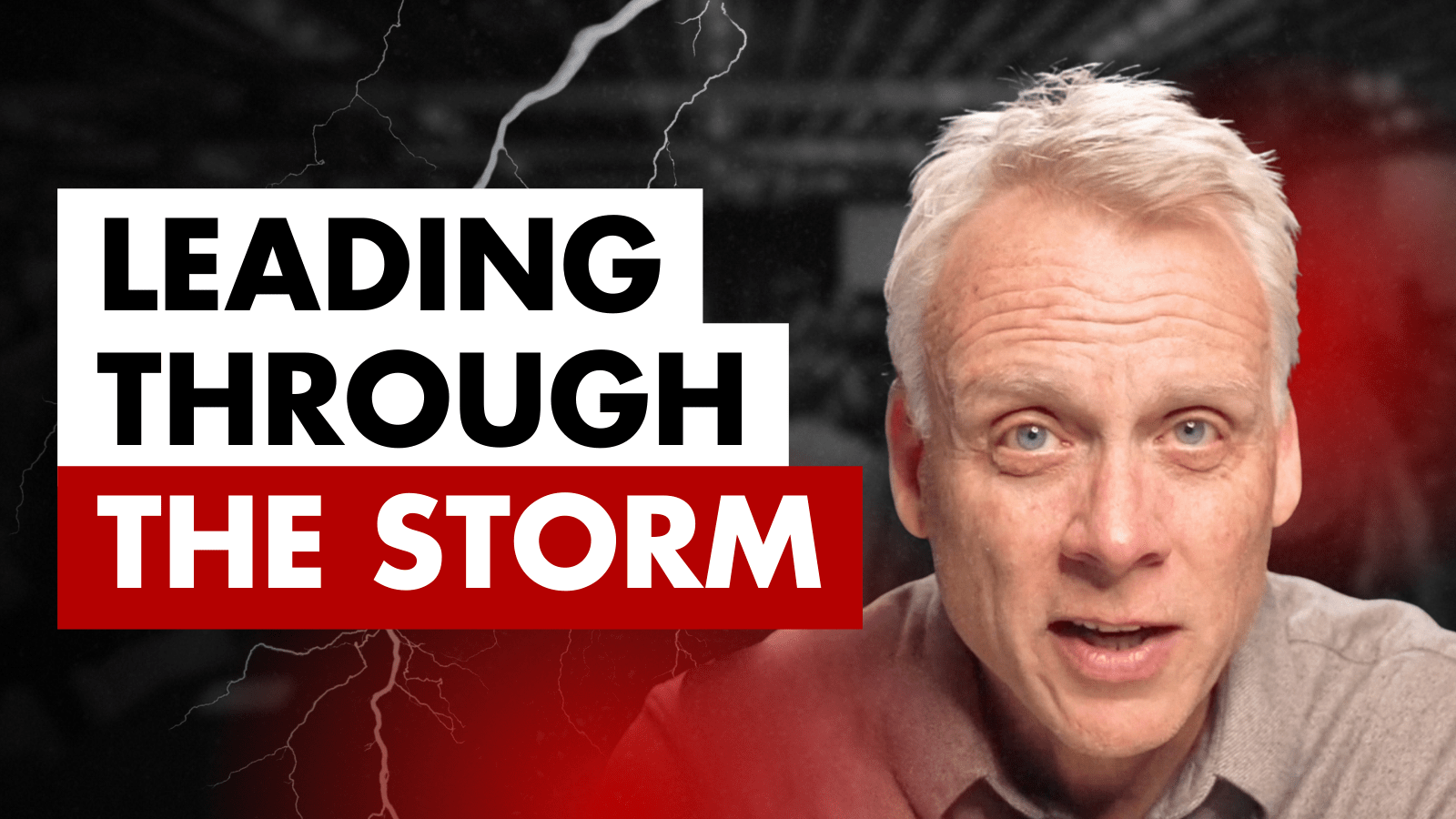
I was preparing for our summit and had to give a keynote, and I was trying to get it to be real and kind of reflecting on the lessons, like what have I learned the last few years? And you call it the season of hard. And I hope it’s okay, they’ll bleep it out, but I just called it like leading through the storm, or your *** storm.
And it’s like, I think there’s different levels of times of hard. And I really liked the storm metaphor, because what I looked up, a big storm like a hurricane, that blows through your life, the things that make a storm disruptive, like I like to be on the couch with a mug of cocoa hearing the rainfall. But what I don’t like is a winter storm that knocks out your power and, now, you have no heat and you have no water. It knocks out, kind of, your infrastructure.
And I think there are times in our life as business people and just life where we go through things and it feels like, you know, the deck has been stacked temporarily against us. We can be grateful for all the things, but stuff just keeps happening. And that was kind of the last six years. And this is just my part of it. It’s not Wendy’s or everyone, but I had two spinal surgeries, one of which I was on the table for 11 hours. And it took me years, if I’m honest, to fully recover.
While I was still recovering from that, I had one of my best friends commit suicide. And if I look over that six years, we lost six loved ones. We both lost our fathers. We both lost friends, mother, like you name it. And, you know, two to suicide, two to cancer, one to dementia. And, like, only one of them is, like, the classic in bed surrounded by our loved ones. And those things hit you hard. And I don’t know that I’d ever experienced true grief before that period of time. I’d been sad at funerals, but I hadn’t dealt with the big G.
We went through six leadership changes here. Y ‘all know that. I counted up, I had to prove myself to six different CEOs, go through all the changes. My team went from seven to 44 overnight while I was still using a walker and planning a funeral for my best friend.
At different stages, every system I had broke. And all of my recovery mechanisms broke, too. And the point of this is not like, “Oh, poor Jay.” I don’t think anybody’s storm can be compared to anybody else’s. Like, this was just my low tide. This was a period, if I think I look back, I’ll be like, “Man!” I mean, people said that COVID sucked, but it was like, really, the year before and year after for us that were far worse than anything that happened in COVID.
And your low time is your low time. And I think everybody goes through it. And if we get the gift of great coaches, people like you, our friends on the journey who can help us get perspective, I got a therapist during this period of time, and we can maybe build lighthouses that keep other people from wrecking in the storm. That’s kind of the metaphor. I was like, there are seven lessons or so that I learned, and we can just play with some of them if you want. And I kind of feel like it’s not just what I learned. I want it to be a lighthouse, so that someone else coming after me can navigate better.
Sarah Reynolds:
Yeah, I’ll never forget running into you. You know, we see each other in person – I don’t know – probably three to four times a year, at least. And I don’t know, this was maybe a year, year and a half ago, and we were talking, me and you, and I was looking at you, and I could tell it was wearing. You could see it in your eyes. And I remember right when I got in the car texting Wendy and just saying, “Jay has been carrying too much. Is he okay?” And what’s crazy is we did walk through so many of those things as friends. We knew those things were going on as they were happening. And at the same time, when you sit here and recap, I mean, just listening to your recap just now, and I mean, that is a lot. You also lost a team member, I believe, during that time as well.
Jay Papasan:
Yeah, that was hard because I don’t know a lot of people listening. We’re high achievers. The place I go to hide probably is work. If I want to hide from my feelings, I can go and do something I love to do and be really busy. But when someone who you loved, who took their own life, their cubicle, you have to go by it 10 times a day, the place that you thought was safe is no longer necessarily safe.
And so, that’s what I mean. Some of the places, the systems that I thought I could count on, whether they were the right ones or not, got removed. The storm knocked down all of those power lines, and I had to rebuild and find something that might be a little sturdier for the future. And I mean, I could keep going on. I mean, y ‘all know it, my dead gum dog got skunked three times. Someone totaled my car. There’s also the stuff that life just does, right? I lost a partner, not to death, but we separated ways. I got a job back. I was working two full -time jobs. And you know all the junk that Wendy was dealing with.
Tiffany Fykes:
Yeah.
Jay Papasan:
Right? And so, sometimes, it is like a hurricane. It’s not just a storm. It just feels like, “Wow!” And if you live a big life, your podcast is Empire Building, The ONE Thing, it’s not about average life, it’s about an extraordinary one. I do think that people are surprised that in pursuit of something much bigger, your problems don’t get smaller. They get bigger. And we have to grow, grow with our businesses, so that we can surmount and live up through and live through those problems. And that was part of the journey that I had to go through. I had to grow or I had to quit. And I refused to quit.
Tiffany Fykes:
Yeah, you chose growth. I love – I mean, I don’t know why I’m shocked that you have a great analogy for this, author and writer, but this storm and this idea of lighthouses, as a leader, I love that where you’re like, “All right, this thing that happened to me will be used for good.” You know, it’s like redeeming the experiences by helping others have something to see in their storm. And so, I love that. Let’s talk about your lighthouses.
Jay Papasan:
It came from a question, Tiffany. Like we all know the value of coaches, and I’ve had three coaches through this, and we were reflecting and get with a little distance. And so, the question I ask now is, kind of, a hybrid is, what is the story that you will tell about this season in the future to someone else who’s going through it? And I get emotional because to me, it’s like, that’s it. That’s why I have to have this conversation because we all know that. Our kids are going through something, and we went through something, and we have a story that we can offer them that will help them navigate that thing. That’s a lighthouse to me, right? That’s a lighthouse.
And I’m sorry, I get all emotional talking about that.
Sarah Reynolds:
Oh no.
Jay Papasan:
My number one value is impact. And so, if I am willing to go into these dark places versus try to bury them, and I think most of us just want to bury it and leave it in the past. If we’re willing to go there, maybe with our therapist, with our loved ones, with our coaches, we can excavate something that will shine a light for other people. And that’s just so important to me.
And the thing that made me the most happy is after I gave this speech, some people came up that I know have been – like, their storms are worse than I can imagine. Escape from countries that death was a very real threat every single day. Like, that sort of jeopardy. And they said, I think I now know that I have permission to go back and see if there’s something I can carry forward from that that’ll help other people. It gave them a positive reason to go to those times.
So, I interrupted you, Tiffany, but that question, what story will you tell about this season when you’re helping someone else in the future, I can get through it the second time.
Tiffany Fykes:
Yeah.
Jay Papasan:
It’s a great question to ask when you’re in a dark moment.
Tiffany Fykes:
I mean, that’s a great question anytime. Like along our leadership journey, that is a powerful question and I love. See, there you go. Already providing great questions for people to consider. I love it.
Okay, so let’s go through. Tell us some of the lighthouses that you were able to excavate that could help somebody who is going through whatever their dark time looks like.
Jay Papasan:
I’ll riff on a few of them, and we can see where it goes, because I’m sure y ‘all have stuff of your own to share. Y ‘all are parents. Did y ‘all ever study Dr. Becky?
Sarah Reynolds:
Oh, yeah. I love Dr. Becky.
Jay Papasan:
Okay. So, there’s like probably half the audience nodding their head and half, like, the nod. And I was given her book by Carly, my assistant. And she’s like, “You’re going to love this.” And I remember reading this book on parenting and thinking, this is maybe the best leadership book I’ve ever read.
Sarah Reynolds:
Wow.
Jay Papasan:
And how we show up as parents for our children, I think a lot of that is how I aspire to show up as a leader. And so one of her core reframes, do you remember what the book’s called, Good Something?
Tiffany Fykes:
The Good Inside.
Jay Papasan:
Good Inside.
Tiffany Fykes:
Yeah.
Jay Papasan:
Good Inside. Her core belief is that you don’t have bad kids. You have good kids that are just going through a bad time. So much of what we call acting out is them experiencing something we haven’t yet given them the tools to handle. And so, I think the first thing we have to do, high achievers, I’m just assuming your audience and not my audience are the same. We got high achievers, entrepreneurs, go -getters, we have an affliction about how we talk to ourselves because our standards are so high. Y ‘all know about the gap in the game. We tend to always see the gap between us and our aspirations and our grand vision and never give ourselves credit for how far we’ve come.
And in my executive coaching and my working with people and training, I see it all the time. And we have to reframe the situation. So, I think the first gift we can give ourselves is that everything is going to heck. Everything that we touch does not turn to gold. In fact, just the stinky opposite, right?
Tiffany Fykes:
Skunk. Everything gets skunked.
Jay Papasan:
And it just feels like you can’t do anything right. And I can remember so many times, like, how in the heck can I lead other people when I can’t even lead myself right now? And I was trying to answer that question again and again. And I think the first lighthouse for me, the first answer was just we have to reframe. LIke it doesn’t mean you’re a bad person or a bad leader. Maybe I’m just a bad – maybe I’m just a good leader in a tough season.
And giving ourselves just an ounce of grace because everybody else is. Everybody else is. And we’re the last ones to do that for ourselves. So, how do we give ourselves permission so that we can reframe how we’re viewing what’s actually happening, instead of just piling on and beating ourselves up while the world is beating us up? Kind of say, like, “No, I’m a good leader, and I’m in a really rough season, and I can do it. I can work my way through it.”
Sarah Reynolds:
That’s so good, Jay. That makes me think of a conversation I had with one of our agent growth coaches this week who his wife is 27 weeks pregnant with twins. He has a one and a half year old son as well. And she was admitted into the hospital and one of the twins is not doing well and was going to be in the hospital for quite some time. And his mom, last week, had a heart attack. So, all of these happened in the same week.
And he showed up to our team advance this week, and he wasn’t supposed to be there. And I went right up to him. I said, “What are you doing here? You don’t need to be here right now.” And he said, “No, I need to be here. This is my team family. I’m going to be here.” He’s our number one agent out of all of Empower Home. And he said, “I’m not going to let you guys down through this season.”
And I shared with him afterwards, I sent him a message about when my daughter, Olivia, was diagnosed with hearing loss, an email that I had sent our team. And I sent the team an email just being very transparent about what was going on in my life and letting them know that, right now, they aren’t going to be number one, that Olivia is going to be number one, and that I need them. I need their help.
And I think that when we allow ourselves to say it’s not going to be perfect right now, like everything’s not going to be like the way that we want it to be necessarily, and it allows for us to open up to community. It allows for us to allow for other people to also be there for us.
So, I said to him, I said, “This is an order. Work is so low on your list right now. And I see you, you will be sent home. This is an order.” Because I think what you’re sharing here is so important. We hold ourselves to these standards, and we think that we have to uphold those all of the time. But when life happens, when those challenges happen, lead with transparency, lead with grace for ourselves, and be open. You’ll find that your people just want to be there for you through it all as well. So, I love that.
Jay Papasan:
I think that there’s two things I would unpack that are kind of on my side of the fence. There’s two things. One is, recalibrate standards. I think that we hold on to standards from the previous season in the storm that just don’t apply. And Carly and I, my chief of staff, the young person who died, we were dealing with it every day. And like you, I want to surround myself with people that aim high, that have great standards. And it’s really challenging to recalibrate those standards.
And so, we just had a mantra, and I started it, and I kept saying it, and this didn’t get done, or it didn’t get done to our standard. That sort of talk, done is good and good is great. Done is good and good is great. And I kept saying that. I said it in public in our meetings. I said it privately together. We had to set a different standard for this season. It doesn’t mean we can’t raise it again on the other side. But if we hold ourselves to these out-of-date standards, we’re just going to drown.
And the other one is to reprioritize. We have out-of-date commitments that we are holding on to that we need to say no to in this season. And that’s what you were telling us. Like, one, you’re setting the wrong standard, and you need to re-orient your priorities around this moment, or you will have regrets.
Sarah Reynolds:
Yes. I think it’s really important, all of our young mom Empire Builders, please hear Jay’s words because that is when so many young moms that I talk to, like they feel like they have to do everything by the book, right? Lead generating from 9:00 to 12:00 and all of the things. And I just tell them all the time, done is what you’re going for. If it’s nap time and that’s when the only time you can lead generate, get it done. If it’s after they’re in bed and that’s the only time, get it done. Like you’re not going to be living the book life as a young mom and give yourself grace. I love that. Done is – say it again, done-
Jay Papasan:
… is good and good is great because like our old standard was this got to be great, but now let’s reverse engineer that. Right now, done is good. And in fact, good is great.
Sarah Reynolds:
So good.
Jay Papasan:
And that’s just the fact. Yes, the child pooped their pants and blah blah blah blah, but they’re safe, they’re happy and like no, it’s not the perfect picture of life and the ideal thing. It doesn’t happen that way. That’s not real life. We just have to recalibrate and realize, like, “No, we’re muddling our way through in this season,” and that actually is fine. And I think it’s important for us to all talk about this as leaders.
————-
Tiffany Fykes:
Learning how to control the thoughts we have in our minds is one of the most powerful tools we have as a leader because most of what we say to ourselves in our brain is negative. And we’ve got to change that. I was in a season of hard, and I read The Four Agreements again, that’s what our team was reading, and “Do your best” transformed in my mind because do your best means always do the best you’re capable of doing.
In my mind, it is Tiffany’s standard, to your point, is up here. And so, anything, I must do my best in order to be in agreement. But that’s not what it says at all. What it actually says is, whatever your best is today, acknowledge that, do that, and move on, because that was your best.
Jay Papasan:
I love that. And I would argue, and we talk a lot about habits with The ONE Thing, is the day that you went to the gym and you set a PR more important than the day you went to the gym, fighting a cold, and shuffled through a really horrible workout? Which one is actually more important in the long run? I think the days that we kept our promise to ourselves and just showed up, and it was a horrible workout, we didn’t set a PR, are actually more valuable in the long run, right? Because we’re just building confidence that we can keep going, not that we have to set a PR every day, which is so unrealistic.
So, I love that, that reframing, what does “do your best” mean? What is your best today? Let’s just give your best today. And that might be a shadow of what it was before all this other stuff happened, but it’s still your best.
Sarah Reynolds:
So good. So, what’s another lighthouse?
Jay Papasan:
I think I want to go to one that I think will resonate with y ‘all. And it may not be – I’ll share my journey and y ‘all can echo back how you see it in your community. I had a really, really just horrible night. It was around the time this young employee had died. I had also gotten a very short term U-term on a project. I had 90 days to rewrite the book that just came out. And it was unexpected that I would have to rewrite it from scratch and had 87 days to do it. And I was about to give a presentation in front of a bunch of my heroes.
And I don’t know about y ‘all but, sometimes, I can lay in bed. and then I start imagining every worst possible outcome. And my coach at the time was Jordan Freed, and he said, “That was your night of fever dreams.” And I didn’t sleep. I was like a full, almost full-on panic attack. But I was imagining that the people I relied on most, and there were really two that I leaned on harder than anyone else – my wife, Wendy, and my partner here at work, Carly – and I was unfairly leaning into them too much. I imagine that for reasons at that moment that Carly was going to come back from her vacation and give me notice.
Sarah Reynolds:
Oh, wow.
Jay Papasan:
And you think about, like, you can have a wobbly stool on two legs, but one leg is falling over. And I was like, that’s it. Like, I can’t replace that. I am so close to the edge. If I lose one of my core support structures, I’m done. And so, of course, it was all in my head. And I mean, I get it to work. I shared it. Like, Carly hugged me and said, “You’re crazy,” right? But I know, but when you’re in those dark places, I don’t know about y ‘all but I can make it even darker.
But the aha, the gift of this was the acknowledgement that on the journey to build what I’ve built professionally, while still trying to be a good father and a good husband, I had said no to things. And the two things I had most commonly said no to were my friendships and my hobbies. And so, I wasn’t doing a lot to fill my own cup. And I remember Jordan just says, “I think what we should do, because you’re realizing you need more people that you can call at 3 a.m. You need more of those people that you know you’ve got the relationship depth and the love that’s all there. So, let’s just reengineer your village.”
And so, I think a lot of us look up and we realize maybe, like I think about some of the people in your circle, they’re the top female entrepreneurs in their area, like they don’t have a lot of peers that know what they’re going through. They don’t have a lot of people who know what it looks like to deal with what they’re dealing with in work and in business and juggling life. And so, I looked up and I realized the friends that I had grown up with, we were still friends, but they didn’t ask about my work and they hadn’t asked about my work in years. They’re fishing and hunting buddies, and I love them, and I still want to see them, but, like, I can’t go to them with my troubles. And I needed something better.
So, I just kind of started with my coach’s help. I was like, “Who is it that I want to build my new village around? What are the kinds of people that I really want to purposefully spend time with?” And then, I started going first, started reaching out and just saying, “Hey, I know we just hung out together at this conference. I’m just going to start calling you until you tell me not to.”
Because I feel like if you live in this town, my problem is the people on my journey, there’s maybe one or two in Austin, Texas. So, I have to field a group across the country. I created a list, a wish list of all these people that I’m interacting with in these wide circles. If I could pull a few of them in, and I started building that with purpose. And I think that’s something I think a lot of people at a certain level of success look up, and they don’t have the support structures that they need, and it really becomes apparent in the middle of the night when you’re going through one of these horrible times.
Tiffany Fykes:
It’s a huge part of why we all are living the lives that we’re living and succeeding at the things we’re choosing to do because of the people who we can call at 3 a.m. or that will get on a plane and show up for each other. But it’s hard. It’s hard to find that.
One of the things that when I – like I set a goal for myself a couple of years ago of I’m going to make two new friends, which sounds low, but I’m an introvert and I don’t have a lot of bandwidth for this, and I’ve got great friends, but I needed to make two new friends. And so, I started, like you said, go first. And I would text people that I interacted with that said, “Hey, I really enjoyed that interaction. And I’m going to totally make this weird and say, “I want to be your friend.”
And the conversations I had, and that “I’m going to make this weird,” is now a thing in that friendship that we say all the time. So, anytime, anything, like, “I’m going to make this weird, Tiffany, but can I eat the rest of that sandwich?” You know, like-
Jay Papasan:
That’s great.
Tiffany Fykes:
-make it weird. And you need the people around you.
Sarah Reynolds:
I think the big thing from both of you sharing this that I want to make sure our listeners hear is that you both were purposeful about it. I think that at times, like I watch the kids on the playground and like they have no problem, right? And then, as hard happens in life and as we get hurt and as we go through all the things that life brings, like, oh my goodness, does it impact our ability to go out there and create those relationships? And you both had purpose in that.
And Jay, you had to take extreme purpose in it in terms of getting on a plane, reaching out to people across the country. And I remember when we first started Her Best Life Empire Circle, and one of our members said “It feels like I’m paying for friends.” And at first, some people would say, “Well, that’s horrible to think that you’re paying for friends.” And I think now, that’s one of the smartest things you can do. Because when you pay for it, you make the relationship more important. You have set time, so it works with your busy schedule. And so you’ve been purposeful about creating those relationships. What are some other things that you’ve done to cultivate that?
Jay Papasan:
Like, I do have to get on planes to see some of my friends. We go to the same conferences, so we can hang out together. I also react to “pay for friends,” but I totally hear what you’re saying, but I do think that great relationships require an investment. And I don’t want just the relationships that happen to be easy.
Sarah Reynolds:
Yes.
Jay Papasan:
Like, if they were in town, and I didn’t have to get on a plane, hell yeah, I’d do that. But depending on what you’re trying to curate, there may be more investment in time, struggle. Like, there are places that I go. Like one of the places I go is, like, there’s no direct flights. It often takes a full day just to get there. But that’s the conference that we all love. That’s where a lot of us met. And we’re planning a camping trip on the backside of it. And I’m like, “Yeah. And I’m gonna have to lose an extra day because the last two times I’ve tried to go, the travel was so hard, I missed part of the event. And I’m just going to go a day early and add more onto it. So, it’s now going to be not a three -day event, but like a five-day event before I’m done.”
So, I think what’s worth investing in, in terms of the relationships that matter in your life, and it’s not about professional networking. I mean, I can go to any frigging conference and do that. Talking about the kind of people, again, those 3 a. m. calls.
Anna Kalinske and I were talking about this, and she was saying she had seen a Simon Sinek video where he’s talking about the importance of those friends, and his code word was, “Do you have eight minutes?” And this idea that you could have those people where you could just text and say, “Do you have eight minutes?” and they know, “Hey, my friend’s in trouble, and I need to talk to him.” So, I don’t know that there’s a price I wouldn’t pay for the people that I love.
And the keep-it-weird thing or the make-it-weird thing from Tiffany, like, I started telling people I love them. After you lose enough people, and a couple of them to suicide or very rapidly to cancer, you just don’t take it for granted anymore. And I just made a promise to myself. I was like, I will never go to a funeral where I can’t remember when the last time I told someone I love them if I do know. And it friggin’ came out of my mouth a few times. And people, you just see the look on their – you talk about making it weird.
Tiffany Fykes:
Make it weird, Jay. I love it.
Jay Papasan:
Tell one of your coworkers, “And I love you.” But it’s such a gift, and people are waiting. And so, Liz Bohannon, who I got to interview this summer, my big takeaway from reading her book, it’s not even her language, I don’t think, it’s the connection we seek is on the other side of the rejection we fear. And you want to tell someone you love them, you want to tell someone, it’s like, “Man, I’ve had so much fun. I want to be friends,” but we’re afraid somehow that we’ll be rejected. And so, we don’t.
And then, that distance, that artificial distance, because chances are most of the time, a lot of them are thinking the same thing. Like you did just have a good time. It wasn’t all in your head. And if we just say the word sometimes, “Man, we should be friends. We should be friends. This is really fun and we should keep doing it.” And we all know people who’ve said that, and we don’t actually think they ever meant it. But we can mean it, and I think there’s an opportunity out there. I have not had anybody that I’ve made it weird with call HR on me or anything bad. Most of the time, people are just like, “That’s really nice. Thank you.” I feel the same way.
Tiffany Fykes:
Since you’ve leveled up your circle, or how did you say it? We call it the circle. What do you call it? Your room?
Jay Papasan:
The language that I stuck to, and then all of my lighthouses start with R, is re-engineer my village. The engineer is about the purposeful. Like, I didn’t just build a new village. Like, I wanted to engineer it. Like, who am I wanting to hang out with? I was pretty specific about the kinds of people. They have to be net givers. I want them to be creative and curious. And there’s a few, things on my list, it doesn’t mean that they have to be a seven-figure creator or whatever. I would like them to be on a growth journey. Like I want someone who’s curious and interested in growing because then we can grow together.
Tiffany Fykes:
So, now that you’ve reengineered your village and have been working on that for a few years, like what’s different? How are you different? How do you see that having impacted your life?
Jay Papasan:
Still a work in progress. I’ll just say that. And I like it because I’m much more clear now that there are more of those people that I can reach out to and open up to if I need to and leaders that can be hard. Like, sometimes, it is the right thing to kind of put a brave face on it within except for a very small circle maybe in your business.
Like this afternoon, I’ve got a semi-frequent date with my buddy, Tim. He’s trying to get me to smoke cigars. I don’t really like him, but he’s like, he calls it the whiskey and cigar. Like he just wants to talk at the end of the week for 30 minutes while we sit outside and catch up. So, like, rituals of connection. I’ve got a mastermind that I go to twice a year, and I try to make my calendar revolve around it.
I’ve got this conference. I have rituals now that weren’t present four years ago, that instead of making me nervous, like going to a conference, like I’m an introvert too, usually I’d be like, “I have to go. Maybe I’m going to get to speak,” but now I just get all excited because I think of all the people that really matter to me that I get to go and I want to have breakfast with this person. And like, it’s a very alien thing for this introvert to talk like that. But you know this, introverts, it’s not like they don’t like people. It’s not misanthrope. Like, I love people. I just don’t need a lot of them. And I need the right ones.
Sarah Reynolds:
Exactly. I love my people deeply and fiercely. So, I get it.
Jay Papasan:
And we’ll ignore the rest, but that would be the main thing.
Sarah Reynolds:
That’s right.
Jay Papasan:
I’ve got more rituals of connection, and I love that – Wendy has hers. So, I don’t have to feel guilty if I’m going to go to a conference, because she’s also been on this journey. And she’s been ahead of me on it, if I’m honest.
Sarah Reynolds:
She started the purpose, right? Like, she was the most purposeful in the beginning, and all of us now, as part of her circle, are also purposeful. And you’ve got to put in the time. And then, also, it does take time to build those deep relationships. Just like Carly and Wendy on your stool didn’t happen overnight, right? Those were developed. And I think as we develop them, your stool becomes stronger.
And I think I’ve had a rough week myself and didn’t sleep for three nights this week and was fearful of a team member hurting themselves this week and your story today is hitting really home with me personally. And I think about the times that we lose when we don’t have those. Meaning, like that day, probably you weren’t the best. When you didn’t sleep that night, when you were thinking about like, “Oh my goodness, my stool is about to fall down. I’m about to lose one of these legs,” it ends up impacting every part of your life. Every part.
And so, sometimes, when you think about the investment that needs to be made in building, in reengineering, the investment that needs to be made, you actually end up making that investment no matter what. It’s whether or not you’re making the investment for the village or away from the village. Because I think a lot of people – I’m just curious, what led you not to just go internal? Because I think so many people I have found don’t re -engineer, don’t become on purpose about it. Like, what made you not just become so much more internal and carrying it by yourself?
Jay Papasan:
Talked to him. I said it in my name. Jordan was my coach. He was the leg of the stool. Any stable platform needs multiple legs. And he’s showing up for me. And I wasn’t giving him credit for already being there. So, I think having a coach for me is something I’ve always had. And I think of it when people ask, it’s like, “I want a partner on the journey. I want someone who’s very much in my corner.” And yes, you have to pay for a coaching relationship. This is the chance that I get – I made an investment. I do want the focus. I’m here because you’re here to help me on this journey. You can be a partner to me on this journey.
And he showed up that way. And we’re not coaching clients anymore. We’re friends now. And that was very obvious during the journey. But he’s someone who helped me see, one, there were more people than I was giving myself credit for. And that’s also, again, when you’re in a dark place, you just don’t see things right. That’s why a coach is so valuable. And I looked up, and because we had lost a young person too early and too close, and it happened in a work environment, I’m going there and I’m trying to find free resources for therapy and make sure that all of the young people that are also impacted have the right resources.
And I look up and I’m like, “I need that resource and I should role model it.” And I had to call around and I literally couldn’t get an appointment to find a frigging therapist when I needed one. And finally, Wendy called a friend, and I got a friend, and I got in, and I just shared with my team. It’s like, “Hey, we have these resources. We have these programs. If you need it, I would encourage you. And I’m just going to say on the record that I am.”
So, there are people. Like we talk about solo agents who say they don’t have a team and we’re like, “That’s BS.” You’ve got people that you’re not employing them, but you have a team that you’re not recognizing right now. I think that’s part of it, isn’t it? Some of the people were already there, but I had to recognize it. And then, I had to acknowledge it. Like, we’re friends, right? I mean, you make that move. But I do think I will credit my coach, and I will also credit my therapist. Like, just reinforcing how important it is to have these outlets in our life, whether they’d be for business or personal life or both. But friends show up for both. Even if they don’t understand your business, they’re there to hear. And talking it out loud helps this process. It’s just a relief. It’s just a burden lifted.
Sarah Reynolds:
I know we’re almost out on time, but I have a question that I have always wanted to ask you. And so we’re going to pivot a little bit.
Tiffany Fykes:
Make it weird, Sarah. Make it weird.
Sarah Reynolds:
Yeah, we’ll make it weird. No, the pivot is weird. So, I have so many male friends. I have an amazing husband. I’m surrounded by a lot of great guys. And I will say out of all of my male friends, you have been the most supportive of female business owners and entrepreneurs out of anyone I have ever seen. Like you use your platform, you use your influence to help amplify females. I see it almost every time I’m with you. I’m curious, like, a lot of our listeners are females. Like, I’m curious, where does that come from?
Jay Papasan:
Well, first, thank you. I mean, that’s a high compliment to me. It comes from being open to grow. I mean, I came from the South, where that’s not normal at all. I was talking to a new friend in Charleston, and she’s a female entrepreneur. And the burden of the expectations for her as a mother and a wife there were smothering her business. So, that’s a reality.
I do think, if I was going to give credit, I did grow up with a very strong mom. My sister was a leader. She was always school president. My dad was a leader, and I think he was very fair and open-minded. And if I’m honest, our family tree is a matriarchy, not a patriarchy. So, we always had these really strong, opinionated women. And so, I’ve been lucky enough to have been exposed to a lot of strong, vocal women most of my life. And they were strong and vocal in ways that earned my respect. We all also know the people that are strong and vocal that you wish would just shut up.
So, I think some of it’s that. And I married the right lady. And I would say the wrong thing, I remember the first time I saw female boxing, and I was like, “I’d done some boxing and I’d known how to fight.” I was just like, “Ugh,” just kind of being way too critical. And she’s like, “No, you realize how long have they even been able to earn a living doing this?” And so, I’ve had people and been open to hear that have corrected my biases and my stuff over time. So, I mean, go back to the village. It does take a village, but I try. I think it’s worthwhile. I think we all have something to offer. And I don’t want to judge someone by whether the color of their skin or whether they’re wearing a skirt or something like that. That just seems foolish to me.
Sarah Reynolds:
Again, going back to that intention, once you’ve decided something is important to you or you want to raise the awareness around it, you give voice to things that other people just let sit in their head. And so, when you see, “Oh, no, that was a great point,” and you elevate that person intentionally because you know that nobody else probably is going to. And so-
Jay Papasan:
I’m a troublemaker that way, though.
Sarah Reynolds:
You’re just doing it to jab. It’s funny-
Jay Papasan:
No, no, Just, I’m not afraid. And that’s something – I don’t know it was always true, but it happened here. Like a couple of the leaders that we cycled through were, I think, in retrospect, pretty toxic. They hit it well. And there weren’t many people here that were trying to be a voice for our employees. And I do think that I was one of the tallest one of my friends. Like, I don’t think anybody’s ever picked a fight with me because I was a big guy. But I would step in and help my friends or break up fights. And there is this instinct in me that I want to help people that I feel like are being mistreated. That is something, I don’t know, brought up well, I don’t know. But I will speak up for them. And maybe that’s just good parenting. I can credit my mom and dad, I don’t know. But like, I look out and in real estate, we’re on the stage, 65% or more of our audience are female entrepreneurs. And so like, it’s also just good business, right, if we just wanted to go straight to that. So, let’s just acknowledge that and talk and treat them with the respect they’ve earned as business people.
Sarah Reynolds:
You’ve used your life to be a lighthouse in many ways. I mean, what you’re talking about here is being a lighthouse for those that need you, and then also for females at times and minorities. And it’s something that I’ve always respected you for and appreciated. And when I know I’m speaking on a stage and you’re there with me, I feel more seen and I just appreciate it so much.
Jay Papasan:
Thank you. That means a lot. That means a lot.
Tiffany Fykes:
Well, I so appreciate the time you’ve given us today. I know you need to get to your non-cigar-but-whiskey moment.
Jay Papasan:
We get to train. We get to train our new dog, Kiki. I think we have a dog trainer showing up.
Tiffany Fykes:
Okay. You’ve got to get to that, and then you can hang out with your friend. But I appreciate you being willing to share the experiences that you have and the fact that you did the hard work to build the lighthouses, so that other people can have something to see when they’re in the middle of the hurricane.
—————
Jay Papasan:
Well, I hope you enjoyed this special episode. We kind of flipped the mic, and Tiffany and Sarah interviewed me from our sister podcast, Empire Building. If you haven’t checked it out, I hope you will. They have amazing ideas to share from some of the best business leaders in the industry, and they have a unique perspective as well.
I do have a challenge for you at the end of this episode, just like always. My challenge for you is to take a challenge and turn it into a solution. I want you to pick something this week that is challenging you, and you’re going to think through a solution, and then ask the question, “Can I turn the solution into a framework? Can I build a tiny checklist, a little lighthouse for my future self, so the next time this happens, I’ll have a system, I’ll have a ritual, I’ll have a framework for fixing it faster the next time.”
So, can you build the tiniest possible lighthouse in your world? Instead of just solving the problem for yourself, solve it for your future self or your future team as well. Good luck, we’ll see you next week.
Disclaimer:
This podcast is for general informational purposes only. The views, thoughts, and opinions of the guests represent those of the guests and not ProduKtive or Keller Williams Realty LLC and their affiliates, and should not be construed as financial, economic, legal, tax, or other advice. This podcast is provided without any warranty or guarantee of its accuracy, completeness, timeliness, or results from using the information.