Jay Papasan:
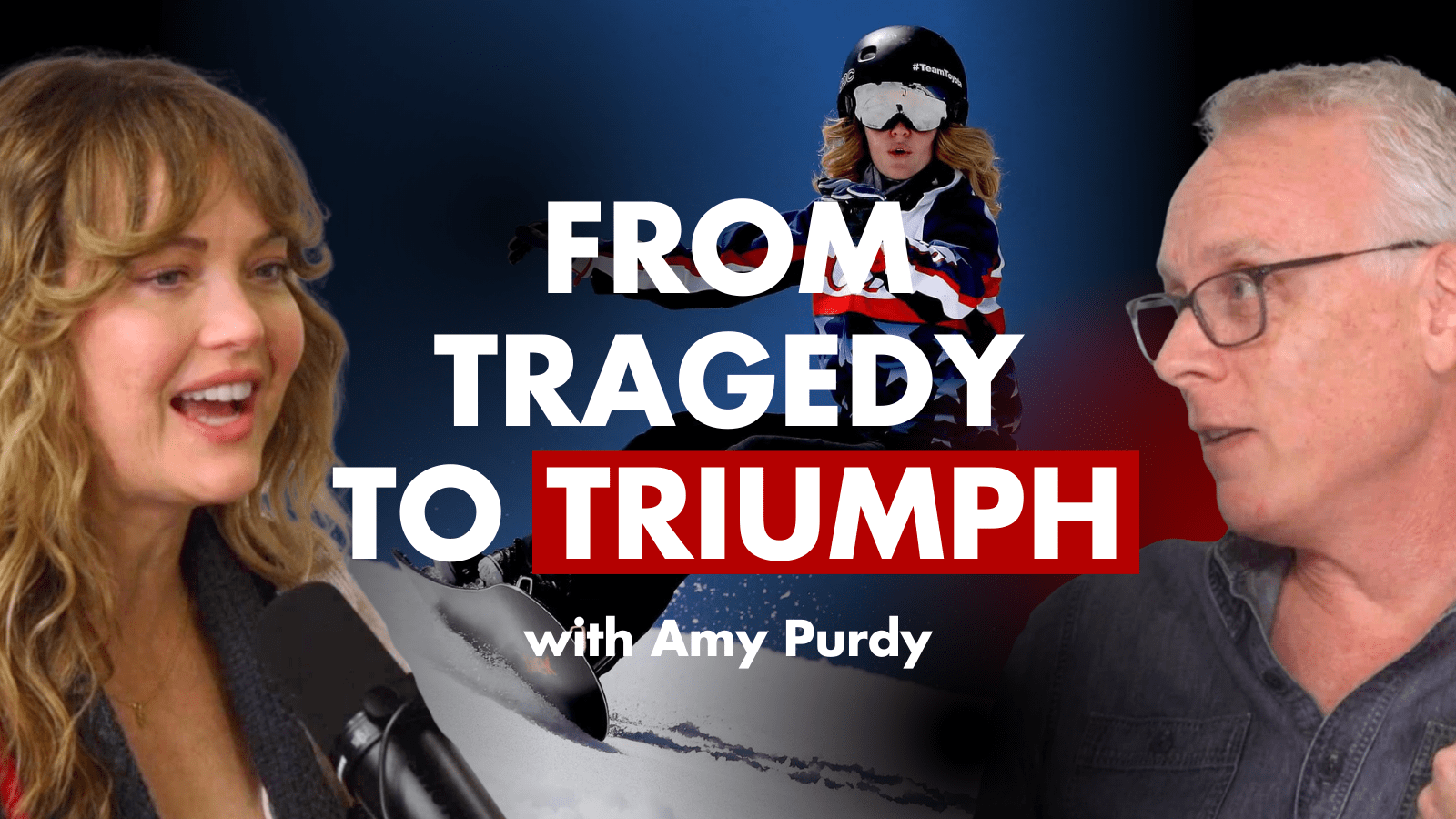
Hey gang, I’m so excited to share this episode with you. It’s incredibly powerful. Today, I’m interviewing Amy Purdy. At age 19, Amy lost both of her legs. But that did not stop her. She went on to become a Paralympic medalist. She started her own business. She’s written two books. She has not let her physical limitations stop her from living her best life.
So, anybody who’s ever felt like they have their own limitations, how do we overcome? How do we find our resilience? How do we find our ingenuity? Throughout this episode, you’ll hear Amy again and again having to solve her own problems because no one in the world had tried to before. There were no artificial legs for someone who wanted to snowboard until she created them. There were no dancing feet for someone who wanted to compete on Dancing with the Stars until she made them for herself. It’s a show about agency.
I hope you’ll be as inspired as I am to hear Amy’s story, and I hope you’ll check out either of her books. She has her first book, On My Own Two Feet, but her brand new one, which is she’s telling her full story and how she navigated these challenges, is called Bounce Forward. Please enjoy my interview with Amy Purdy.
—————
Jay Papasan:
I’m Jay Papasan and this is The ONE Thing, your weekly guide to the simple steps that lead to extraordinary results.
—————
Jay Papasan:
Amy, welcome to The ONE Thing podcast.
Amy Purdy:
Thank you. I’m so excited to be here.
Jay Papasan:
I know. I was thrilled to meet you at Jim Quick’s event. I still remember when the book was young, you promoted it. You had a picture of you sitting on the steps with the book.
Amy Purdy:
That’s awesome.
Jay Papasan:
And I thought, “Oh, how cool where the book is reaching.” It reached a lot of CrossFitters, like it caught on in the athletic world really early on, I think, because people who know The ONE Thing, like they get it really quickly in that world.
Amy Purdy:
Totally. I think your book just kind of confirms what we already know and already do as athletes.
Jay Papasan:
Yeah, focus on what matters and put in a lot of reps.
Amy Purdy:
Right, exactly. That’s all it is. And I’m trying to think of where I heard about your book in the first place. I can’t remember, but I loved it. I opened it up and I was like, “This is it. Yes, this speaks right to me.”
Jay Papasan:
Love that.
Amy Purdy:
So, it’s awesome.
Jay Papasan:
I felt flattered even in that moment, years before I would get a chance to meet you. Your journey, just for listeners who might not be familiar with it, you’re 19, you’re a massage therapist, you love to snowboard. That’s what you wanna do more than anything. And you got… is it bacterial meningitis?
Amy Purdy:
I did, and never heard of it before. But kind of leading into that, I was healthy. I was active. I worked out every day. I was a vegetarian at the time. I was a massage therapist, so I was around just in a super healthy environment. I was getting massages, giving massages. My goal was to travel the world and snowboard. I grew up snowboarding, even though I grew up in Vegas. And a lot of people are like, “Wait, you’re a competitive snowboarder and you grew up in Vegas,” but we had ski resorts outside of Vegas that people don’t realize. Like 45 minutes from my parents’ house was a ski resort.
And so, I would go to school in high school, I’d get out at one o’clock and then go up to the mountains and snowboard every day for another four hours and just fell in love with it. Just absolutely, like, knew that it was something that I would do for the rest of my life. And then-
Jay Papasan:
I would put the falling in the falling in love part. I can ski, but I cannot snowboard. Just for clarity.
Amy Purdy:
And so, I can snowboard, but I can’t ski. And my dad skis, my family skis. I skied, but I didn’t fall in love with it. And the first time I got up on a snowboard, I was like, “This is it.” Something just clicked. And I love the people I was with, friends who brought me up there. It was just that there’s something clicked and it felt so right and I knew it was something that I wanted to do for the rest of my life somehow.
And so, I went to school to be a massage therapist. The day after I graduated high school, I moved to Salt Lake City and became a massage therapist because I ran into a friend who was a massage therapist and she was telling me how much she loved it. And I just thought, “Well, maybe, maybe that’s it.” And I loved it. I totally fell in love with that as well.
And I ended up… so I went to school for about eight months in Salt Lake, moved back to Vegas, where I got hired at a world-class spa called Canyon Ranch, which was one of the best spas in the country at that time. And I was the youngest massage therapist hired out of 64 massage therapists. And again, I just, I fell in love with it. I absolutely loved my job. I loved helping people. I loved healing people. I loved just how calm the environment was, but I also was making great money. And I thought, “Okay, I’m going to save up and then travel the world and snowboard and live in these different ski resorts and have this job that would travel with me.”
And about, I think it was about four months after I started working, one day I went to work feeling fine. And about halfway through the day, I started to feel a little bit run down. I remember massaging this guy and just thinking, “Gosh, I’m exhausted.” And I was kind of blaming him. I thought, “God, this guy’s just draining me,” because you know sometimes you’re like, “What is going on with this person?” So, I just felt so drained.
And so, then, I went into the break room after that. My back was achy, my neck was achy and thinking I had the flu I just decided to go home from work early. And within about 24 hours of that first flu-like symptom, I was in the hospital on life support where I was given less than a 2% chance of living. And it happened so fast.
Jay Papasan:
Did they diagnose it really quickly when you got there?
Amy Purdy:
No. And that’s the thing with bacterial meningitis, it’s actually, you’re so lucky if you get it like I got it. I was in septic shock by the time I entered the hospital. It just happens so fast. You think you have the flu for, they say like within 15 hours, it’s 85% fatal, something like that. I’m not sure if that’s 100% accurate, but it’s incredibly fatal within just the first 15 hours of your first flu-like symptom. And it’s because this bacteria gets into your bloodstream. We don’t know where it necessarily comes from. One in four people are carriers of this bacteria on your nose and your mouth. So, it’s like a common bacteria. Just, our immune systems fight it off.
And for some reason, whether someone sneezed on me in the elevator at work, or at the weekend before I was sharing drinks with a friend because we were at her 21st birthday party. So, it could have been any of that stuff where this bacteria got into my bloodstream, my body didn’t fight it off. They say it doubles every 20 minutes. So, it just rapidly progresses, like, just spreads throughout your bloodstream.
And so, you think you have the flu for the first 15 hours, and it’s like the last hour, you realize, “Oh, I’m actually dying.” And that is what happened for me. I just was in my parents’ bed feeling sick, and then suddenly realizing, like, “I am not okay.” And then, I got up and tried to stand up and realized that my feet were numb. And I looked down to the floor, and my feet were purple, and my hands were purple, and my heart was beating out of my chest, and I was shaky, and I was tunnel vision.
And my cousin walked in right then because my mom had called her to come check on me. So, she walked in and she said, “Oh my God, Amy, it looks like you’re dead.” And I said, “I’m dying. I know I am. I got to get to the hospital.” So, she rushed me to the hospital and yeah, by the time I got there, I was in full septic shock, lungs collapsed, veins collapsed, and remember the nurses just fighting to find a vein to put in an IV, but my veins were collapsed. And I remember hearing a nurse call my parents and say, “She’s got maybe two hours left to live, but we don’t really know what’s going on.” We just-
Jay Papasan:
Did she think you were unconscious?
Amy Purdy:
No, I wasn’t unconscious and I wasn’t in a coma yet, but I was in full septic shock.
Jay Papasan:
Okay. It’s a horrible thing to hear.
Amy Purdy:
It is. At that time, it’s interesting though, when you’re in survival mode because kind of the fear of it all went away, any kind of sadness of, like, what was happening went away and it’s just kind of literally you get tunnel vision, just focusing on just your breath or just like this moment, and not getting too overwhelmed with the fear of what could happen.
But as soon as they got an IV in, they put me into an induced coma. My parents were two hours away, so my dad actually ripped the… my dad who’s in real estate actually, but he, actually, ripped the handle off his door getting in his truck so fast ’cause they said “She’s got two hours left to live.” And the whole time my parents were driving to me, they’re like, “Wait, she just had the flu.” Like, that’s it. Like she was just barely sick. Like she had a little temperature, like this can’t be real, but it was.
So, anyways, I ended up in the hospital fighting for my life. It was bacterial meningitis. I was in full septic shock. I ended up… over the course of about two weeks, I lost my kidney function. I lost my spleen, it completely burst, and was removed in an emergency surgery where I flatlined and all of this went on. They had to shock my heart into rhythm multiple times and just a lot to save my life in those two weeks. And I ended up losing both of my legs below the knees to septic shock.
Jay Papasan:
Did you know you were losing them or did you wake up and find out that you had lost them?
Amy Purdy:
I knew that I was losing them. And I remember going into this induced coma right before because I couldn’t breathe. And that’s why they put me into it. I was gasping for air, but my feet were really cold. And I kept asking my dad, “What’s going on with my feet? What’s going on with my feet?” My dad said, “Don’t worry about your feet, we’re worried about you.” And I’d say, “I gotta see my feet because they hurt so bad.” So, he lifted the sheets. The last memory I have before going into this coma, he lifted the sheets and my feet were just purple.
And so, then, I was in a coma, but kind of in and out of it for about two weeks. And when I came out of it, yeah, I mean, I knew that my feet were not good. The bottom of them were completely black. They were swollen. And my fingertips as well. Actually, my fingers were purple and my fingertips were black. So, they actually thought I was going to lose my fingers more than my feet. And then, all of a sudden, it turned around, and I didn’t lose my fingers at all. I lost some fingerprints, which the doctors would joke that I could go steal a bank or go like rob a bank or something at that point because I had no fingerprints. But I ended up losing my legs below the knees a couple of weeks later. And that was just septic shock.
So, I was aware that it was happening. I had time to wrap my head around it a little bit, the most that you can, I guess, the best that you can. And yeah, and that was actually the beginning of an incredible adventure that I’ve been on.
Jay Papasan:
Yeah, I heard you, someone asked you a question or you heard a question, if your life was a book and you were the author, how would you want the story to go? And I remember when you shared that, like I felt like that was a source of some agency for you. Like I’m gonna take control of this narrative now. Is this about when that showed up in your life or did it happen later?
Amy Purdy:
It was a little bit… Well, actually, no, it was around that time because I was in the hospital. So, I was in the hospital for about two and a half months. And I remember, so I had my legs amputated. I had no idea what to expect. I had never even seen an amputee in the first place, like never even seen a prosthetic leg at that time. So, no idea if I’d be in a wheelchair, if I’d be walking again.
And I remember laying in the hospital bed, it was nighttime, my dad was asleep in the couch next to me, the lights were low, the TV was flickering, and I started to visualize what I wanted for my life. And I started to visualize myself snowboarding, which I loved, obviously, at that time. But I saw myself snowboarding. And I didn’t just see it, I felt it. Like, I felt it so strong. And I thought to myself, “Okay.” Like, before I get in my own way, before I think “Nope, that’s never happening again,” like, what if I could be what I want to be? Like what would that look like? What if I could do what I want to do? What would that look like before I tell myself that I can’t do it? Like what would I do? What do I actually want for my life?
And the first thing that I thought of is what I didn’t want, which is I didn’t want people feeling sorry for me. And I didn’t want people like, “Oh, poor Amy, the girl who lost her legs.” That’s what I absolutely didn’t want. And I was feeling a lot of that at the time because anybody who visited me, my parents, my family, they all, they were heartbroken.
Jay Papasan:
Yeah, you could see it in their eyes even if they didn’t say it.
Amy Purdy:
Yeah, I hated the feeling of knowing that everybody was so sad for me. And so, I didn’t want that. And so, then, this question allowed me to think of, well, what is it that I do want? And I saw myself walking gracefully, and I saw myself somehow helping other people. I actually saw myself standing on stage before I even knew that there were motivational speakers out there. I saw myself standing on stage, talking to people, saying, “Everything’s going to be okay. Whatever it is you’re going through, everything’s going to be okay.”
And that was before I even knew that everything was going to be okay for me. I just knew in my heart that I was still the same person. I still had the same dreams and passions. I was just going to have to get creative and figure out a way to do them, but that everything was going to be okay. And then, I saw myself snowboarding again, and I visualized it so strong, I could feel it, I could feel the wind against my face, I could feel the beat of my racing heart, I could feel my muscles twitching. I got excited. Like I really, really felt it and I allowed myself to feel it.
And that kind of created this vision of, that is what I want to do and that’s what I want to continue to do and figure out a way to do. And so, I started asking my doctors, “Can I snowboard again? When can I snowboard?” So, all my medical notes, pretty much every page is-
Jay Papasan:
Snowboarding.
Amy Purdy:
Yeah, there’s, like, the patient’s asking if she can snowboard again. And we don’t know what to tell her because we got to get through, her legs have to heal first. They brought in a prosthetist who makes prosthetic legs. I asked him, “Can I snowboard again?” He said, “Well, I’ve never seen a double-leg amputee snowboarder before. They’re skiers, or they’re sit-skis where you can sit in a mono-ski if you’re in a wheelchair and do that.” But I thought, “I want to use my legs.” I also thought, “Well, maybe there just hasn’t been somebody who’s passionate enough to put in the effort to figure it out.” Maybe that’s all it takes is the most passionate person who will put in the effort will be the one that eventually figures it out.
Jay Papasan:
Enter Amy Purdy. We write about this in The ONE Thing that so many people, when they’re setting goals for themselves, they just look at the horizon. Like what do I currently see that’s possible for me and what do I want to go for? But the best way to do it is to go way farther than you can currently see and work backwards. So, there’s this dream of you. You didn’t know how it was going to be possible, but it gives you an anchor to work backwards from.
Amy Purdy:
Completely.
Jay Papasan:
I know the story. I’ve read the book and I’ve heard your story. I mean, you’re a pioneer. No one made prosthetics for people in action sports.
Amy Purdy:
Right. Yeah. I mean, there was that. It’s still a little bit like that, to be honest. It’s a very resourceful community, actually, when you’re an amputee, because you’re just trying to figure out how to do the things that you love. So, whether it’s action sports, or later on, for me, it was dancing or it’s getting,
Jay Papasan:
Yeah, for folks who don’t know, you actually came in second in Dancing with the Stars, which is an incredible story in itself.
Amy Purdy:
Yeah. That one, that tested me in every way too. But yeah, there weren’t any snowboard feet at the time. And yet, your feet have to move a certain way to be able to snowboard. And it’s amazing, you don’t realize how important your feet are and all the motion that you get in like a real human foot. It’s so hard to get in a prosthetic foot.
Jay Papasan:
It’s foundation. Yeah.
Amy Purdy:
Well, and a prosthetic foot, it’s like when you’re walking, that’s a completely different movement than when you’re snowboarding or when you’re running or any of those things. And so, you can’t have a foot that does it all or you would just be falling all over the place. So, a walking foot really is just good for walking and that’s about it. But I realized when I got up on a snowboard in my walking feet, my ankles wouldn’t bend. And so. I kind of was okay on my heel edge, but then I went to go to my toe edge and I couldn’t get over. And yeah, I shot straight down the mountain and fell. And my goggles went one way, my beanie went the other way, my legs still attached to my snowboard, went flying down the mountain and like, they just completely detached. And I was sitting on top of the mountain, just so discouraged. It literally defeated… like I felt completely defeated. Like this is clearly not possible.
But then, I thought, “Well, wait a second. If I can figure out a way to get my ankles to move in the way that I need them to, if I can figure out a way to get my legs to stay attached to my body, then I actually probably can do this again.” And so, I just went on this mission. I went home and –
Jay Papasan:
Instead of it being a failure that stopped you, it kind of triggered you to problem solve in a new way. It gave you the data you needed.
Amy Purdy:
Exactly.
Jay Papasan:
So, I can be on my heels, but I cannot be… is that your edge. Is that the toes?
Amy Purdy:
On the toe edge, yeah.
Jay Papasan:
The toe edge. Like, that narrowed the problem for you, actually.
Amy Purdy:
Yeah, yeah, exactly. It’s like this part of it works. Exactly. And I never knew that I had a mechanical brain, kind of, but I do when it comes to breaking things down because I thought, “Okay, I can do this. Like, I can stand on my heels and that’s fine. I can keep my feet in my boots, I can strap down, I can do all these things, but I can’t do this one motion.” So, just trying to break down, how can I do this motion?
Jay Papasan:
I’ll just call out, like your whole story illustrates, I think when we lose things, it’s really easy to focus on what we don’t have.
Amy Purdy:
Yeah.
Jay Papasan:
And I also think, sometimes, it forces us to discover hidden things that we already had.
Amy Purdy:
Absolutely.
Jay Papasan:
And like here’s the thing, like you’re basically this mechanical engineer inventor that you would have been a massage therapist.
Amy Purdy:
Exactly.
Jay Papasan:
Like you knew how the muscles worked. You already had that knowledge, but you had to apply it to something completely different. There’s this hidden gift that you just uncovered through tragedy.
Amy Purdy:
Absolutely. And you know what I also think in your book makes me think of, as well, is I hyper-focus on one thing. So, when I was a massage therapist, I was the best massage therapist. I know I was. I mean, I-
Jay Papasan:
Yeah. And you said it, the youngest one hired at this elite place. I was like, you probably have a history of coming in first in things. Like, you’re gonna be the best if you do it.
Amy Purdy:
I put my heart and soul into it. I loved it. And then, you know, moving that energy into, “Okay, now I’m hyper-focused obsessed with figuring out a way to snowboard and figuring out my feet.” And so, my leg maker and I, we had some random feet because you’re given feet to walk in and then you progress to other pairs of feet. And so, you end up with parts and pieces and stuff.
And so, we ended up taking a foot from one brand and an ankle from another brand and turning the ankle around backwards because I realized that was the motion that I needed. Like the normal walking motion didn’t work, it would stop, so I wouldn’t get over on my toe edge but when we turn the ankle around backwards, I’d have all this ankle flexion. And so, we ended up doing that with this foot and kind of piecing this foot together. And then, I put wood under the heels, kind of a wedge, so that I could get over onto my toe edge. And neon pink duct tape just kept that together.
But then, I got in my snowboard boots and snowboard and realized that we had done it. And I was able to ride my heel edge, ride my toe edge. And so, then, yeah, we figured it out.
Jay Papasan:
What was that like in that moment where you’re on the mountain? Like, I mean, you’re testing this out. I’m sure you stood on it and think maybe this will work before you go up there. But like you’re now going down the mountain. What was that feeling of like, “I figured this thing out”?
Amy Purdy:
Yeah, yeah. You know, it’s funny because I almost don’t know if I’ve thought about that feeling in a while, like that very first feeling, because there’s so many feelings after that, to be honest, trying to fine tune it, right?
Jay Papasan:
Yeah.
Amy Purdy:
But definitely-
Jay Papasan:
You’re still obsessed on getting it right.
Amy Purdy:
Exactly. Yeah, it actually began even more of an obsession of getting it to where I wanted to feel like I had my real legs back because I knew what it felt like to snowboard with legs. I wanted to… I was constantly, honestly for 20 years, fine tuning to try to get back to what it felt like to have real legs when you snowboard.
And I think that’s what led me to snowboard as well as I did. There’s definitely people who have disabilities who they pick up snowboarding after their disability. For me, I think, because I did it before and I know what it feels like, I was constantly chasing that.
Jay Papasan:
That feeling.
Amy Purdy:
Yeah. And so, I just got really used to having tools in my purse and tools on me at all times. And I’m tinkering away and just adding things and just trying to get my ankles and my feet to do what I want to do as I would. As my skill set would progress in snowboarding, my feet would hold me back. And so, we’d have to try new things. And eventually, I ended up snowboarding and competing in legs that I didn’t build, but that a friend of mine built. His name is Mike Schultz. He’s amazing. And now, he builds snowboard feet for the entire international.
Jay Papasan:
You were like a co-author of these-
Amy Purdy:
I was.
Jay Papasan:
… feet. I mean, you were not the lead designer, maybe, but you were the test pilot making it fly.
Amy Purdy:
Definitely, test pilot. And yeah, I mean, it’s just the disabled community is extremely… can be, especially if you’re athletes, can be extremely resourceful. We’re building things in our garage. And I mean, just the other day, I had a Dremel out. My husband was filming me because I was like, this is my everyday.
Jay Papasan:
I actually saw that post.
Amy Purdy:
Yeah, did you?
Jay Papasan:
You’re like making an adjustment to make sure that your leg fit right.
Amy Purdy:
Yeah, and I just kind of get over waiting on other people to do it. So I’m like, “Give me the tools I need and I’ll just do it myself.” But yeah, it’s really… it’s interesting. So, that. Yeah, realizing, “Oh my gosh, I can snowboard again. I wanted to help other people,” so-
Jay Papasan:
Well, that’s also a throughline. And we’ll probably have to go on a break, but I’ll just point out, you said when you were a massage therapist, you were healing people. And then, you imagine yourself in the future inspiring people. But I think you’re also helping other people become whole. And a whole, like, that to me, feels like there was probably already this instinct in you to do this adventurous thing that you love but also help people. And you’re still doing both.
Amy Purdy:
Right. Yeah.
Jay Papasan:
And that’s really beautiful.
Amy Purdy:
Yeah. And you know what Jim Kwik says? I love it. He says, “Passion is what you do for yourself, but purpose is what you do for others.” And so, I think losing my legs helped me find my purpose.
Jay Papasan:
Oh, okay. All right. Well, we’re going to pause on that note, take a quick break, and we’ll see everybody on the other side.
———————
Jay Papasan:
All right. Well, welcome back, everybody. I love that in finding your purpose, this vision, it became something that pulled you forward. I think that a lot of people that are listening are physically whole, but we know this because we’ve worked with a lot of people that suffer from imposter syndrome. A lot of people feel like they’re still incomplete. So, you had your identity removed. You went to basically zero, and you had to start over. What, maybe, can we learn from your journey and maybe share with those people who might be listening, going like, “I’m physically whole, but I’m still incomplete”?
Amy Purdy:
Well, I think first of all, we’re all under construction at all times, right? Mine might be more visible. Then, I have the internal stuff as well, like imposter syndrome. I mean, anytime you have room to grow, you’re going to feel uncomfortable trying to figure out who you are. And as soon as you get to a certain spot where you think you know who you are, then you’re comfortable there for like a very short time. And then, all of a sudden, you’re trying to figure out who you are again. So, I mean, first, I just think that that’s just our human experience, right?
Jay Papasan:
So, just maybe first start, like, it’s not just you, it’s everyone.
Amy Purdy:
It’s everybody.
Jay Papasan:
And we have to just kind of learn to embrace that as a part of the journey.
Amy Purdy:
Yeah, absolutely. And, you know, I think, sometimes, people will hear my story and say, “Oh, my gosh, I’m not doing anything with my life. Like now I feel really bad about myself. She lost her legs, and she’s doing this and this and this and this,” and like, “What am I doing?” And that’s definitely what I don’t want to get across. Like, I share my story because I want people to feel in their own life that they can make their own goals happen.
And whatever your dream is, whatever your challenge is in your way, there’s ways around it or there’s ways to use it, or there’s ways to have that challenge fuel you so that you can get ahead and do the things that you love. If we didn’t have challenges, we wouldn’t have solutions. We didn’t have problems, we wouldn’t have solutions. So, like, all have those little problems. We’re all trying to figure ourselves out, and we have no idea what we’re doing.
But I think if you lean into the challenge, whatever it is, you can learn so much about yourself. You can find fuel to your fire, and you can create and innovate new things, new pathways for yourself or others. So, for me, it did start a little bit selfish to be honest. It didn’t start with, “Oh, I’m going to do this to help other people.” I was doing what I needed to do for survival for myself so that I could live the life that I wanted to live. Through it, I realized, “Oh, my gosh, like this could help so many people, right? Like there’s other people who are in this situation as well. So, how can we help them?”
Jay Papasan:
I think the gift you also had is that you were clear about the life you wanted to live. And I always find it sometimes surprising, but I’ve also experienced it, that a lot of times, we’re not really clear about what success looks like for us-
Amy Purdy:
Exactly, what you want.
Jay Papasan:
… about what we truly want. We might be living our parents’ lives that they expected of us. A lot of times, we try to do things because the world tells us we’re supposed to do them. And we feel incomplete around something that we don’t actually want. So, I think, maybe, if I’m hearing your journey and trying to learn too, like, we just have to get clear about what is it that I truly want and what’s actually missing that I need to go find.
Amy Purdy:
Absolutely. And I think being clear on something, it’s a practice of visualizing and allowing yourself to visualize who you really want to be without getting in your own way. I think we, oftentimes… like when you’re little, you daydream and you let yourself just daydream about whatever it is that you wanna do in your future. But when we’re older, we go… and I could have easily done this in the hospital, but you go, “Oh, I wanna do this. I wanna travel the world. I wanna snowboard,” or “I want to start this business,” but then you stop yourself and you say, “But I can’t because of the situation I’m in.”
Well, like, obviously I’m not going to snowboard because I don’t have feet. So, you just don’t even allow yourself to have that daydream or that vision. But I think if we can almost create a practice of allowing ourselves to daydream and see what is your best self look like? Like what are you doing? What does it feel like? And allowing yourself to believe that you can actually do that. And then, taking the necessary steps to get there.
Jay Papasan:
That’s a really… like you asked a very specific question. If I’m remembering the conversation, you’re like, you knew that you were missing a piece, like very specifically this ankle. But you started going forward, what would have to be true? What would I have to do in order to have that dream come true? And again, if we’re willing to go to that place where we’re clear about what it is we want, I think a lot of times, we know intuitively what’s missing. But now, the creativity gets aimed at something very specific versus all the things.
Amy Purdy:
Exactly. It narrows it down completely to like, this is what I have to figure out. And it’s interesting as you’re saying that I’m just thinking of even just having prosthetic legs, so much of what I do, I have to kind of narrow my focus on, like, even if I’m not comfortable, for some reason my leg’s not comfortable, my leg maker can’t figure it out, there’s a million things that could be. I mean, I get locked in, almost obsessed with figuring it out until I’m usually the one that does figure it out. You know, I can’t really expect other people to do it for me.
Jay Papasan:
No one’s going to want it as bad as you.
Amy Purdy:
Exactly.
Jay Papasan:
And also, you’ve learned a kind of confidence. And that comes from trying. So, you tried and failed and you tried and failed, but eventually you had that first breakthrough. And I’m just imagining you celebrating at the bottom of the hill, crying in tears, and you were like, “Actually, I was probably identifying the other things I needed to do.”
Amy Purdy:
Completely. That’s probably when I figured out that I was a perfectionist as well, because yeah, it was not like, “Oh, I did it.” It was like, “This could be so much better.” Like, “Okay, now, what do I got to do to, like, make this even more?” So, I don’t know if I ever really did a celebratory, like, “Oh, my gosh.” I believed in my heart I could figure it out. I figured it out to a degree, and then I just chipped away at it until there was, you know, many years later when I competed in the Paralympic Games, standing in this-
Jay Papasan:
You medaled twice, right?
Amy Purdy:
Yes, right.
Jay Papasan:
Okay, let’s just not gloss over that. You didn’t just compete.
Amy Purdy:
Right. So, actually I medaled three times.
Jay Papasan:
Three times.
Amy Purdy:
… the very first Paralympic games, which by the way, that was also-
Jay Papasan:
You made it happen.
Amy Purdy:
Yeah, that was this effort to even make snowboarding become a Paralympic sport, we did that through our organization, Adaptive Action Sports, but also connecting with other organizations around the world. We kind of collectively did this huge push to get snowboarding into the Paralympic Games, and had a small group of core athletes who are very similar to me. I mean, everybody was on their own figuring out their legs and who loved snowboarding, and we all came together, and these people were from all over the world. So, we all came together, and we did this huge push to get snowboarding into the Paralympic Games, and we were able to do it. And so-
Jay Papasan:
I just want to imagine like the shop talk, like maybe I’ll get together on a Zoom around the world. And then you’re like, talk to me about your ankles.
Amy Purdy:
Oh, that is Shop Talk.
Jay Papasan:
Because you all had to find your own solutions. I imagine between all of you, you all started to see, “Well, these are the things that we all had to do.”
Amy Purdy:
Exactly. And that’s what was so cool about starting our organization, Adaptive Action Sports. So, my husband and I, we were dating at the time, but we started our organization, and we wanted to just help people snowboard and kind of grow the sport of snowboarding in the adaptive world. Once we realized that I could do it, we wanted to help others do it. But then, we started to realize people were just coming out of the woodwork who are doing it on their own. You know, they were in the Netherlands or, you know, New Zealand or Canada and, and they were doing it on their own.
And then, we would put these events together where we would all get together and live in a house together. We’d spend a week in a house together snowboarding and learning from each other. And yeah, I mean, we would be, like, passing legs and feet and like, you know, “How do you do this? and “How do you do that?” And, “Oh, you set your leg up that way,” or “How do you do it?” And so, we were all just trying to learn from each other and figure out how we could snowboard the best that we could.
We all had the common goal of just… well, we all have the common passion for snowboarding. So, I sit here and I think, what makes you hyper-focused and narrow-focused on something? Well, the passion has to be there first, right?
Jay Papasan:
You’ve got to want it.
Amy Purdy:
The drive. And maybe passion too, at times, can come from pain, right? Because it’s like, what hurts, what pains you that you want to figure out that is not figured out? That can make you hyper focus on making something happen. That can give you a vision of “I want to figure that out,” and because you can feel it, because it pains you. And I think about that with my feet. Like it upset me that I couldn’t snowboard the way that I used to. And so, I became obsessed with figuring out a way to do it. And so, I think your purpose can come from pain as well.
Jay Papasan:
I think so too. And I think wherever it comes from, it becomes a source of power. And then, that weird path, your pain becomes your power if you just realize that if you connect the dots, this thing that you thought was going to stop you becomes the thing that propels you forward.
Amy Purdy:
Completely.
Jay Papasan:
But you have to make those steps. You have to latch on to something to pull you forward, escaping the pain or pursuing your vision, and then work backwards. Like, you know, become a little perfectionist, become obsessed with finding your answers. The gift you got, which I love, is I’ve been in rooms where a lot of people have had to solve problems that were similar. And when they come together, there’s a kind of magic that happens. Because like, it’s not like you have 12 individual brains solving a problem. It’s like you’ve got 48. It’s like they multiply somehow. And it’s so much more powerful and everything happens faster, and you realize I’ve got a community as well.
Amy Purdy:
Completely, yeah.
Jay Papasan:
I think a lot of people don’t realize whatever their challenge is, there’s a whole community out there waiting for them once they start moving towards the goal, so other people will see, “Oh, you’re on that journey too.”
Amy Purdy:
Right, exactly. And I think what we do a lot when we feel challenged is we kind of internalize it as our own. We try to hide it maybe, and we try to avoid it or resist it. So, we’re always trying to resist our challenges because we just don’t want to deal with them.
Jay Papasan:
Fear.
Amy Purdy:
Yeah, fear or just-
Jay Papasan:
What if I fail?
Amy Purdy:
… you know, their burden. It’s like, you know, I don’t want to deal with this over here because I’m trying to do this over here. But I think, when we lean into the challenge, it’s like that’s when we… I mean, that’s when we learn the most about ourselves. That’s when we allow ourselves to really… you know, to feel it and understand it, and then to connect with people within it. I think, yeah, we all want happiness and a big hurdle to happiness is resisting what is.
Like when you can just learn to lean into it, you don’t have to like it, you don’t have to embrace it, but accepting that this is a part of my life and I’ve got to figure it out and this is part of my journey, then all of a sudden it can open up communities that you didn’t even know existed because, now, you’re not hiding something that’s stopping you from reaching your goals. You’re actually maybe… you’re exposing it and that allows you to be vulnerable and connect with other people who are going through the same thing.
So, yeah, I think we have to be a little bit more accepting of our challenges as part of who we are, not just a burden that’s stopping us from being who we want to be. It is part of who we are, part of our journey, and you can use those challenges to get ahead as well.
Jay Papasan:
And they don’t just open up community to you, they open up as we’ve discovered, like you found you had a little hidden Tony Stark in you.
Amy Purdy:
That’s right. Right.
Jay Papasan:
And I believe, if I remember your biography, you were sharing it on stage, like your husband’s like a motorcycle tinker. So, he’s probably a good partner to have along on that journey as well.
Amy Purdy:
He’s amazing. I mean, yeah, he loves… he’s super resourceful, really creative, and can fix anything. He was perfect for this because at one point, I wanted to skateboard again. And I thought, “Oh, I haven’t skateboarded.”
Jay Papasan:
Did snowboarding come from skateboarding?
Amy Purdy:
Yeah, it does.
Jay Papasan:
Because I always associate those cultures as being so similar.
Amy Purdy:
They are very similar, yeah. I think skateboarding is probably where a lot of it started, but even surfing, it might’ve all just… I don’t remember what started first, but definitely snow, surf and skate are our passions. And my husband was a skateboarder before he was a snowboarder.
And so, yeah, at one point, I wanted to skateboard again, and I had not skateboarded with prosthetic legs. That one is very hard because you’re not attached to the board. So, snowboarding, at least, you’re attached to the board. Where you go, the board goes. But skateboarding, you’re not. And so, you’re kind of trying to control something that’s not a part of you, which is my legs; controlling something that’s not a part of you, which is the board. And that feels pretty impossible, but.
So, my husband just, you know, went to the Home Depot and created kind of this pull on the board, not so that it would turn it into a scooter, but it more so just allows me to kind of lean on it a little bit.
Jay Papasan:
Yeah. Another connection point.
Amy Purdy:
Yeah. When I have that connection point, then I can bend down and move my ankles the way that I need to. And so, he’s amazing. So, he does those types of things where it’s like, “Oh, now, we can just go skateboard together.” And this thing that seemed impossible is totally possible. You just have to get creative and think out of the box a little bit.
And so, we’ve been a great team when it comes to that. And that’s why we started the organization, as well as we realized I can do these things, we wanted to help other people do them as well. And then, it ended up leading to a whole new sport and just a really amazing kind of path of figuring out the possibilities.
Jay Papasan:
And that’s like, I’ll just go ahead and say like your new book, Bounce Forward, like the subtitle, it’s got that in it.
Amy Purdy:
Right.
Jay Papasan:
Right, 21 Tools – I’m going to look at it in my notes – to a Life Beyond Limits.
Amy Purdy:
Yeah.
Jay Papasan:
Like, you take the word limited, and you just change it to limitless. If we apply the right resources, the right focus, and the right courage through purpose often to plow through all of the hurdles to get there.
Amy Purdy:
Right. And actually, I have a chapter in the book called Limited to Limitless. And so, I love that you said that. And that chapter is all about visualizing. And what I realized with this book too is I realized that the tools and the things that were helping me survive my hardest days were the same things that were helping me thrive to my greatest moments. The same exact tools.
Jay Papasan:
That is so powerful.
Amy Purdy:
Yeah. And I was sitting on a plane one day and I was thinking, “Okay, if this plane went down, what did I learn while I was here?” And I jotted down 21 things. And I realized these 21 things, yeah, they helped me in my hardest days, visualizing, in bed, no legs, what I wanted for my life. But that also helped me standing in the start gates to win medals. That helps me with my business, or that helps me with who I want to be in the future. Like, where am I going next year? That visualizing, that tool, being able to use that in different ways has been key for me to live a good life. And so, yeah. So, anyways, put it all together in this book, the things that have helped me get to where I’m at today.
Jay Papasan:
But you’ve come to appreciate challenges. Like you said it earlier, without challenges, we don’t get solutions. And so, those darkest days come with really wonderful lessons if we can learn to notice them. And then we get to employ them forever.
Amy Purdy:
Exactly. And we have to stop resisting them. You know, when there’s a challenge, we look at it as a burden, but a challenge can be an opportunity. It can be an opportunity to learn, to grow, but also, even getting frustrated about it can fuel you in ways that you never could have imagined. And that’s what propels you forward. So, I always say, even with my legs, like they didn’t hold me back, they propelled me forward, but that’s because I leaned into them and I let them frustrate me, so that I could figure out ways to do things for myself and then for others.
Jay Papasan:
So, Amy, when you’re on the plane and you’re writing down those 21 things, when you stand back and look at it, is there any of those that stands out as kind of surprising in retrospect?
Amy Purdy:
Maybe one of them, which is kind of interesting, and you already said it or hinted to it, which is that you need problems to find solutions. I realized that in order to be happy, we need problems because I found myself becoming more happy when I was problem-solving and not necessarily when I got to the solution. I was almost happier in the mode of problem solving than when I got to the other side of it. So, I thought, well, then we need problems to be happy because it’s the act of taking action and problem solving that creates purpose.
Jay Papasan:
There’s huge research on this. We touched on it, if anybody made it to the end of our book, but that fulfillment happens along the way, right? That people say, “I want to be happy,” but it’s in pursuit of things that we feel the happiest.
Amy Purdy:
Exactly.
Jay Papasan:
It’s those little milestones. It actually is a little bit of a letdown when we get to the finish line.
Amy Purdy:
It is.
Jay Papasan:
It’s just like, “Now what?”
Amy Purdy:
Right. And you kind of go, “I did it.” And you would think a lot of Olympians feel this way. I’ve spoke to a lot of my friends who feel the same way I felt. When we cross the finish line, and we get a medal, most of the time, instead of us feeling elated, we feel more like, “Thank God,” because all our hard work just… you know, but it’s not like-
Jay Papasan:
It’s relief.
Amy Purdy:
Yeah, it’s more relief. So, it’s not like, “Oh, my God.” And the happiness comes. The happiness was in the process to get there. And if we weren’t enjoying it, we wouldn’t have got there.
Jay Papasan:
You wouldn’t have done all the hard things that were required to cross that finish line.
Amy Purdy:
Right.
Jay Papasan:
I love it. So, find the joy along the way.
Amy Purdy:
Exactly. Yeah.
Jay Papasan:
Amy, thank you for sharing your gifts with us. At the end of these, we usually offer our listeners a little challenge. If someone’s been listening to this conversation, maybe they’re about to turn it off and head into their house or into work, what’s a small challenge we can give them this week, maybe to take a first step on this journey of maybe turning a problem into a solution or getting around that challenge.
Amy Purdy:
I think a good challenge would be allowing yourself to visualize who you want to be. Who are you at your best self? What does that look like? What does that feel like? You got to feel it. It’s not hopeful. It’s not, “Oh, I hope to do this someday.” It is allowing your brain to go into that space where you see yourself doing whatever it is that you want to do. And you allow yourself to actually feel it in your heart and don’t stop yourself. Don’t let your thinking brain get in there and say, “Well, you can’t do that. You’re busy, you have kids, you’re too old.”
Jay Papasan:
No buts allowed.
Amy Purdy:
You got to allow the vision to take place and happen. And when you feel it, then you know that you can do it. And then like you said, you work backwards from there.
Jay Papasan:
I love that. Thank you, Amy.
Amy Purdy:
Yeah, thank you.
Disclaimer:
This podcast is for general informational purposes only. The views, thoughts, and opinions of the guest represent those of the guest and not ProduKtive or Keller Williams Realty LLC and their affiliates, and should not be construed as financial, economic, legal, tax, or other advice. This podcast is provided without any warranty or guarantee of its accuracy, completeness, or guarantee of its accuracy, completeness, timeliness, or results from using the information.