Jay Papasan:
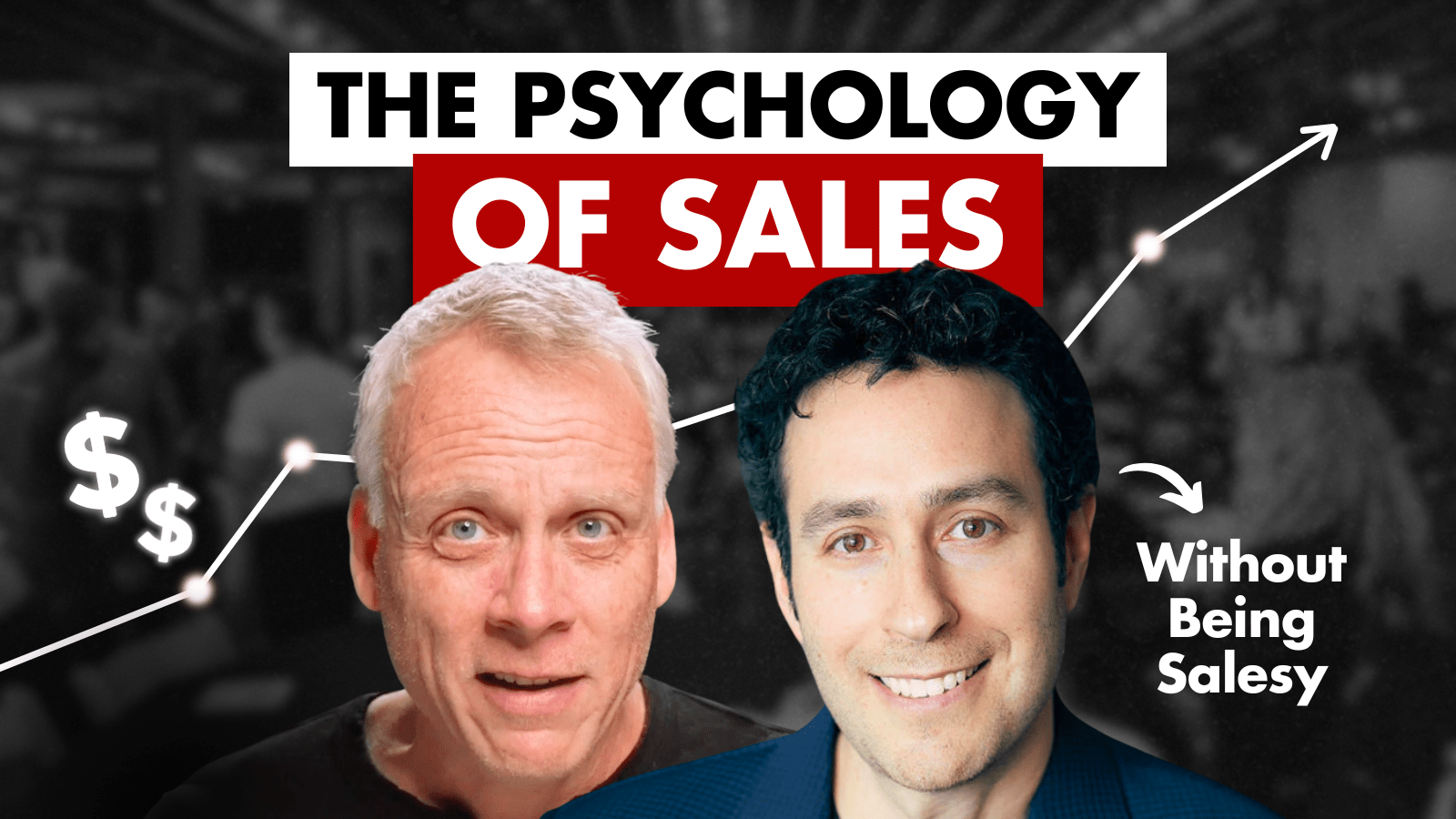
Hey, gang. Today, I’m talking with David Preimer. He is the founder of Cerebral Selling, and he is an authority on sales. But guess what? Like so many of us, he didn’t set out to become a sales expert. He didn’t set out to be in sales. He started somewhere else. He was a scientist. But his curiosity led him there, and he breaks down all the great frameworks for creating influence in our lives, whether you’re a salesperson or not.
We’ll hear about his journey through multiple startups. We’ll hear how infomercials actually capture our attention and get us interested in the things they’re trying to sell us and how we can use those skills for good. Anyway, there’s lots to learn here if you’re in sales, or if you don’t think you are, there’s lots to learn. Let’s enjoy this episode with my friend, David Priemer.
———–
Jay Papasan:
I’m Jay Papasan, and this is The ONE Thing, your weekly guide to the simple steps that lead to extraordinary results.
———–
Jay Papasan:
All right, David, welcome to the show.
David Priemer:
Oh, it’s great to be here. Thanks so much, Jay, for having me.
Jay Papasan:
Yeah, it’s great. We got to get together before this and get to know each other a little better in our history. But you like to say that nobody chooses to get into sales. We have a lot of people in sales that listen to this podcast that everybody kind of stumbles into it by accident. That’s kind of your story, isn’t it?
David Priemer:
Yeah. No one gets into sales on purpose. We don’t teach it in school. It’s not something that even anyone aspires to, you know. Even-
Jay Papasan:
Can you get a degree in sales?
David Priemer:
No. You can’t. Okay. So, the reality is there are a select few post -secondary educations that offer anything having to do with sales in the context of business. Maybe you could, but it’s also not something that people say, “You know what I want to be when I grow up?” It’s not like an emergency room doctor. It doesn’t make you popular at parties.
And yeah, I was no different. I started my career as a research scientist in the late ’90s and got into sales by accident at the turn of the dot-com boom. I joined a startup, which is what you did back then.
Jay Papasan:
But hold on. What did you research?
David Priemer:
Oh, okay. So, I was doing graduate work in chemical engineering, and I was building mathematical computer models that simulated the movement of toxic contaminants in urban areas.
Jay Papasan:
Sounds like the perfect prerequisite for sales.
David Priemer:
100%. Got it. Got it.
Jay Papasan:
It screams sales.
David Priemer:
Yeah. You know, at the end of that experience, I said, “Okay, what I want to do with my life?” I realized I didn’t want to stay in academia. So, I said, “Okay, I’ll go into consulting.” I actually ended up getting a job. I interviewed at Accenture, which was Anderson Consulting at the time. IBM Consulting actually got offers from both and decided to go to IBM.
And then, a few weeks before I was scheduled to start that job, I randomly ran into a friend of a family of a friend, who was doing a startup and said, “Oh, you should totally join us at our startup.” So, I was like, “Okay.” I was 25 at the time, not a huge amount of responsibility, so I decided to do that.
Jay Papasan:
And this is like right around the year 2000, 2000-
David Priemer:
Correct. 1999-2000. Yeah, this is a 20-person startup.
Jay Papasan:
When It was really cool to be in a startup.
David Priemer:
That was the whole thing, right? Especially coming out of research science and you have the world saying, “Well, what are you going to do with that?” You know, it was a good, you know, punctuation to say, “Well, I’m going to join a startup and be cool.” So, that’s what I did.
Jay Papasan:
Yeah. But didn’t you go in and go, “And now, what am I going to do?” Like based on your history, did they hand you a phone and say, “Drum up sales”? Or how did that happen that you ended up in sales?
David Priemer:
It was kind of easy because I actually got hired by IBM as a sales engineer, basically a functional technical product expert that could do custom coding and demo of their brand new web design, whatever it was, their e -commerce platform, which was brand new at the time.
And so, when I joined this other startup, they said, “Well, we also need people that can do that. Why don’t you just join us?” It was a very product-centric company and the CEO, who was great, loved kind of sales engineer. So, even in a company of 20, when we joined, there was three of us that did that job, which is highly unusual on a company that size.
Jay Papasan:
Okay.
David Priemer:
So, it was-
Jay Papasan:
I have a couple of friends that have done software sales, longer sales cycles. It’s kind of technical. So, like, having really smart people that could maybe work in Excel graph is probably a handy thing. So, it’s not what most people think of when they think of sales, if they don’t know enterprise sales like that.
David Priemer:
That’s right. The idea was just, “Hey, look, we’re building this company. We need general, all purpose, Swiss Army knife, smart people to do a bunch of stuff.” And that’s how I got in.
Jay Papasan:
Our worlds collided when you were at Salesforce, right? That’s when you read The ONE Thing and you started using it. Is there anything that you learned materially? Because like, I know you, your brand is Cerebral Selling, and this combination of science-backed but empathy plus selling, and what happened in between or do we just need to jump straight to Salesforce?
David Priemer:
No. You know, like being a research scientist, I realized I thought of sales almost like an engineering problem. When I say something to someone like this, they get it. When I say it like that, they don’t. And I just became really curious about all the pathways and mechanisms. And then, when I joined Salesforce, and I joined because they acquired my third startup. So, I didn’t decide to work there or apply there. I just came along with the ship.
Jay Papasan:
So, you went from working at a startup to your third startup as an entrepreneur and you got acquired.
David Priemer:
That’s right.
Jay Papasan:
That’s cool.
David Priemer:
Yeah. And it was, you know, “Oh, great.” It came across with the ship, a lot of high fiving and butt slapping. When you get acquired, that’s kind of like the dream, right?
Jay Papasan:
Right.
David Priemer:
I will say, and I’ve said this before, the next six months after joining Salesforce were the worst time in my entire career. Because you go from this elation of being acquired, and you’re at the small company, do all these great things to, all of a sudden, putting a lot of pressure on yourself to maintain your own ego of like, “Oh, I’m a successful person. I need to be successful except now, instead of a 45-person company, it’s a 6000, at the time, person company where you don’t know how to do anything.” And so, I put a lot of pressure on myself.
Jay Papasan:
I would imagine you’re also going from the identity of a founder to someone who’s now a contractually required employee for a period of time.
David Priemer:
Yeah.
Jay Papasan:
It’s like going from being the boss to having a J -O -B, I’m sure was a little bit of an adjustment.
David Priemer:
Yeah, you know, that ego part wasn’t as much for me as just wanting to be successful. You know, they didn’t run us as our own separate business unit for a little while.
Jay Papasan:
So, you had a bit of entrepreneurial flair there.
David Priemer:
Yeah, exactly. And in fact, Salesforce welcomes entrepreneurs that come in from the outside because they know as they grow, when I’ve… by the way, when I left Salesforce five years later, they were 25,000 people with 6000 people when I joined. So, that’s a big delta, and it’s not all by just hiring. They acquired a bunch of companies. They like it when entrepreneurs come in from the outside because they bring all of this new perspective.
And that was part of what I ended up doing, which led to my journey now, which is, I started writing. They said, “Hey, look. If you can think of a better way of doing things than maybe that we are used to doing, then tell us what it is.” And in a company of that size, there is a certain amount of momentum, and people just end up doing things cuz it’s what we’ve always done.
Meanwhile, as the research science empathetic person, I’m like, “You know what? I love sales but I also don’t like talking to salespeople.” And a lot of things. I love to use Salesforce, but everything we do here is kind of like a little bit of a thinly veiled product pitch. So, there’s lots of ways that we could be adding value to our customers in ways that transcend the product just by virtue of who we are and our size. And they said, “Great. Tell us what we would do.” And so, I started writing and that’s kind of where this additional journey started.
Jay Papasan:
So, it’s been a few months since you walked me through the actual journey. So, how did it all happen?
David Priemer:
Yeah. Yeah. So, I started writing.
Jay Papasan:
Just so people know, like, this is me being selfish. When I hear stories of The ONE Thing in the wild, I get excited because you’ve written books, you write the book, and you feel like this is how the world will receive it and use it. And it’s always something that you didn’t expect that shows up on the other side.
David Priemer:
Oh, yeah.
Jay Papasan:
So, like, you were using the book in a way that I hadn’t heard of anybody else using it towards your sales goals, but also delivering value.
David Priemer:
Yeah. Well, do you want me to talk about The ONE Thing and how I used it at Salesforce?
Jay Papasan:
I don’t want to leave them hanging on the writing part.
David Priemer:
So, what happened? Yes. So, I started writing and sharing some of my perspectives. As a research scientist, I said, “Okay, here are the pathways and mechanisms by which human beings make purchasing decisions.” I had done and I’ve been in software and startups and seen the trends and patterns. So, I said, I’m going to start writing about some of this stuff. And people enjoyed it internally.
Jay Papasan:
Was this on a blog?
David Priemer:
Yes, I was writing.
Jay Papasan:
This is the heyday, the early days of the big blog.
David Priemer:
Yeah. Oh yeah. So, the Salesforce blog was also a very popular blog for sellers and the industry. So, I started writing for the Salesforce blog and the content ended up getting picked up by Forbes and Entrepreneur and these outlets, you know. So, I said, “This is great. I should keep doing this,” right?
Jay Papasan:
Yeah.
David Priemer:
And so many, many years later, I ended up with all of this content. And so, when my friend Jay says, “Oh, hey, David, can you send me some of your stuff?” I was sending you articles all over the web. And so, I said, “You know what? I just need my own website to put all this stuff,” which is where Cerebral Selling started, but let’s just rewind for a second.
As I started writing, people started liking the content. It started to get traction. And of course, I started to teach my own teams some of the tactics that I was talking about. And they were successful and they enjoyed it as well. I was introduced to The ONE Thing around that time and I loved The ONE Thing because I didn’t even think of it like a sales book and I didn’t say to people, “Oh, it’s a sales book.” Like, this is a life book that helps you promote focus. And it not just helps you promote, it gives you permission to say it’s okay to say no to certain things.
And so, it quickly became one of the two books that any new sales rep on my team got because I said, we work in a very busy environment here. You’re going to be very distracted. Everyone’s going to want a PC and telling you what you do. You have to say no to certain things and be good at saying no to certain things. And so, if you want a bit of a framework to do that, here’s this great book, The ONE Thing.
Jay Papasan:
I just generally classify it as a self-leadership book.
David Priemer:
Yeah.
Jay Papasan:
Right?
David Priemer:
Yeah, yeah.
Jay Papasan:
Like, before you lead others, can you learn to lead yourself? And a lot of that is having healthy boundaries about what you do and what you don’t do, which all kind of rolls back into that. But like, before you – what was the other book?
David Priemer:
The other book, it was called, Yes! 50 Scientifically Proven Ways to Be Persuasive.
Jay Papasan:
I know that book.
David Priemer:
Yeah, yeah. Which was for me –
Jay Papasan:
With maybe the American edition, but did it have a yellow cover even? I’m trying to-
David Priemer:
It was red and white.
Jay Papasan:
Red and white.
David Priemer:
Yeah.
Jay Papasan:
Okay, there we go.
David Priemer:
It was a combination of authors, but I loved The ONE Thing. It was actually bought for us by one of our investors at my startup that got acquired by Salesforce. And it was the first book for me that put science and selling on the same plane.
Jay Papasan:
Thank you.
David Priemer:
It was 50 short experiments that were just all about how to be persuasive in everyday life, from interrupting someone to ask them if you could use the photocopy machine, to the way they put little door knockers on your door to tell you how much energy your house is consuming to try to get you to change your behavior. I fell in love.
Jay Papasan:
You’re so tempting me to go down that path. I love the photocopier experience.
David Priemer:
The photocopier. Like people don’t know now what a photocopier is. When I use that example, I’ve said a photocopier is kind of like a printer, but it would just give you like… it would print the one thing you give.
Jay Papasan:
And people would line up at universities to make copies.
David Priemer:
Yeah. It was a whole thing, you know, but I love that book because it’s short. Like there’s a lot of… you know, 50 short chapters. And I said, like, “There’s so much gold in here.” And I referenced that as I do The ONE Thing in my books as well. So, those were the two books.
Jay Papasan:
That’s excellent.
David Priemer:
Yeah.
Jay Papasan:
All right. So, you’ve written this, you’re getting traction, you’ve pulled it all together on your website, you call it Cerebral Selling.
David Priemer:
Yeah. Well, can I tell you a ONE Thing story about how I used One Thing at Salesforce?
Jay Papasan:
Yeah.
David Priemer:
So, I love The ONE Thing so much, I would give it to my teams. And when the company said, “What are some of the things that we could be doing?” I said, “Look, we have this amazing company here at Salesforce. We grew it from…” Not the royal we. I was not there at the beginning, but we grew it from nothing.
Jay Papasan:
Well, it grew 500 % while you were there.
David Priemer:
Well, okay. I’m not gonna… It’s funny, everyone at Salesforce can take credit for, like, “Oh, I was at Salesforce when it went from two to 10 billion,” or from 10 to whatever. So, I said, “Look, we have this amazing story here. People want to know what we do at Salesforce.” And I said, “There’s so much that we can teach them. Instead of doing events that are focused purely on here’s the Lex version of the product or here’s the future of this space, we should just do things that are helpful for people.”
And so, I took a page from what we used to do at my startup, which is have these intimate executive dinners. So, we would go to a city, typically, like we would do this in our core markets, New York or Washington, but we would also go to Cincinnati, Pittsburgh, like these secondary markets where we didn’t have an office. And we would show up and we would say, “Hey, look, we’re going to pull together a dinner of like-minded customer executives,” and they kind of positioned me because, at the time, I was running small business sales for the Eastern US for Salesforce.
And so, as someone whose business was acquired by Salesforce, a lot of my customers wanted to know how we did it. How did you build your startup, get acquired by Salesforce, and now you’re here? And so, that was a bit of a draw. So, we said, “Well, let’s do these intimate customer dinners, and we’ll invite these CEOs and C-levels to join. And we’ll make it intimate.” Like 10 or so people, 10, 15 or so people. And I bought everyone a copy of The ONE Thing, and I used it to drive the conversation in these dinners.
And the executives would show up to the dinner and I would say, “Hey, we don’t want to talk about Salesforce.” You know, we don’t want to talk about software today. This is all about you. Honestly, like we want to help you run your business. We’ve learned a lot growing this business and anything we can share, we’d love to. I love this book, The ONE Thing. I have been reading it for years, been giving it to my team, and I want you to have a copy. And here’s what we’re going to do. We’re going to go around the table, and everyone at the dinner is going to say what their one thing is. I framed up the focusing question.I said, what’s the one thing that you could do to grow your business such that everything else you could do would be easier or unnecessary?
Jay Papasan:
Well done.
David Priemer:
And here’s what we’re going to do. We’re going to go around the table. And everyone’s going to say what their one thing is. And then, we’re all going to help that person with their one thing, and then we’re going to go around to the next person. I have to say, the initial formula and how well it worked was maybe a bit of a fluke, and then we just kept replicating it.
Jay Papasan:
Well, you’ve created a little mastermind.
David Priemer:
Yeah.
Jay Papasan:
Right? If you get people to genuinely share, like, this is what I think my one thing is, If you have a critical mass of 10 or 12 people, like two people in the room, it goes, “Well, we tried that.”
David Priemer:
Yeah.
Jay Papasan:
Or “We’ve been down that path and this is what we’ve learned.” They may not be able to tell people what to do, but they might be able to tell them what not to do. So, like, that’s a really good formula for a mastermind. And people listening should take note, if you’re trying to build value with your customers or you’re trying to build sales, like I find facilitating a mastermind, you’re not having to have all the answers. You’re just facilitating the conversation is one of the best ways you can do that.
David Priemer:
It was so good and so valuable. In fact, when you go to a business dinner, and you sit around the table, and you end up talking to whatever, I don’t want to say loser, you happen to sit beside and that’s your whole experience for the dinner. These were not like that because it didn’t matter who you sat beside, it was a quiet dinner. I said, “Let’s not talk to each other. each other.” Now, they served food and we ate, but there was no cross-chatter. It was not like a-
Jay Papasan:
Oh, I love that. So, you had one conversation.
David Priemer:
One conversation.
Jay Papasan:
God bless you.
David Priemer:
And it was super valuable. And at the end… and by the way, the great thing about The ONE Thing, which I also love is there’s a coaching element to which I’ve incorporated into my last book but the idea was the first person who would often say what their one thing was, “Oh, my one thing is we’re releasing three dot of the product and once that’s in, everything will be good.” And the next person we get up and say, “You know what? I think it’s the culture of my company. I need to make sure I have the right culture.” And then, the first person would be like, “Can I change my answer? I like that culture answer a lot. It’s not the product, right?”
And so, there’s this element of coaching people to what their one thing could and should be that they found really valuable. The trick was you have to have a common caliber of people. You can’t have a lower level first year student and then a CEO. We all have to have a similar kind of problem, which was good because we all operated in the same segment, in the same geography, and they love those conversations.
So, first of all, the customers love the conversation so much, so much so that those were the highest ROI events that we ran in our entire segment, including Dreamforce, which is our big conference. And we know because we measured the revenue attained within 90 days of that event from those customers was amazing. And that was not the… I mean, you know, you don’t do a customer events for free for nothing, but like that was the whole idea was to actually, in the spirit of reciprocity, add value, get them to enjoy the time together and make it so that when our reps called them, they got so much value, the reps started to take their call.
The secondary benefit though was that the reps who were present at that dinner saw the magic unfold. And they had this epiphany, like, I don’t need to be – not that they were – a sleazy salesperson. I can actually be helpful. I help my customers focus, which we said, CEOs, you’re always struggling with focus. And so, that’s going to be the topic of the conversation. And the reps learned so much and it demystified this whole process for them.
Jay Papasan:
All right. I want to unpack that a little bit. Then we’re going to have to take a quick break, but like so much, we’ve done a lot of masterminds in The ONE Thing business and also in my work with Gary. You hit a really important note I want to highlight. So, if someone’s saying, “I’m going to do this for my business,” grouping people that are about the similar level. And I don’t even find they have to be in the same industry, but if they’re all companies of a similar size, about the same revenue, there’s a commonality to the challenges those companies have.
And you don’t also have all of the, kind of, inside-the-box thinking, if everybody’s in the same industry, they all think the same way. So, there’s some magic to getting similar people from different industries. You didn’t do any sales at this dinner, but reps would follow up with them later. So, if someone’s thinking, “I want to do this,” was it like, “Hey, how did you enjoy your dinner?” or what was the follow -up?
David Priemer:
Yeah, I’d say there was so much value. And of course, when you tell people, don’t talk about Salesforce, they end up talking about Salesforce a little bit. But it’s okay because you told them not to do it. After the dinner, the participants would often reach out to us. And they would say, “Hey, look, thank you so much for inviting us. That was super valuable.” And it was a way of staying in people’s lives.
Jay Papasan:
Right.
David Priemer:
And then, of course, we invited customers that were not like out-of-the-blue customers. These were customers that we were already working with, who we’ve potentially had something going on with. And so, it just made those follow -on conversations so much more natural.
Jay Papasan:
Yeah. How can I help you out? Like, I know someone needs your services. It becomes a natural extension. Reciprocity shows up.
David Priemer:
Yeah. And it also creates opportunity when you get people in a room talking about their problems, they’re, of course, going to be about some of the problems that maybe we could help them with.
Jay Papasan:
We have a solution.
David Priemer:
Yeah, we might have a solution. And not everyone realizes all of the ways. This was a crazy thing for me, being acquired by Salesforce on the executive team of the company that gets acquired. Okay. And I’m like, “Oh, I know Salesforce.” A few months later, I go to one of what they called them Cloud Forces at the time. It’s like a little mini Dreamforce. They had it in San Francisco. It was like 17 ,000 people, which actually would be a pretty big conference otherwise. For them, it was small.
And I’m sitting there in the audience and I’m watching all of the demos and everything they do. And I’m just looking at it, I’m like, “I had no idea we did any of this,” right? We do service. We do this, we do that. And so the same thing with our customers. And especially now after you have these big conglomerate organizations that have acquired so many different products, customers don’t know all the things that you can help them do. And especially even now in the world of AI and all these technologies that are exploding everywhere, people don’t know.
Jay Papasan:
I mean, I think that’s true of even our… like a lot of people who listen to this are in professional services. They might be an accountant, an attorney, a real estate agent, you name it. And people think of them for the primary thing they do, not all the things they’re capable of doing.
Like my wife’s a real estate agent. And so people like, “Oh, should I list or sell with Wendy?” Well, she can also hook you up with any vendor you could ever need to work on your house. She can consult with you on your property taxes. Like there’s almost everything tangential to that space if you’re a professional and experienced, you know about.
So, even though Salesforce is a magnificent example of a deep organization where like who actually does know everything that they do? Probably a lot of people inside still don’t know everything they do. But I think that’s probably true. And we don’t give ourselves credit that there’s a depth there that most people… well, they’ll discover and you can help them discover, “Well, I can actually help you with that too.”
David Priemer:
Yeah. That’s part of the value I find just in general with, you know, if you want to call them us sellers, is that people walk around with problems in these thought bubbles above their head that they have not fully crystallized. And it’s kind of our job, and I kind of say this facetiously, sometimes I say, if you want to sell someone a Band -Aid, you have to cut them first, which I’m not suggesting you go out. I talked about this in my first book. You shouldn’t go out and intentionally harm anyone. But the idea is that people are just not aware of all the ways that you can help them. And sometimes, you have to show them ways. And then, obviously –
Jay Papasan:
If they don’t know they have a problem, you can’t give them a solution.
David Priemer:
That’s right. And this is actually why I gave a TEDTalk a few months ago, and it was about the secret infomercial pitch formula. You know, you’re watching an infomercial-
Jay Papasan:
All right, we’re going to tease this real quick because we’ve really got to go for a break. Somebody’s out there, they’re in their driveway, they want to hop in the house. So, we’re going to do a quick break and we’re going to come back to the secret formula of infomercials. Does that work?
David Priemer:
Let’s do it.
Jay Papasan:
All right, let’s take a quick break.
———–
Jay Papasan:
All right, so welcome back, everybody. All right. So, you did a TED Talk around the secret formula of infomercials.
David Priemer:
That’s right. Yeah.
Jay Papasan:
And lay it on me.
David Priemer:
The title of the talk is Why You’re Bad at Buying Stuff. And the upshot is that you know how you’re watching an infomercial for like the sharp knives that can cut anything, right?
Jay Papasan:
Ginsu.
David Priemer:
Ginsu. And you’re watching this thing-
Jay Papasan:
Is this a test of my infomercial knowledge?
David Priemer:
Well, you know, I didn’t want to go all the way there, but yes, you’ve passed. You know, your Ginsu. It’s the Ginsu 2000 was what it was.
Jay Papasan:
Okay.
David Priemer:
So, you’re watching this thing and at first you’re thinking, I don’t need this, right? And then 30 seconds later, you can’t live without it. And so, I was always very curious, how do infomercials do that with just normal, ordinary household things?
Jay Papasan:
This is the scientist in you showing up.
David Priemer:
The scientist, I’m like, what do they do? And I realized that there’s a storytelling formula that they use specifically in infomercials to pitch their products. Actually, I call it the PITCH formula, P -I -T -C -H. So, I did this TED Talk on the PITCH formula.
Jay Papasan:
And is that an acronym, P -I –
David Priemer:
It is, yes.
Jay Papasan:
God bless you. We love those around here.
David Priemer:
So, the P, which is the important thing that we’re talking about here. I said, if you want to sell someone a bandaid, you have to cut them first. How do though, if you’re watching an infomercial for the Ginsu 2000 knife, how does it start?
Jay Papasan:
Problem.
David Priemer:
Problem.
Jay Papasan:
Is that right?
David Priemer:
Yeah, yeah.
Jay Papasan:
Okay.
David Priemer:
Well, so the P, I tried to be a little bit fancier, I call it pain revelation. It starts with saying, has this ever happened to you?
Jay Papasan:
There you go.
David Priemer:
And there’s like some poor soul who’s trying to-
Jay Papasan:
You’ve got a can and you don’t know how to cut it.
David Priemer:
No, it’s like a tomato.
Jay Papasan:
Yeah.
David Priemer:
And they’re trying to cut it and they’re using the Dulles knife in existence, and they’re wearing a white suit for some reason, and it’s black and white grainy footage, and they just try to club this thing and it just splooshes all over the place. You’re like, this is the most saddest thing I’ve ever seen.
Jay Papasan:
Right.
David Priemer:
Right? So I say, the idea is before they’re selling you the product, they’re selling you the problem, because before they position any kind of idea or solution, they need you to fully feel the pain. And all great pitches start with that pain revel, has this ever happened to you? Like the pain revelation, because now you’re receptive.
So, now, let’s go back to The ONE Thing dinners that we used to do. Part of the thing is when you get a bunch of people in a room talking about some of their pains and challenges, what they are inadvertently doing is cutting each other in a way, right? And they’re like, “Oh yeah, you know what? That is a problem.” I sometimes refer to these as, like, the unspoken problems, where if I asked you what your problems are, you’d say, “No, everything’s good.” But then, if I really dug in and said, “Well, what about this?” You’re like, “Oh, shoot. You’re right. Yes, I do have that problem.”
And so, that’s what the attendees of these dinners were doing to themselves. And then the one thing was the-
Jay Papasan:
It makes total sense. Like if you’re running a company, you’ve got to be able to compartmentalize and just deal with, it’s not like problems ever go away. You get so successful, they go away. They just get bigger and different. But they get good at living with problems.
David Priemer:
Yes.
Jay Papasan:
And so, they’re always in the background, like little hungry ghosts, like moving around the room. And now, someone else is raising their awareness. Like, “Oh man, that does happen to me too.”
David Priemer:
Yes.
Jay Papasan:
It makes total sense.
David Priemer:
And they’re trying to decide, okay, which problems can I let burn and infest or which problems do I actually have to attack? And this was like where the focus of The ONE Thing comes in-
Jay Papasan:
Yeah.
David Priemer:
-which is like, okay, like what’s the one thing I could do? I can’t do everything.
Jay Papasan:
Yeah.
David Priemer:
What’s the one thing I should focus on? And so, that’s-
Jay Papasan:
There’s nothing you couldn’t optimize in your business. And that would be a lot of efficiency with very little effectiveness. Like, the whole point, I think, of The ONE Thing is to point people at the work that will actually truly make them effective versus all of the other stuff that they could do.
David Priemer:
Yes. And you probably talk about this a lot, but I’m a really big fan, and to dovetail into how I use it today, and I mentioned you in my second book on sales leadership coaching.
Jay Papasan:
Thank you.
David Priemer:
… is the could, because you can’t do everything. And if I said, “Well, what’s one thing you could do to make…” And they’re like, “Oh, if the economy wasn’t in the crap or I could probably do A, B, and C of interest rates for this. I could do…” Well, look, guess what? You don’t control any of those things. So, what are the things that you do control? So, there’s an element of coaching that you can have around that.
Jay Papasan:
That’s why we use the word can in the question.
David Priemer:
Yeah. Which I think some people miss. I don’t know if everyone gets that.
Jay Papasan:
It’s a little quote on the side, but it was from a children’s book that we read to our kids, Shel Silverstein poems, all the woulda, coulda, shouldas all ran away and hid from one little did. And the would, could, should is when people say the question and I’m like, “No, that’s the wrong way.” Why? Because the list of things that you could or should, which is to me a shame statement, like that’s about somebody else’s problems, not yours.
The would, like, “Oh, how could you go to Alaska?” “Well, I could study for seven years and become a pilot and then fly there.” Well, that’s not practical at all. What can you do? So, I love that word can a lot because it gets us into action. We don’t get to know everything before we start. We have to start to know anything. No, all right, but thank you. I just jumped on my little soapbox right there with you.
David Priemer:
This is great.
Jay Papasan:
So, it helped. Everybody surfaced their problems. Just for the benefit of everybody else. Like, they can go watch your TED Talk. If they Google you and say, “Great, cerebral selling, TED Talk,” they’re gonna find that.
David Priemer:
Yeah.
Jay Papasan:
But really quickly, can you give us the ITCH?
David Priemer:
Yeah, so the I is what I call the intuitive solution. So, it’s like the gold standard or like the typical way someone would solve that problem.
Jay Papasan:
A sharp knife, not a dull knife.
David Priemer:
Well, you would say, you know, if you want, there are professional high-end Japanese hardened stainless steel knives that would be great for what you want to do.That’s the intuitive solution, right?
Jay Papasan:
Right.
David Priemer:
So, that’s where you would lead to next, because what you want to do is acknowledge something that the person’s already tried or maybe thought of to solve their problem. All right, so you’re trying to cut this tomato with a dull knife. You could just go get an expensive, fancy professional knife. Then, you get to the I, which is like the trap of convention, which is where you expose the flaw in the traditional approach, which in this case would be, look, professional eyes exist, but they cost hundreds, even thousands of dollars, right?
So, the trap of convention, while possible, it’s too complex, it’s too inconvenient, it’s just not gonna work for you. And that creates this cognitive dissonance. So, now, you see you have the problem. You see what the ideal solution would be. But now, you also see why that wouldn’t work for you. And now it makes you much more open to the suggestion.
Jay Papasan:
I’m no sucker. I’m not falling for that trap. Right.
David Priemer:
So, now, you’re open to an alternative solution, right? And they do this all very quickly.
And then, you get into the C, which I call the conviction statement, which is before they even start talking about their product, they introduce the belief system behind the solution or idea. So, they say, “Hey, look. At Primer Knives, we believe that every home chef trying to prepare delicious, nutritious meals for people they love deserves professional quality cutlery that does not break the bank. So, you’re not just buying-
Jay Papasan:
Have you ever thought about selling knives?
David Priemer:
And this is the formula behind so many of these pitches.
Jay Papasan:
Everybody who’s listening to this in the car, walking their dog, whatever, is like, They either got the knife commercial, which I grew up with, or a vacuum cleaner, or whatever else. Like, I got it.
David Priemer:
Yeah, they’re like, “Oh, it shouldn’t cost you this much. It should never lose suction, like we believe.” And so, now, what you’re doing is you’re not buying a product. You are buying, like, into the belief system that underpins, which is a lot more powerful.
And then, after the conviction statement is the H, which is actually, I kind of leave this out in most cases, it’s the hard proof. That’s where they cut the knife with… a tin can with a knife, and it’s the evidence that silences your inner skeptic, because it’s hard proof, it’s social proof, it’s reviews, testimonials, outcomes, right before your eyes. Now, here, most companies…
Jay Papasan:
But isn’t there another letter where it’s now, it’s like, but for $19.95, you don’t just get one knife, you get 17 or whatever.
David Priemer:
But that’s what you would do in the intuitive solution. You would say, “If you had to solve this problem, you would spend thousands of dollars for a knife. And in fact, I will tell you, I’ve been teaching the infomercial pitch for years in the context of… because you can actually rattle this off in like 10 seconds. It’s very fast.
And so, one of my clients actually had a really great example of where they use this, which is related to infomercials, which is when a customer asks for pricing, they say, “Okay, Jay, how much does this cost?” And you know how in infomercials, you’ve got Ron Popeil there saying, “You’re probably wondering how much does this cost and where are you going to get them?” Right? Well, look, and then what they do is they say to do all of the work that this little machine can do, you would have to, you know, all of these other-
Jay Papasan:
It would cost all of these things.
David Priemer:
It would cost all these things. So, there’s a reminding aspect, which is they’re reminding them of the intuitive solution, you know, and why that the trap of why it won’t work for them. So, the infomercial pitch is a nice little thing you can do, because it reminds people of their pain, their problem, what they’ve done to solve it, and what they might otherwise pay or do to solve it another way. And then, you come in like the hero with your like, “Well, we have a better way and this is what we believe.” And it’s very powerful.
I don’t tell people to skip the last step but people, in general, when it comes to business storytelling are really good at describing what they do and how they do it. Most people don’t need help there, but that’s usually unfortunately where people start and they shouldn’t. So, I usually say, “Hey, look, you’re good at providing your hard proof.”
Jay Papasan:
Let’s set up that, so that they’re ready to actually hear you.
David Priemer:
Yeah. You have to make people receptive to what you’re about to say. It’s the same when you get up on stage.
Jay Papasan:
Does that work for… does that pitch formula, like it seems like a universal kind of way to kind of walk people through a process of being open to the offer? You know, they have to acknowledge the problem. Like you kind of walk them through those stages.
David Priemer:
Yes.
Jay Papasan:
Does it work for premium products or is it really only in the lower price points?
David Priemer:
No, a hundred percent. It works for premium products. There’s a bunch of different formulas.
Jay Papasan:
Yeah.
David Priemer:
But imagine you’re, like, in a boardroom, right? And you’re positioning this big transformation and you’re talking about, all right, here’s the multimillion-dollar challenge you’re having in your business. Here are the things you’ve tried in the software and the tech that you’ve tried to roll out to solve it. But it’s actually a lot harder than you think.
And then, you start diving into, like, sometimes what I call the problem with the problem. People tend to think, when you expose a problem that they have, that they can just solve it themselves. Like, “Oh, I can do this. I’m smart. I can figure it out.” And your job, I say, like, as a seller, and I say this in the nicest possible way, is to show them that the problem is actually a lot more difficult and more nuanced than they think, and they cannot solve it on their own. If they could, they would have solved it already. Or-
Jay Papasan:
I’m not debating that. at all. I agree. I’m vibing on this because it’s something I learned. There’s a friend of mine, Stephen Swanepoel, and I remember he went on the stage and he walked everybody in this thousand-room audience through his kind of secret sauce. And it was a long process. To do what he did to analyze businesses, it wasn’t like, “Oh, here’s the snappy three steps.” And he goes, “No, you have to give it all the way and make sure that you’re conscious of all the things that you kind of do unconsciously because, otherwise, it does look easy.” There’s still one or two people in the room that are go -getters and they will take your formula and run with it. But 98% will, like, “I love that. I don’t want to have to do all of that. Will you just do it for me?”
And I’ve seen that again and again. But a lot of times we shortcut ourselves because we’ve been doing it so long and we’re so good at it, we don’t appreciate the experience that allows us to do what we do so easily. And so, we’re not selling how challenging it is to actually do some of the work we do.
David Priemer:
100%. Well, this goes back to the why of everything. This is why I love.. the research science background has given me this gift of curiosity where I just want to know how things work and why they do or why they don’t.
Jay Papasan:
Do you have like a thousand tabs open on your browser?
David Priemer:
I have a lot of tabs. Like you’re kind of like, “Oh, I need to look at that. I need to look at that.”
Jay Papasan:
Yeah.
David Priemer:
I do. Sometimes, you know, I’ll be like, “Why is this?” And I kind of go down a rabbit hole. And then, I feel like I’ve achieved some sense of, like, mastery. You know, people do a lot of things for mastery. I’ve chosen to do it in a couple areas. And sales, you know, look, we’re all children of sales. We’re still trying to learn because the environment keeps changing but like this asking of like, “Why? Why? Why does that happen? When I said it like this, why did the person get it? But I said it like this, they didn’t.”I just find this super fascinating.
Jay Papasan:
You never progressed beyond your seven-year-old-in-the-backseat “Why? But why? But why?”
David Priemer:
I was the kid who was always… I love to put models together. You know, models of the space shuttle. I’m just fascinated by the nuts and bolts of things.
Jay Papasan:
Curiosity solves so many things, though.
David Priemer:
Yeah.
Jay Papasan:
If we could be a little bit more curious, we’d be a lot less judgmental. If we could be a little bit more curious, we’d be a lot more creative. Like, that is a secret sauce. And you’re still curious and interested in sales after all these years?
David Priemer:
100%. Well, because also the world of… psychology has remained the same, but the world of buying has changed a lot. You know, you think about how many solutions there are on the market. I talk about this all the time. Marketing technology, 2011, 150 vendor solutions on the market. 2025, April of 2025, it’s 15,384. 100x growth in a world where attention spans have shrunk by 70%. In the last 20 years, you have this ultra personalization. You go on to YouTube, and Netflix and Instagram and Amazon. And the whole world is curated to you. So, that’s changed how people buy and the way they wanna buy.
At the same time, we’re living in a post pandemic world where people are used to meeting each other in person anymore. They’re not used to storytelling. There’s a lot of automation. And so, it’s actually… like sales is worse than it used to be, and the environment has led to a lot of bad behaviors, in part because people just aren’t as curious as they used to be when they can just, in theory, get an answer that might be good enough.
I can have AI write this email for me. I can have AI figure out this pitch. I don’t have to think. And now, you have no framework to know if whatever you’re doing is right or not.
Jay Papasan:
What would you say to someone listening to this that, “Well, I’m not in sales. None of this applies to me.”
David Priemer:
I would say to quote the great Dan Pink, “Everyone’s in sales,” whether you know it or not.
Jay Papasan:
To sell is human.
David Priemer:
Yeah, to sell is human.
Jay Papasan:
That is a great book and it’s such a true statement.
David Priemer:
100%.
Jay Papasan:
We’re all selling. Hey, which movie do you want to go to? Well, I’d kind of like to go see this one, right?
David Priemer:
You’re selling. You know, he describes it, which I think is pretty, you’re moving people from one position to another. You’re always moving people, even in roles where you don’t have that sales title. You’re always negotiating with a child in some way. And I also say this in the context of leadership, leaders are in the business of behavior change. You’re doing this. Today, I need you to do this instead.
And whenever you ask someone to change their behavior, their first question is not, “Okay, great.” If I said, “Hey, Jay, what we’re going to do to sell more here is we’re all going to show up to work on Monday wearing clown costumes.” Your first question would not be, “Well, David, where are we going to get these clown costumes?”
Jay Papasan:
It would be, “Why?”
David Priemer:
It would be, “Why the hell would I want to put on a clown costume”, right? And so, being in the business of behavior change, we’re always selling our position to someone, whether it’s in business or our personal lives.
Jay Papasan:
I love that. All right. Well, we’ve got to wrap this up. Like I’ve gotten about 15 directions. I could have taken it down. And so, the next time I’m up in Canada, we’ll probably do this again or see you back here.
David Priemer:
Yeah.
Jay Papasan:
Based on everything we’ve talked about, knowing that we’ve got a lot of people that whether they thought at the beginning of this episode or not are in sales, what’s like one small challenge we could give them that they could take on this week?
David Priemer:
Okay. So, you’re saying if we’re in sales, you mean, or we’re just trying-
Jay Papasan:
Everybody’s in sales.
David Priemer:
Where everyone is-
Jay Papasan:
I think we just thank you, Daniel Pink, for helping us with the language, but I agree. Everybody, whether they want to believe it or not, is in sales, and we all deserve to learn a little bit more about it. But what’s a tiny challenge, based on our conversation today, that maybe they could go implement one tiny piece?
David Priemer:
Yeah. If you’re talking to someone, whether you’re in sales or not, if you’re talking to someone and you’re trying to move them to some position or another, ask yourself, what does this person value? What do they want? Because oftentimes, in sales, we do things and we pitch and we say, “Well, you want to reduce costs and improve efficiency and save money or make money or live the life of your dreams.” And that may not be true. You know, oftentimes, we’re motivated by these various subconscious emotional drivers, sometimes, that we are not even in touch ourselves with. And there’s a lot of great science around this.
So, ask the question, the person I’m talking to that I’m trying to kind of move, what is it that they value? What is it that they want? Meaning like, what are the outcomes or feelings that they’re trying to drive through whatever they’re trying to do? And see if you can focus the conversation on that and see how that goes.
Jay Papasan:
Love that. And now, I want to go down a whole other tangent around that, because I do think we often assume that people want what other people want or what we want. And can you just ask, if you don’t know, like first ask the question, could you ask Is that just as effective? What is it exactly that you would like to get from this?
David Priemer:
So, you can, but the problem is when you ask people, you get the very surface level answers, the ones that are safe, not confidential, not embarrassing.
Jay Papasan:
Right.
David Priemer:
You know, the example I give is, let’s say, and I talk about this in Sell the Way You Buy, if I walked into a gym to work with a personal trainer and the personal trainer says, “Hey, what are you here at the gym for?”
Jay Papasan:
I want to get in shape.
David Priemer:
Yeah. I want to get in shape, lose a few pounds, whatever. I’m not going to say, “Oh, my wife, who I’ve been married to for many years, doesn’t find me desirable anymore. And now, I need to get in shape for her. Otherwise…” You know, no one’s going to say that on the first date. Just like if you’re trying to sell IT security software to a company that just had a data breach, I’m like, “So, Jay, what are you looking for?” You’re not going to tell me that you had a data breach.
Jay Papasan:
Of course not.
David Priemer:
Not on the first date.
Jay Papasan:
But it still helps us to put ourselves in their shoes. What’s the most likely reason that they would want this. So, we can at least start there by aligning where we want them to go with their own motivation.
David Priemer:
Absolutely.
Jay Papasan:
Love it. David, thank you so much. My curiosity is piqued. I’m going to have to go dive into more of your videos. Thank you so much for sharing with us today.
David Priemer:
My pleasure. Thanks so much for being here. And thank you for writing such a great book that has served me and so many people well throughout the years.
Jay Papasan:
Thank you. I’ll start paying you commissions from now on. Kickbacks will follow. Thanks so much.
Disclaimer:
This podcast is for general informational purposes only. The views, thoughts, and opinions of the guests represent those of the guests, and not ProduKtive or Keller Williams Realty LLC and their affiliates, and should not be construed as financial, economic, legal, tax, or other advice. This podcast is provided without any warranty or guarantee of its accuracy, completeness, timeliness, or results from using the information.