Jay Papasan:
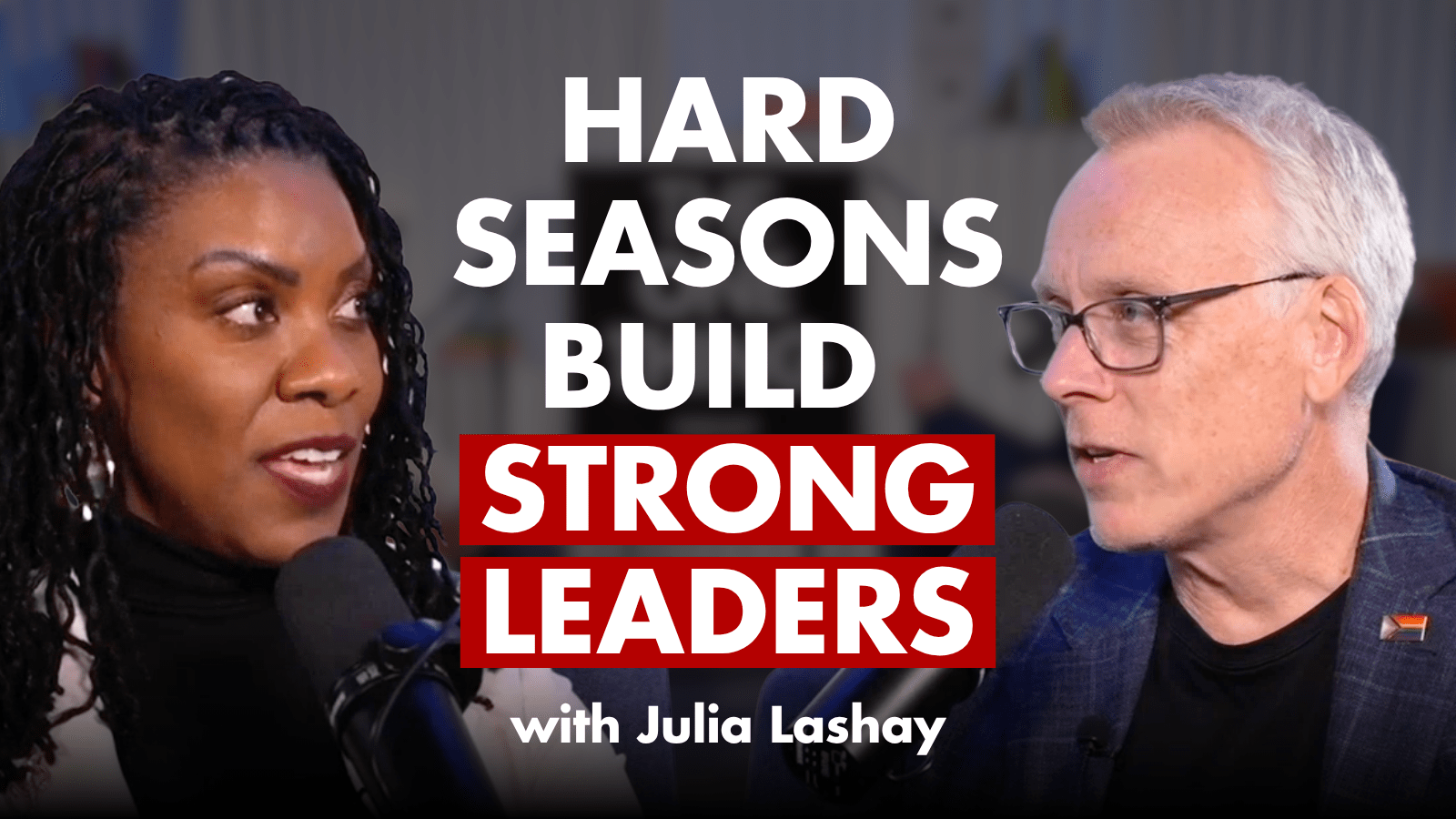
Hey, gang. This week, I’m talking to my good friend Julia Lashay Israel. I got to work with her for several years when she served at Keller Williams as our Director of Inclusion and got to see her navigate some really tough times, and she’s got amazing leadership.
Today, she’s written a book, she is a keynote speaker, and one of her big focuses is on resilience. She’s been through some incredibly tough times. And trigger warning, she is gonna talk about the loss of a child in this episode, but she’s also gonna talk about the tools that she’s learned on how to be a more resilient leader and how to show what better and how she’s teaching that all across the country.
I think there’s great stuff in this episode. I hope that you’ll take away at least one thing on how you can be a more resilient leader, a more resilient person in your life.
—————
Jay Papasan:
I’m Jay Papasan and this is The ONE Thing, your weekly guide to the simple steps that lead to extraordinary results.
—————
Jay Papasan:
Julia, welcome to the show.
Julia Lashay:
Jay, thank you for having me. I’m so excited. I’ve never been on The ONE Thing podcast. Long time listener.
Jay Papasan:
I know.
Julia Lashay:
First time visitor.
Jay Papasan:
And we’ve been like podcast partners. Like I was working with your team and y’all were building out y’all’s podcast, The Color of Money. And we got to work together for how many years.
Julia Lashay:
It’s been a while.
Jay Papasan:
It’s been a while. It’s probably-
Julia Lashay:
Probably six years.
Jay Papasan:
You think six years?
Julia Lashay:
Yeah.
Jay Papasan:
So, I’m super excited to explore some of your wisdom. Lately, you’ve been speaking and talking a lot about resilience. And I love that topic for our audience. We’ve got a lot of business owners. And business ownership, that’s easy, right? [0:01:41] resilience for that. I mean, it’s hard. Like stuff happens. People leave. Competitors show up, we don’t expect. And so, resilience is something that we need to be focused on, so that we can get through the tough times to get to the rewards. What started you down this journey?
Julia Lashay:
Well, many things. I think I’ve been an entrepreneur my entire adult life and I’ve seen a lot of things, and I’ve experienced a lot of things, and I learned that most people, entrepreneurs don’t fail because of lack of opportunities. They just don’t have a foundation strong enough to withstand the adversity or the market shift or the challenge, and they stop building.
Jay Papasan:
Wow.
Julia Lashay:
And they give up, they lose their momentum, and they don’t have the skills to stay in the game, whatever game they may be playing. So, being that I’ve experienced plenty of challenges my own self, I used it kind of as fuel to help other people in those scenarios.
Jay Papasan:
How about that?
Julia Lashay:
Yeah, where they can also maybe learn from my experience ’cause I don’t want the challenges I’ve been through to be wasted. At least, you can help someone else going through a similar thing.
Jay Papasan:
I share that philosophy. I do think as leaders, and you’re a leader, I think we have a responsibility. When we go through a tough moment, sometimes we need some distance, right? So, we can get some perspective. But how do we take the lessons from that, not just to serve ourselves in the future, but to serve other people. And it might be that we’re not leading an organization, but we’re a parent. Like can we pass those lessons in a way to our kids, right? So, you’ve had a life of lessons.
Julia Lashay:
I have had a life of lessons, That’s one way to put it. Yeah.
Jay Papasan:
Yeah. As a learning-based individual. So, like, without going super deep, but like, I know that you’ve, you’ve lost people you love. You’ve dealt with hardships in business. Can we just get a quick snapshot just so people understand, like you’re coming from this from a very real place.
Julia Lashay:
Absolutely. I talk about in the Keep Building talk, I talk a lot about my experience. I got licensed when I was 18 years old.
Jay Papasan:
Okay.
Julia Lashay:
And I bought my first house when I was 19. And by the time I was 23, I had six properties, property management company. I was doing well
Jay Papasan:
You came outta the gate strong.
Julia Lashay:
I did. And then 2008 happened, and I lost all of the properties. I had to file bankruptcy.
Jay Papasan:
For those of you who are too young or who are blessed with a short memory, we’re talking about the Great Recession, which hit a lot of folks hard.
Julia Lashay:
Yes, it did. Yes, it did. And as a real estate agent at that time, it was incredibly difficult. So, that was my first major loss, just financially losing things and having to start over. But then, I also have-
Jay Papasan:
You said that you actually had to declare bankruptcy during that period of year?
Julia Lashay:
I did, yeah. Oh, yeah.
Jay Papasan:
Ugh. Like how do you mentally weather that? ‘Cause I know a lot of people, it is there for a reason. It allows businesses to fail without-
Julia Lashay:
Yeah. And I didn’t see it that way. It was embarrassing. You know? A lot of people are embarrassed by it. Also, I couldn’t see another way out where I could get a clean start.
Jay Papasan:
That’s the whole point though. I think a lot of people see it as a sentence on them as an entrepreneur, not a reset. And it’s there because if it-
Julia Lashay:
Yeah, it was exactly a reset.
Jay Papasan:
In the absence of that, people can never get out from under the mistakes they made the first time to start again. And if you look at the most successful entrepreneurs, there’s usually a long series of failures to get them there. Maybe not resulting in that far, but like by design, bankruptcy not to be abused, but it is a tool to allow people a second chance.
Julia Lashay:
Absolutely.
Jay Papasan:
But then, it’s tough.
Julia Lashay:
And I was young. So, I had… like, I got a lot of life left. And obviously, I made a lot of mistakes. So, it was an opportunity to have a second chance and start over. Yeah.
Jay Papasan:
Okay.
Julia Lashay:
And then, I also share in that many years later, my son passed away from cancer. He came home from college with a pain in his leg. He was an athlete and they just were telling me, “Oh, you know, it’s some sort of athletic pain,” but it actually turned out to be a tumor. And when he came home, he was late stage four and there wasn’t anything that we could do for him. And he passed away four months after just being diagnosed with cancer. And so, obviously, that was a major challenge in my-
Jay Papasan:
How does a parent… and you were a single parent at the time, how do you even… I mean, you had another child. I mean, maybe that’s the answer. Like how do you continue to function when you go through something that hard?
Julia Lashay:
You know, you say you had another child. My other child, he began to self-medicate as a result. So, it was an incredibly challenging situation. And honestly, there’s a tool or a template – some people may be familiar with it – a GPS, a 411. I-
Jay Papasan:
We teach them. The people who listen to this podcast have heard those words.
Julia Lashay:
That’s fantastic. I actually used that because obviously, grief is a real thing.
Jay Papasan:
Yes.
Julia Lashay:
And depression is a real thing. These are real things that happen in real life
Jay Papasan:
It happens to strong people.
Julia Lashay:
Yes. Oh, yeah. And so, I used those tools to just… it’s like an emotional regulation. You feel the pain, you feel all of it, but you can’t stay there. I knew I couldn’t stay in it forever, and I wanted to do something. So, I’d set a goal.
Jay Papasan:
Right.
Julia Lashay:
And I would use the 411 to just put something on there. Now, I wasn’t gonna be able to accomplish all the things that I used to accomplish prior to the grief, but I would put like, “Go to the grocery store.” That’s my top 20 ’cause getting out of the bed and getting dressed and going to the grocery store was like a big deal. Call the telephone company. And I would literally make a 411 and check off a couple things. And there’d be small things, like “I went to the grocery store,” “Boom, I called the people,” like you did that girl.
Jay Papasan:
Yeah.
Julia Lashay:
You did. And then that’d be it. That’s it. That’s all I can do.
Jay Papasan:
[Crosstalk] it a little bit. And I mean, I will say, I say people are familiar. GPS is The ONE Thing business plan, and the 411 is how a lot of us track our 20%, which is the big rocks, the things that are important.
Julia Lashay:
Which is why I made a [crosstalk] say like-
Jay Papasan:
And a lot of people would say the grocery store
Julia Lashay:
Is not a 20% thing.
Jay Papasan:
… is a task.
Julia Lashay:
Correct.
Jay Papasan:
But like when you’re in a state where functioning, right, is tough, like I think that a lot of times, people, they want to do big things, and you’ve done big things. Up to 26 years, you’d started business, and you’d done all these things. And now, these feel so small and inconsequential. We do have to give ourselves credit for progress.
Julia Lashay:
Absolutely. I pat myself on the back. And maybe this week, I did two things. Next week, I’ll do three. And I literally slow walked it until I was back building businesses and running businesses and doing all the things. But I actually used those tools as a way to get out of whatever emotional state that you might be in, so that I didn’t get stuck there.
Jay Papasan:
Right.
Julia Lashay:
I didn’t wanna live in that space. I feel it, but you gotta figure out how to put one foot in front of the other.
Jay Papasan:
A lot of people tell us in that moment, there’s a silver lining to this or whatever. And I’ve been told that in those moments, not my own version of yours. And just wanna slap ’em. You’re like, “I know, I know what you mean. But I’m not ready to receive that.” But with enough distance and perspective, there are lessons and you’ve learned a few and you’re sharing them now.
Julia Lashay:
Yeah. Well, you know, there’s a pastor, TD Jakes. He had a sermon one time, and he said, “Nothing you’ve been through will be wasted.” And so, I really took that to heart and meant like all of my life challenges, all of the lessons, none of those are for naught. There is something that I can offer to someone else.
Like I just finished speaking to a room full of people about resilience and every time someone comes and says, “Thank you for sharing that, I was stuck here. But now that I’ve heard that…” And so, I use those experiences and those challenges to help other people get past things that I’ve already been through because it’s not for a waste. There’s a reason and a purpose still to everything that we encounter in life.
Jay Papasan:
Oh. But even if they… like they hear the tools, and they’re not even ready yet to do more than go to the grocery store, it gives them hope when someone else shares and is willing to be transparent about their journey, and that they’ve gotten to the other side ’cause most of the time, when someone walks up and you’re giving a keynote, like you’re, if you’re watching us on YouTube, you’re dressed like a million bucks, right?
Julia Lashay:
Thank you.
Jay Papasan:
You show up like, “Wow, that person must be so successful.” And they tell themselves this story that success is a series of successes, not a series of failures and humbling and obstacles that we actually have to overcome to get there.
Julia Lashay:
That’s right, yeah.
Jay Papasan:
But in that sharing, you’re like, oh, they are a lot like me. And I can get there too. So, thank you for the bravery to get through the other side to share. That’s a big deal.
Julia Lashay:
Yeah. And it’s therapeutic in a way as well, right, to be able to share with someone that I did make it, and here’s how you can too, and here’s how you can continue to build and here’s how you can overcome challenges. They can be done. And there’s some therapy in that.
Jay Papasan:
Yeah, yeah, which we will not pretend to be therapists, but we can offer some solutions.
Julia Lashay:
I am wildly unqualified. Friends, I am not qualified as anyone’s therapist. Let’s just make this clear at all.
Jay Papasan:
So, you kind of shared your first steps were around, like, giving yourself clear concrete goals, so that you could start measuring like, “I am making some progress.” You’ve now got distance. And I know that you’ve got some strategies that you share when you talk about this. Using The ONE Thing, you know, we always ask, like, if we’re gonna start somewhere, now that you have distance and perspective, if someone were in a similar spot, where would you say to start? What’s the one thing to focus on if you’ve been in a rough patch and you’re trying to emerge?
Julia Lashay:
I would say to start with your purpose and your passion.
Jay Papasan:
Okay.
Julia Lashay:
And, you know, they say there’s… the two most important days of your life are the day you’re born and the day you find out why.
Jay Papasan:
Right. Everybody says, that’s Mark Twain, but I looked it up and-
Julia Lashay:
I have no idea who it is but-
Jay Papasan:
… he never said that, but he gets… he’s so clever, they all say-
Julia Lashay:
Who said it?
Jay Papasan:
I have no idea.
Julia Lashay:
Well, so-
Jay Papasan:
I think it’s one of those-
Julia Lashay:
That’s why I said they say. I don’t know who they is, but-
Jay Papasan:
Well, you’re smart because, like, it’s Churchill, Mark Twain and like Abraham Lincoln. It’s like they said a lot of good things, but I love the quote ’cause there is truth, right? The day you’re born and then the day you find out why.
Julia Lashay:
And that purpose, your why, it fuels everything you do. When you’re able to identify the purpose and you can tie a vision and a mission to that. It fuels everything else. You know, it creates a passion. I have a number of things that I think my purpose is, but I also think it is to help inspire and motivate other people to build big lives and big businesses. When you identify what that is, and it’s oftentimes something that you’re really good at or something that you spend hours doing and you lose track of time doing it. Like you probably write a lot.
Jay Papasan:
Yeah.
Julia Lashay:
And read a lot, and you’re passionate about those things. When you’re able to identify that and build a business and a life around that, it fuels and drives pretty much everything.
Jay Papasan:
Let’s unpack that. So, your purpose statement, did you just say it? Just like, it came out of your life to help other people?
Julia Lashay:
Yeah. I would call it my mission statement. You know how you have a mission statement for your business-
Jay Papasan:
Yeah.
Julia Lashay:
… and you have a mission for your life. I would say my mission is to inspire and motivate people to build big lives and big businesses through entrepreneurship and real estate.
Jay Papasan:
So, in that period of darkness, like, could you articulate that then? Like what does it look like to figure that out? Like, especially when you’re in a dark place, like sometimes thinking about the future, it’s even hard.
Julia Lashay:
There is no future.
Jay Papasan:
Right.
Julia Lashay:
I remember going to an event, an event that I’ve always been at, and they asked the same questions. We always ask that, that now I’d be able to easily answer and I couldn’t answer any of them because I see no hope for the future in this moment. Like, I have no idea. They’re like, “So, what is your big why?” I don’t have one ’cause it used to be my family. But now, I was divorced, my child is dead. You know, like, I don’t know what my why is anymore. It’s shifted.
And there’s plenty of times in life where it may shift, and it may change, and your passion may change, and you just redefine that and you reevaluate. Ask yourself a series of questions and rediscover your purpose and your passion. It can change throughout life. It’s not always the same thing, but identifying that really helps to anything that you do in life.
Jay Papasan:
It sounds like we need to give ourselves a little grace and be patient that it’s not like a road to Damascus where the light comes out of the heavens and it just hits you. You’ve got it. Eureka.
Julia Lashay:
Yeah, no.
Jay Papasan:
No. It’s something that-
Julia Lashay:
Again, depression is a very real thing. Grief is a very real thing. And it’s okay to feel those feelings. And how do we move forward, you know, so that you don’t get stuck in it?
Jay Papasan:
I would suggest, and I would love for someone… I know you teach a lot of people and you help a lot of people. I know a lot of research suggests in the absence of knowing what to do, helping other people is one of the most proven ways to feel better about yourself. Like, literally, people who donate their time live longer. Like they’ve talked about the act of giving is not that altruistic because it’s so beneficial. So-
Julia Lashay:
Yeah, I love that you said that because the only reason I started using the 411 as my tool to move forward was because I was in a group of women and another lady had lost her child and she said, “This is what…” She posted a picture of herself, “This is what I looked like before my son died, and this is what I looked like after.” Well, the before picture, she had like combed her hair and got dressed. And then, the after picture, she hadn’t. So, I started coaching these women. I said, “I have a suggestion. Why don’t we today just, like, get dressed?”
Jay Papasan:
Okay.
Julia Lashay:
That’s it. Let’s just do that today.
Jay Papasan:
That most fundamental self-care. We’re just going to help ourselves look presentable.
Julia Lashay:
And so, I found myself coaching these other women. And then, I recommended, “You should use this tool,” which is how I ended up using the tool is because I was in the process of trying to help someone else. And ultimately, ended up helping myself. Yes. Yeah.
Jay Papasan:
Well, there’s great truth and I hope people will just recognize that. If you really, really aren’t clear, you’ll never regret exploring just helping other people. Even if you feel unqualified going in, I mean, go into soup kitchen. Like ladle some soup. Go volunteer at your church. Go do something because there is something soul giving and life affirming about helping other people that creates just a little bit of positive momentum.
Julia Lashay:
That’s awesome. Absolutely. I love that.
Jay Papasan:
All right. Well, we need to take a little break. So, we’ll take a quick break and on the other side I wanna unpack some other strategies ’cause I know you’ve got more.
Julia Lashay:
Absolutely.
—————-
Jay Papasan:
All right. Well, welcome back everybody. So, in the first half, we kind of unpacked some of your journey where you started explore this, and we talked about how the power of purpose and mission. And if those are just not clear, maybe just helping other people. What are some other things we can do to maybe find our resilience to kind of keep moving forward? Because like something you said in the beginning, it’s not for lack of opportunity that business owners don’t hit their goals or find success. It’s about their resilience in making it through these tough times that allows them to kind of reap the rewards of all the hard work that they do.
Julia Lashay:
Well, yeah, a couple of the other ones. One for sure is embracing failure as a learning lesson. Like we talked about me filing bankruptcy. I could have saw that as a failure. Not really, learned from that, never did that again.
Jay Papasan:
Okay, yeah.
Julia Lashay:
Never did that again, you know. And failure’s part of it. It is an inevitable part of the entrepreneurial journey. If you think you’re gonna build some massive anything and not have… I don’t even call ’em failures, but learning lessons along the way, you’re fooling yourself. It is a series of mistakes that you turn into learning lessons. that you say, “Well, that didn’t work.” And I know a hundred ways that don’t work, right? Only because I’ve actually done them. But you don’t learn those lessons unless you actually make the mistakes. People are afraid of making mistakes, so they don’t do anything.
Jay Papasan:
There’s two lessons I’m hearing here that I think our audience, we have a certain percentage of our audience, we talk about there’s doers who need space to dream, like they’re always doing, which is a form of hiding sometimes from a bigger picture. And then, there’s dreamers who make space to do. And in that group, we’ve got people, they might self-describe as, “I’m a perfectionist.”
And the challenge of that is if you’re trying to avoid making those mistakes, I wanna learn about the mistake before I start, then they’re not taking action. And most of the learning does happen in the action phase, not in the planning and the perfection stage. It doesn’t happen on the spreadsheet, right? When we think about our success, we see a highlight reel. We don’t see everything else that happened. All the stuff that you know, ends up on the cutting room floor. So, I do think we have to understand that if you understand that failure is part of the game, it is part of the price of admission for business ownership and big success, now, learning from those lessons.
All right. So, if I can be brave enough to say, “I screwed that up,” how do I learn from it?
Julia Lashay:
Well, let me analyze what went wrong. Like what exactly in this did I do? Sometimes people like to point fingers at everyone else, but we always have some DNA in it.
Jay Papasan:
Right.
Julia Lashay:
Like, what could I-
Jay Papasan:
It’s called being accountable.
Julia Lashay:
That’s what we call being accountable, yeah.
Jay Papasan:
And so like, what could I have done differently for a different outcome? You have to analyze that. And then, learn from the lesson of maybe I could pivot here or shift here, or maybe if I could have said this differently or done this different, or in some scenarios you say, “You know what? I couldn’t have done anything differently. That’s just part of it.”
Jay Papasan:
One of the lessons I learned from a friend, he’s a creator, he just said these people… he was doing a big launch of a course he was trying to sell. And he ends up being a coach to a lot of people who do this. And he goes, “One of the things that was hardest for me to accept is that I failed. And it wasn’t that I actually did anything wrong. Sometimes, you fail just ’cause the timing wasn’t right.”
Julia Lashay:
All 100%, yeah.
Jay Papasan:
So, like the first time you fail, like maybe the mistakes are screaming at you, right? You tripped while you were running a race. Okay. That was a mistake. You don’t wanna repeat that. But if it felt good, maybe you do need to try it a couple of times because it might be the right formula that you’re not performing perfectly yet, but you don’t know enough to see it. Or it could just be something as simple as timing. So, I think this is a skill that you can learn.
Julia Lashay:
It’s not the end all. Remember that book I wrote?
Jay Papasan:
Yeah.
Julia Lashay:
I wrote a book. Flop. Total flop. One, I partnered with the wrong people, Two, It wasn’t really my authentic voice. I don’t like it.
Jay Papasan:
Okay.
Julia Lashay:
I mean, it’s been helping a lot of people. A lot of people, it still helps. It’s not something that I would say, “This is my best work ever.” And so, some might call that a failure. Not me. I learned a lot. I called you. I called Phil Jones. I called a ton of people and I learned a lot. At first, I was like, “I’m never doing that again.”
Jay Papasan:
That’s a frustrating lesson ’cause it’s really hard. I was very proud of you and congratulated you ’cause writing a book is hard.
Julia Lashay:
Yes, it was.
Jay Papasan:
But I know this from my time at Harper Collins and I just heard this from editors, you would hear them. It’s like a lot of times the way someone learns to write a great novel is ’cause they had to write a bad one.
Julia Lashay:
That’s right. That’s how I feel better now.
Jay Papasan:
And there’s no other way to learn. And I’m sorry you had to learn that way.
Julia Lashay:
Yeah, I learned the hard way. I learned a lot of things the hard way. Lesson nonetheless, right. , I actually literally learned a ton from that. So, the next book, that is my voice, that is me, that is partnered with the right people. It’s gonna be phenomenal, no doubt, but only because I had that experience. Had I not had that experience, one, the next time, I wouldn’t even be as excited about it as I could have been because I’ve had a lot of experience on what not to do and what I would do differently.
So, I analyzed what I did wrong, all the things that went wrong. I know what I’ll do differently next time. And next time, it would be a… It’s just part of it.
Jay Papasan:
Right. I mean-
Julia Lashay:
It’s just part of it.
Jay Papasan:
… as business people, we keep some form of a score, right? A lot of times, in book sales, it could be reviews, it could be readers. There’s a lot of ways to keep scores. Some people talk about dollars. It doesn’t matter, but we keep score, so that we have something to measure success by. Otherwise, it’s just how you feel about it ’cause when you said, “My book was a flop,” I was like, “Well, let’s define flop,” because your flop, like the average-
Julia Lashay:
Yeah, let’s not. Yeah.
Jay Papasan:
… the average book sells 150 copies, not a thousand, 150. Did you sell more than 150?
Julia Lashay:
I believe I did.
Jay Papasan:
So, you’re not a flop.
Julia Lashay:
Yeah. Wow, that’s incredible.
Jay Papasan:
In the grand scheme. But it didn’t meet your expectations. And you measured. So, as business people, we have some way of keeping score ’cause that allows us to ask, “Well, did we do better the next time?” And so, that’s a part of it. So, we gotta learn from our failures. I’m gonna introduce, and you can tell me if this has been in your experience. A lot of times, I’m too close to the problem to see it. And so, one of the ways that we can learn from our failures is to get feedback from other people.
So, you talk to me, you talk to Phil, an accomplished author. My friend, Jenny Wood, amazing keynote. She’s been on this podcast. She got off the stage, and she almost missed her flight ’cause she just wanted me not to tell her how good she was. “Tell me everything I could have done better.” She is committed to being her best version. And so, she’s seeking an outside perspective ’cause you know what it’s like. You’re giving a keynote, you’re so focused.
I actually talked to a professional speaker coach and I said, “Do people have amnesia on stage?” He goes, “Yeah.” And I was like, “What is that? I’ll come off stage and people said, ‘That was so great,’ and I can’t remember a word I said.
Julia Lashay:
At all, at all. It happens to me all the time. What did I say? Yeah.
Jay Papasan:
So, sometimes, we’re in a state, and this is actually the right state they call it, it’s like a part of flow. You are so focused on the thing that you’re doing, your brain is not reserving any resources for recording it. So, it’s like you have a little blip of time. 45 minutes you were on stage. That’s why football players, they watch tape. And they watch it with who?
Julia Lashay:
They watch it with the coach.
Jay Papasan:
That’s right.
Julia Lashay:
Yeah. Well, I love that you’re saying that ’cause that’s my other strategy. It’s my last one.
Jay Papasan:
Oh, I just… See? See?
Julia Lashay:
My last one is surrounding yourself with the right people.
Jay Papasan:
There you go.
Julia Lashay:
Yeah. Because the right people are gonna give you not just opportunities – you’ve given me opportunities – but also feedback, knowledge, perspective. You have a very different perspective. I didn’t even know what I said. You can say, “Well, what you said was…” So, I like to bring somebody with me that I know is an authentic feedback provider ’cause a lot of people clap for you. They’re all, “Oh, that was the best thing I’ve ever seen.”
Jay Papasan:
And that’s not to be taken for granted-
Julia Lashay:
No, that’s great.
Jay Papasan:
… because some people don’t even hear the support when it’s given. We all need to be nurtured. We need someone who believes in us and tells us they believe in us. And that’s so important.
Julia Lashay:
Yes, yeah, but the people that surround you are so incredibly important. But they also – to your point – give you support. So, through all of those experiences that I’ve had, especially when my son was sick, he was sick just four short months, but my office, the brokerage, the Keller Williams brokerage I was at at the time in a team meeting, they raised $30,000, so I didn’t have to come back to work. And, you know-
Jay Papasan:
Wow.
Julia Lashay:
And I-
Jay Papasan:
Wow, hold on. People need to digest that. This is a small real estate business.
Julia Lashay:
In an hour, they raised $30,000.
Jay Papasan:
And at that moment, now, that, you can say, “Oh, the company culture.” People did that because they believed and liked and cared about you two.
Julia Lashay:
That’s right. That’s absolutely what they did.
Jay Papasan:
And so, it was not just financial support.
Julia Lashay:
No. My family were like, “Who are these people?” Yeah. “Where are they coming from?” But I mean, all kinds of things. Actually, our house was packed up. I was moving to Texas the day that he was diagnosed. When we found out what was wrong with him, my house was empty, the furniture was gone. A stager came with a truck full of furniture, put furniture in our house.
I liked to exercise. That was my healthy thing. I came home one day, my son’s like, “Mom, you gotta come home.” I was at the grocery store. They had bought me a Peloton. It was delivered, so that I could work out and care for him at home. Like my support network is like the real deal. And those people, they don’t just give opportunity or knowledge or perspective. They give very necessary support. Hands down. Without my support network, I would not be anywhere that I am today.
So, yes, the people that clap for you when you fall down and you think you failed, I need those people that gas me back up. Like, “Girl, it’s because you’re…”
Jay Papasan:
You didn’t flop, girl. You didn’t flop.
Julia Lashay:
Yes, yes, yes. I didn’t. 150? Yeah. Like, you need people that do that, that support network. So, surrounding yourself with those people. Some people aren’t surrounded by people like that though.
Jay Papasan:
Right.
Julia Lashay:
You know.
Jay Papasan:
We live in an age where we’ve never been more connected, and also the feelings of isolation have never been higher. So, when we talk about community, it’s not just how many people are following you on Facebook, it’s not how many Facebook friends you have. I think that it’s something deeper, right? It’s the people that maybe you actually get to see or that you can pick up the phone. I work with people and I just love it.
Like my family has tradition, every Sunday we get on Zoom and we talk to each other. We did it in COVID and we just kept doing it. And when I hear like, “Oh, like, every morning I talk to my sister,” or whatever, they’ve got community of family and friends.
And one of our former guest woman named Liz Bohannon, you know, she shared the longitudinal study from Harvard that they’ve studied for 80 something years, the thing that correlates most to the longest life, living longest, not dying is the quality of your community. And it’s not just your personal family. It’s friends.
Julia Lashay:
Yeah. No, definitely. I believe that wholeheartedly.
Jay Papasan:
It is huge.
Julia Lashay:
And so, for people that don’t have that, back to what you said before is you can be that for someone and build a community that way because I understand not having family. I don’t have a ton of family, but my friends, my sister friends, like thicker than blood.
Like when I’m really, really down, like we, we went through a lot of challenges in Minneapolis in January. One, I just couldn’t take it one day, I just jumped on a plane, and I found myself in Orlando. And my friends that happened to be there, they came together. We laughed. We sat at the bar. I’m surprised they didn’t kick us out. You know, like they… but it was just the support of having people that care about you. And they’re not my blood family. I don’t have a lot of blood family. They’re not my blood family. They’re friends that I have poured into, so that they can pour back into me ’cause I didn’t have those people. But you can start by being that person-
Jay Papasan:
I love that.
Julia Lashay:
… for people.
Jay Papasan:
I love that.
Julia Lashay:
‘Cause I know the whole… Lynn talks… Bohannon, Liz Bohannon, excuse me, she talks about the loneliness epidemic.
Jay Papasan:
Yes.
Julia Lashay:
Yeah. And so, part of that is, that’s real also.
Jay Papasan:
Yeah. Especially as business owners, right?
Julia Lashay:
And I’ve experienced that.
Jay Papasan:
We have to put a brave face on it with our people. And that feels even more isolating if you don’t have an outlet. You don’t have a true friend that you can go to. And it’s like, “Man, I failed the crap out of today. And I feel horrible, and I need someone to talk to me and maybe lift me back up.”
Julia Lashay:
Yep, that network is so important. If you don’t have that, you can be that and build friendships and relationships and community that way, ’cause I know a lot of people don’t have that. But yeah, knowing who you surround your… surrounding yourself with the right people, probably, I would say, I should have started with number one because those people are so incredibly impactful. Your circle elevates you. They have a lot to do with your trajectory.
And then, one of my favorite quotes that I use is, if your circle doesn’t elevate you, it’s not a circle, it’s a cage. And so, how do you get away from those people that are not elevating you, that are not pouring into you, that are draining you and your circle is not actually helping you get to where you wanna go? How do you find a different circle of people?
Jay Papasan:
Okay. So, if that circle is not… Say that again.
Julia Lashay:
If the circle is not elevating you, inspiring you, uplifting you, it’s not a circle, it’s a cage.
Jay Papasan:
Wow. Okay. That’s significant. I remember my first kind of connection with that sort of thinking, I can’t remember, maybe it was Dave Jenks, our late writing partner. He was a huge fan of Jim Rohn, and there’s a Jim Rohn quote that is Jim Rohn, and I’m gonna butcher it, but he did say something like this, that you’re the average of the five people you spend the most time with.
Julia Lashay:
Absolutely, yes.
Jay Papasan:
And the whole call there was, you can love people and they can be family even, but you don’t have to give them that much time. You can start investing your time with people that help you grow and help you move forward. And it’s about being a little bit maybe more selective. And I think that’s a big… that’s been a big part of my journey when I went through my toughest times, is I realized, my coach, our project, we said we’re gonna re-engineer your village. You need to be purposeful about picking the people that you’re gonna surround yourself with, so that they’re supporting you and they’re there for you.
Julia Lashay:
I love that.
Jay Papasan:
But I think you’ve topped it all. Go first. Go first. Be that for someone else.
Julia Lashay:
Absolutely. And by the way, I don’t know who gave the quote, I think it was Nipsey Hussle. I don’t know. I’m not sure. The cage quote, I don’t know. But also, my pastor used to have on his desk, it says, “If you can’t change the people around you, change the people around you.” Right? So, like, I also live by that ’cause maybe your family or whatever, you know, find a different circle.
Jay Papasan:
Yeah. And it doesn’t mean you can’t still love your family.
Julia Lashay:
Love them from over there.
Jay Papasan:
Yeah, exactly.
Julia Lashay:
Yeah.
Jay Papasan:
Maybe from another town.
Julia Lashay:
Yep. Yep. Definitely another town. Yeah,
Jay Papasan:
Yeah. I love that. All right. Well, we have to wrap it up.
Julia Lashay:
Sure, yeah.
Jay Papasan:
And I know that when you travel the country and you share this message in a keynote, you’ve got a lot more to share. But thank you for sharing what you did today.
Julia Lashay:
Thank you for allowing me to share.
Jay Papasan:
So, you were that for a lot of people listening today.
Julia Lashay:
Thank you.
Jay Papasan:
ANd I think they’re gonna reach out and say, “I needed to hear that today.”
Julia Lashay:
Good. I hope so. I hope so.
Jay Papasan:
So, thank you. You’re living your mission right now.
Julia Lashay:
Thank you, Jay. I appreciate it.
Jay Papasan:
What’s one challenge that we can give the people listening that maybe need to take action on what they’ve heard? What’s one small thing they can do this week?
Julia Lashay:
I don’t know if it would even be small. It’s kind of a big task, but I would at least start down the journey of determining what your mission is. Like often, as business people, we know what our mission statement is for our business, but what’s the mission for your life?
Jay Papasan:
Okay.
Julia Lashay:
I think once you identify that and that’s like maybe not a small one thing, but once you identify that one thing, everything else kind of falls in place.
Jay Papasan:
When we teach and coach people, that’s great wisdom. And even if it takes you a long time, it’s the ultimate payoff ’cause that’s the thing that pulls you forward. Purpose allows us something to pull us on our dark days, who gets us outta bed when we don’t wanna get outta bed. It’s a worthwhile journey. And we teach people to start with our core values, which is one of our core things that we train. Like a good little gateway drug to our purpose. And you could do that in 30 minutes. So, I would tell people to go check that out if they want to.
Julia Lashay:
Absolutely. I’ve done that. Yeah.
Jay Papasan:
Yes.
Julia Lashay:
Yeah.
Jay Papasan:
All right. Again, thank you, Julia.
Julia Lashay:
Thank you, Jay.
Jay Papasan:
You’ve really poured into our audience. I really appreciate you as a human being.
Julia Lashay:
Thank you. I appreciate you. Back at you. Thanks everyone.
———–
Disclaimer:
This podcast is for general informational purposes only. The views, thoughts and opinions of the guests represent those of the guests and not ProduKtive or Keller Williams Realty LLC and their affiliates and should not be construed as financial, economic, legal, tax or other advice. This podcast is provided without any warranty or guarantee of its accuracy, completeness, timeliness or results from using the information.