Jay Papasan:
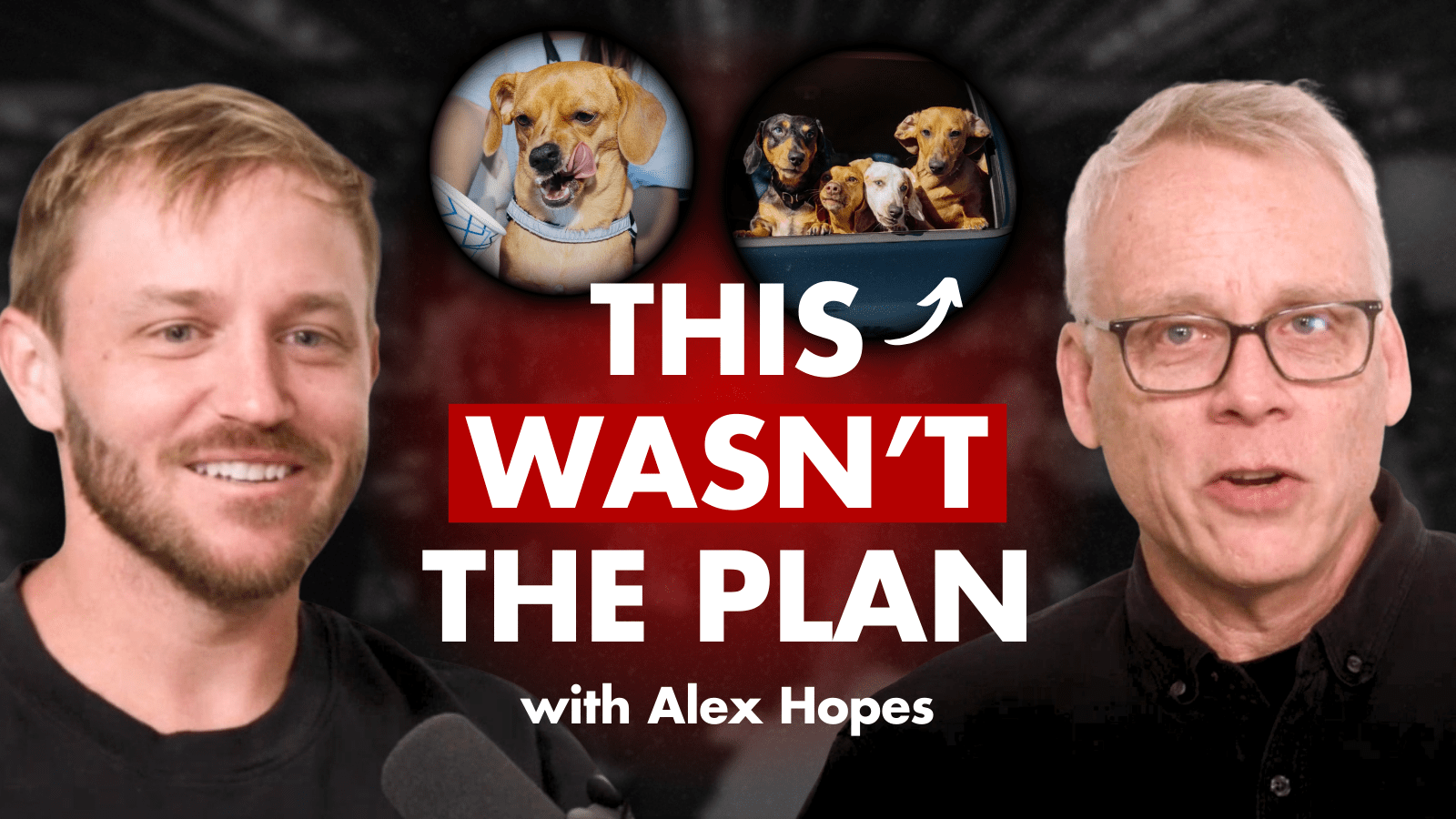
This week I’m chatting with my friend Alex Hopes of ZilkerBark! We’ll be talking about his journey as an entrepreneur, from starting with a pivot he didn’t expect in life, being open to the new route that life threw at him, and then going all in on a dog photography business that’s to become an exponentially growing dog event business. So, if you’re a fan of Wiener Dogs, Pugs and Goldens, you have a lot to learn here. But basically, any entrepreneur that’s had to kind of zig when life throws a zag at them, you’ve got lessons to learn from this episode.
———-
Jay Papasan:
I’m Jay Papasan and this is The ONE Thing, your weekly guide to the simple steps that lead to extraordinary results.
———-
Jay Papasan:
Alex, welcome to The ONE Thing podcast. I’m so happy to finally have you here.
Alex Hopes:
Yeah, I’m excited to be here. This is awesome. It’s great to see your space and get to converse with you about all these things.
Jay Papasan:
I know. It’s been a while since we got to hang out in person.
Alex Hopes:
It has. Yeah. I feel like the last time I probably saw you in person was at Zilker Park with the dogs or something. Yeah.
Jay Papasan:
And that’s like the story. I think when we were looking at your story, your business story has been a series of pivots. And I think, a lot of us, like, change for a lot of people is scary and weird, but like the pivots that you’ve made have turned out pretty incredible. And you shared with me recently, like you pivoted, and we’ll get to the whole story, like from pure dog photography to dog events. Can you tell us a little bit about that?
Alex Hopes:
Yeah. You know, it’s funny. I was actually an elementary education major. So, my former self saw myself teaching elementary students. And now, I’m hosting dog meetups. So, it’s certainly an interesting direction, but I feel really fortunate to be in this position and have the response from the dog communities that we’ve had. What began as a dog photography project, simply going to Zilker Park and photographing dogs, got kind of popular on social media.
Jay Papasan:
I mean, your Instagram got huge. ZilkerBark! you called it, because it’s Zilker Park, you made it ZilkerBark!
Alex Hopes:
Yeah.
Jay Papasan:
How big did it get in the beginning? I mean, I just remember like you had a hundred thousand or something [indecipherable].
Alex Hopes:
Yeah. So, originally, and this maybe goes more into local government inefficiencies than anything, but I had the Instagram handle @ZilkerPark for whatever reason, because surely they didn’t. Surely, they didn’t go out and get that.
Jay Papasan:
Are you serious?
Alex Hopes:
Yeah. So originally the account was called @ZilkerPark. And I was like, “Well, I’ll just go photograph the dogs of the park.” I think that would be a great way to use this account. And after about eight months and 20,000 followers, I think that was when my friend recommended that I change it to @zilkerbark and I was like, “Oh, that’s perfect.” Plus now, I can actually make it a business instead of having it be something that’s gonna be…
Jay Papasan:
Did you end up selling Zilker Park to the city or do you still own it?
Alex Hopes:
No. I still have it. And I also have @bluesonthegreen as well, so…
Jay Papasan:
Oh wow!
Alex Hopes:
Yeah. For all the…
Jay Papasan:
For our Austinites out there that’s like a big thing in Austin to go to Zilker Park for Blues on the Green.
Alex Hopes:
Yeah, yeah. So, after that, you know, the account kind of got some social momentum. You know, it just came down to people being able to see the dogs of the community, have their dogs featured. I think it was just a fun way for people to engage with… you know, have the dog community engage with the account and-
Jay Papasan:
That’s how we met. I was-
Alex Hopes:
Yeah.
Jay Papasan:
We were training our Brittany Taco, and you took pictures of him drinking from a water fountain.
Alex Hopes:
Yeah.
Jay Papasan:
And posted it on the… I was like, “I was so proud. I was a proud dog daddy.”
Alex Hopes:
Well, and that’s the beautiful thing about it is it’s one-off experiences with each person and leaving one person with such a great experience, and they tell their friends. And slowly, it starts to build. I don’t know that there’s a better way, word of mouth marketing is always gonna be the best. That’s gonna be-
Jay Papasan:
Always.
Alex Hopes:
… personal recommendation, it goes a long way. And having that be kind of the start of the business went really well. And I think over the course of a few years, we built the account to 150,000 followers. But the beauty of it is it’s largely local. So, we were able to… when we do things, whether it’d be dog portraits or events or anything like that, we get a really big community response. And that’s been-
Jay Papasan:
You would do, like, early on, like Valentine’s Day or something, like you would have a holiday and say, come get a portrait with your dog at Joe’s Coffee or something.
Alex Hopes:
Yeah. And in my early days, every event that I did, I donated every penny to nonprofits, which in retrospect, I donated too much because it burned me out of the degree of work I was putting in, but it was a really cool mission and the community got behind it really easily.
Jay Papasan:
Yeah, I think strategic given is important in business and maybe not 100%, so that there’s some reward for the work done. But I do think it drives a lot of interest and people feel good about paying for things when they know it’s going to a cause that matters to them.
Jay Papasan:
Totally. Yeah. And Austin, I mean, Austin is such a dog-friendly community first and foremost, but it’s also very adoption forward. So, I think being able to, kind of, showcase that is very Austin.
Jay Papasan:
That’s who you mostly supported, like Austin Pets Alive or something?
Alex Hopes:
Yeah, Austin Pets Alive, Austin Animal Center, and Emancipet, which I could get all into that, but yeah, I love supporting the spay and neuter mission and trying to prevent dogs from ending up in the shelter.
Jay Papasan:
So, it starts with dog photography. You would do portraits. I’ve, like, given gift cards to have friends, like, get their dog portraits. And like, the crazy thing is the first time I interviewed for a whole other podcast years ago, like you just shared like randomly that you’re this professional photographer that happened to be colorblind.
Alex Hopes:
Yeah.
Jay Papasan:
And I thought that was the most interesting thing.
Alex Hopes:
Yeah. Well, you know, it’s funny. And early on, I basically only photographed dogs. There’s no people in the photos. And now, there are people in the photos, so it matters a little bit more.But you know, the nice thing is these dog skin tones or fur tones are a little more open to interpretation than people skin tones are, I guess. So, if I’m a little off, people don’t push back as much. Maybe they just think it’s a creative freedom that I’m taking with there.
Jay Papasan:
I love it, because sometimes our constraints force us. You were sharing technical stuff. like ” I do these kinds of lenses.” You focused on other aspects of the photography to make it come alive. And a lot of times people think, “Oh, I have to check all of these boxes to do the thing I love.” And you’re walking evidence that even though people might have said, “Well, maybe you shouldn’t do photography,” you can clearly do it and blow it up big. You just found a workaround. That constraint forced you to come up with other solutions. I know at one point your girlfriend, now wife, was helping you. Some of that, but like, yeah, it’s encouraging to hear that people can break out and do something big around their passion, even though they had some sort of constraint.
Alex Hopes:
Yeah. Well, I think that from the constraint perspective, I think that’s also echoed through other areas of photography. For the most part, I would go out with one camera and one lens, one focal length.
Jay Papasan:
And a lot of treats.
Alex Hopes:
And a lot of treats, yeah. And really the big thing was, the more options that you have for trying to create, sometimes it ends up where you’re doing a lot of things in an average way, instead of really finding that thing that you do that’s really gonna stand out.
Jay Papasan:
Well, now, you’re speaking our love language. You’re talking The ONE Thing there.
Alex Hopes:
Yeah.
Jay Papasan:
Yeah. So, like, yeah, I’ve got this thing that I can really pursue. And by focusing on it, I can become better and better and better.
Alex Hopes:
Right.
Jay Papasan:
Like you capture so many pictures of dogs, like the perfect… I mean, maybe you take a thousand and pick one. But I just remember I feel like you captured the personality of the dog.
Alex Hopes:
Oh, yeah.
Jay Papasan:
Not just a nice picture of them.
Alex Hopes:
Totally. And that’s what it’s really about. And that’s one of my favorite things about dog photography is you never have to solicit a look. You never have to say, “Okay, smile.” It’s just like the dogs are going to be who they are. And nine times out of ten, if you get that photo of a person with their lip caught in their teeth, they probably don’t want it, but that’s the one the dog owners like.
Jay Papasan:
Yeah. So, you started there, you were doing portraits. You started with events. Where did it go from there?
Alex Hopes:
Yeah. So, we started doing the events, and there were small time events relative to what we’re doing now. And at this point, I’ve probably done a hundred to 125 events. I mean, this is our 10-year anniversary this year.
Jay Papasan:
Congratulations.
Alex Hopes:
It’s wild to think about. And we photographed over 40,000 dogs. I mean, it’s just like, I don’t know that there’s a type of dog that I haven’t met yet. And these events are a big part of that because we’ll have sometimes 100 to 500 dogs come through a portrait event. And the events have all gone really well. But one of the things that I noticed is, you know, we have certain event themes. One of them that we did was Tacos and Doggos, which was named after Taco.
Jay Papasan:
Oh, really?
Alex Hopes:
There we go. Okay, so to say.
Jay Papasan:
And we didn’t show up. He’s even got a taco outfit.
Alex Hopes:
Yeah, yeah, he definitely should have been there. But we did the Tacos and Doggos events, and the first event we did was huge. It was just insane how many people showed up. We did it again the next year, and we saw about 75% of the attendance. And slowly, we started to see it trickle down. And one of the big takeaways from that is like, what is it about these events that keeps people wanting to come back? And I think if you can’t provide them with a completely new experience each time, you have to find something else that’s going to get them to connect with the event where they can almost take ownership in it and wanna be there simply because they feel more attached to it. And that’s kind of how-
Jay Papasan:
What was the answer you found? ‘Cause you’ve shared the numbers, like, so the first year 200, the next year like 800. So, pretty much everybody who showed up the first time is coming back in with friends to fill up these. What were they getting out of these events besides just a portrait?
Alex Hopes:
Well, so what we started doing is we started highlighting specific breeds of dogs. So, over the last three years, we’ve found that there’s only a handful of breeds that you can get a large amount of them together, and then everything goes okay. One of them is pugs because pugs, you know, I’m sure that if they could bite each other, they might, but their snouts are so short. They’re just the most docile creatures too. But then wiener dogs and golden retrievers. And –
Jay Papasan:
And I’m gonna interrupt you, because when we talked about this the first time, like y’all had moved to Santa Fe and y’all were pivoting more towards events, you have a database of everybody’s emails and all the dogs that you photographed and you write down the breed.
Alex Hopes:
Right.
Jay Papasan:
And so you looked first, like what are the most prominent breeds we have contact information for? And then, now, you just shared, like you also said, well maybe we won’t do a pitbull convention, not to pick on pitbulls, but like is this also a great breed to put in the same room together?
Alex Hopes:
Yeah, yeah.
Jay Papasan:
Like Taco, Brittany, I mean I don’t know that that would be a great one because they’re working dogs and they might, you know, snap at each other.
Alex Hopes:
Totally. I mean, it’s the same with Australian Shepherds. It’s the same with, kind of, any of those dogs who have traditionally been bred to do jobs. But yeah, you know, over the course of all of those dogs that we photographed, every time we have somebody sign up, they always tell us the name, age and breed of their dog. And it was, I think in like 2021 or 2022, I was like, “Wow, you know, I should go in and look at the volume of specific breeds that we’ve had come in.” And it was actually pretty impressive. We already had like a couple hundred golden retrievers, a couple hundred wiener dogs. And it allowed us to take a deeper look into, like, how can we, I guess, almost concentrate our efforts, our marketing efforts to reach specific demographics.
Jay Papasan:
But like you look at all the things you could do, and here are three breeds that you’ve already got a lot of people in your database that are kind of really appropriate for events. So, let’s build with this core thing.
Alex Hopes:
Yeah. And one of the most fascinating phenomenons that we witnessed from this, and I guess it makes sense in retrospect, but at the time, you know, it wasn’t that clear to me, but these events are so self-promoting. Every person who takes ownership, it’s not an event they’re going to. It’s ownership. It’s not like, you know, if you had tickets to ACL, you’d be like, “I’m excited to go to ACL,” you wouldn’t go out and tell every one of your friends who likes music that, you know, “Are you going to ACL?” I guess they kind of do that too though.
Jay Papasan:
Austin City Limits is maybe a special ticket. But I get the pattern.
Alex Hopes:
Right.
Jay Papasan:
Right?
Alex Hopes:
But you know, at the dog park, if somebody has a wiener dog, and they have tickets to Wiener Fest, and they see another wiener dog, I mean, what’s the natural progression, right? They’re gonna be like, “Are you going to Wiener Fest?”
Jay Papasan:
Well, when you told me about it, and it was like Wiener dogs were gonna be featured, I immediately thought of, who are all the people I know with Wiener dogs, so I could make them aware of the event?
Alex Hopes:
Right.
Jay Papasan:
And it was an easy fix.
Alex Hopes:
Yeah.
Jay Papasan:
Like Carly on my team’s got a Wiener dog, I wanted to tell her. I’ve got Kelsey who works in our events team who’s got a Wiener dog. I started going through the list.
Alex Hopes:
Yeah. I mean, and ultimately, it’s a fun reason to celebrate your dog. I think it just gives so many layers of connection to the experience, and I think it gets people really excited to participate.
Jay Papasan:
So, the first time you did this, which breed did you pick and how did it go?
Alex Hopes:
So, the first one of these was Pugs. We did Pugs first. And I think that event, we had 180 Pugs show up. 150 to 180. We didn’t do a great job accounting in the early days, but that’s an estimate. We did the event the next year and we had 550. And then, we had 900 this most recent year. And that’s our smallest of the three events.
Jay Papasan:
So, it’s like doubling basically.
Alex Hopes:
Well, that one is. The other one the golden retriever meetup, we went from 300 to 800 to 1600.
Jay Papasan:
Wow.
Alex Hopes:
And then the wiener dog event went from 200 to 500 to this most recent one was 1,713 dogs. So, that one’s growing at its own exponential rate. Yeah. Yeah, it’s great. I mean, ultimately, you know, it’s really cool to be able to offer this to all of these owners. I think everyone has… I don’t know. We live in this world nowadays where I think a lot of our interactions are limited, social media has kind of turned us into interacting mostly through the internet, through social media. And I think giving people an event to come out and celebrate their, you know, therapy dogs, I mean, they’re all our emotional support animals. We feel more comfortable and we can enjoy experiences with them. And to be able to celebrate that with other dog owners who have similar love for their pets, I think is a really cool experience.
Jay Papasan:
I mean, just to highlight, I think a lot of business owners look up, and they think that they will get big by serving more and more audiences. And even though we get told it and told it, and again, you know, niche or niche, I think they say niche to be at rich or whatever, I’m just like, whatever, I always wonder if I’m saying it right. They assume that if I focus on a subset of my potential customers, it will limit my growth. But again and again, like you just demonstrated, by picking three breeds, like the worst of the three, not to label pugs is doubling every year.
So, it’s got this natural velocity and all of them have this exponential thing where you’re like, “Oh, actually, by focusing, we get to curate the message.” Like it’s actually so much easier for me as someone who might come. Like we were talking about, if it’s a pug fest, it’s a pug fest, not a dog fest. It’s easier in my brain for me to go, who do I know owns a pug that also might enjoy this? It just simplifies it for us and for the customers. And I’m sure from a swag perspective, you don’t need German shepherd t-shirts at a pug event.
Alex Hopes:
Oh yeah. Yeah, I mean, you could look at that in many different layers, you know, from the vendors who attend the event, you know, they only have to stock certain merchandise because it’s all gonna be that size. You know, we have-
Jay Papasan:
That’s right. Pug event, like we don’t need any extra large harnesses.
Alex Hopes:
Exactly. Yeah.
Jay Papasan:
Got it.
Alex Hopes:
One of the things we do is a pup cup eating contest. So, there’s, like, a lot of different activation.
Jay Papasan:
A what content? Pup cup?
Alex Hopes:
It’s like a-
Jay Papasan:
Hold on. We’re going to go time out, okay.
Alex Hopes:
Okay.
Jay Papasan:
We have to take a break.
Alex Hopes:
Okay.
Jay Papasan:
On the other side of the break, we’ll reveal what that is.
Alex Hopes:
That’s great.
——————
Jay Papasan:
All right, we’re back. I’m dying to know, what is a pup cup? What is this thing?
Alex Hopes:
Yeah. So,, basically what we do is we built these boxes, like custom housings for each dog with a guard in the front, and we have 10 dogs lined up in these like boxes, and we pull the guard, and then all 10 of the dogs race eat pup cups, which is basically just like whipped cream on a plate. And it’s just about the cutest thing you could ever imagine. And the dogs-
Jay Papasan:
They go hard for the pup cups. I remember there used to be the wiener dog races.
Alex Hopes:
Yeah.
Jay Papasan:
They don’t know where that was.
Alex Hopes:
Yeah, the Buda has a big wiener dog race. I think they’ve been doing it for like 25 years.
Jay Papasan:
It is really fun to see a slow motion video of dogs racing.
Alex Hopes:
Yeah, they definitely have an interesting gate. Yeah. But this event, you know, we have wiener dog races at our event. We had a low rider limbo, which is basically a limbo for dachshunds, which is really cute.
Jay Papasan:
The shortest one.
Alex Hopes:
Yeah. The fails were just as good as the successes, as you can imagine. We also had Winner World Records. So, we have tried to find the longest dachshund, the heaviest dachshund, the oldest dachshund, the most traveled dachshund, who dog that came from the furthest. And we had a Wiener Hall of Fame. So, we had all their portraits, if they made it. So, it’s just like a lot of really fun.
Jay Papasan:
And just like to jump into this conversation, if someone’s listening to this and doesn’t know that we have this on YouTube, we’ll show some of the videos of these dog breeds like on the YouTube channel.
Alex Hopes:
Yeah.
Jay Papasan:
That would be so fun.
Alex Hopes:
Yeah.
Jay Papasan:
So, now, I want to see a pup cup contest.
Alex Hopes:
Yeah, yeah, we’ve got a big archive of ridiculousness from this event for sure.
Jay Papasan:
And maybe a wiener dog limbo.
Alex Hopes:
Yeah, that’s real cute too.
Jay Papasan:
All right. So, you start pivoting your business. Do you still do… like, you do portraits, but at the events. Do you do them outside of that as well?
Alex Hopes:
Yeah, we do, but it’s definitely become a smaller part of the business. We’ve kind of started putting more eggs into these event baskets. It’s more work, but it’s more rewarding. And again, you know, it’s just really incredible to see the way the community responds. I feel like I’m putting in less effort on any marketing side, and I’m getting the most out of it that we ever have. So, yeah, I think there’s, you know, identifying that direction has been really positive for the growth of this direction.
Jay Papasan:
Well, you found, like, the exponential experience, right? It’s a community thing. It has natural word of mouth. It’s easy for the word of mouth. Like, there’s a lot of things working on this. Like when we talked about it the first time, you said, “I feel like I’m on a rocket ship.”
Alex Hopes:
Yeah.
Jay Papasan:
And I need a seat belt because it’s growing exponentially. You have to ask really big questions. So, if I had 1,700 this year and 6,000 RSVP for next year, where do I host it? How do I manage it? You have to ask bigger and bigger questions as you go. How are you managing that part of it?
Alex Hopes:
Sure. Yeah, it is a unique challenge to experience something that’s growing at a rate that maybe you’re not sure you can keep up with because if things happen slowly and you see incremental growth over the course of five years, you can grow with it and learn with it. But this feels like you’re learning so much more on the fly. And I think it’s just trying to, I guess, document as many processes as we can and figure out what’s working and what doesn’t. And, you know, from each individual event perspective, you know, we’re doing three events a year and they’re essentially at the same location with the same execution. So, in theory, we should be further along.
Jay Papasan:
You do a weiner dog, a pug, and a golden event.
Alex Hopes:
Yeah.
Jay Papasan:
One a year, got it.
Alex Hopes:
Yeah, yeah. So, they’re usually spring and fall. We space those out. We had some hiccups at the golden retriever event, which is the first one we did at a larger venue in a larger capacity. But the next time it rolls around, we’ll have all of those problems solved. And I’m really excited to present that to the attendees. And I think it really will benefit them to have a more streamlined experience with more efficiencies and just better overall experience.
Jay Papasan:
That’s cool.
Alex Hopes:
Yeah.
Jay Papasan:
What I’ve learned a lot of times is that you’re trying to forecast out for something that’s growing at a rapid rate. And what I love about this, while we teach people to set really big goals, think big, even if you’re starting small, because when we have a really big goal, it immediately eliminates a lot of things, right? Because like, if you’re thinking about… I’ll just go back, I’m making the number up, maybe it’s from our conversation. I’ve got 6,000 RSVPs. That immediately eliminates a lot of the choices that might serve 1000. Like, now you know, like, “Oh, I have to really look for a big solution.”
So, in some ways, when we are working and managing bigger and bigger goals, it might be harder to find the solution, but it’s so much easier to eliminate the ones that we know won’t work. It’s a narrowing function, right? I think the goal serves as a filter. And yet this goal to serve this many people that well, just kind of filters out a lot of the noise.
Alex Hopes:
Yeah. No, I think that’s a good way to look at it. It is hard. I think trying to… again, because the growth has just been so significant over such a small amount of time, it’s kind of hard to properly forecast, but I think that having the mindset that, yeah, this thing is growing and really putting the pieces in place to kind of help support the growth as best I can, I think is essential, I guess.
Jay Papasan:
So, who do you rely on? Like when you hit a wall and you don’t know the answer, you know, we talked about in our conversation, like I talked to you about how important coaches were for me. Do you have like some mentors? Do you have people around you that, like “I don’t know the answer,” where do you go for the answer?
Alex Hopes:
I’ve started to kind of pursue that direction where I have a guy who he’s kind of been through a lot of these like large scale event experiences and he’s been a great asset for, I guess, trying to identify the mistakes instead of making them. And then, that way, you know, get through those without having to, you know, realize that there are mistakes.
Jay Papasan:
Yeah. I mean, instead of learning from your own mistakes, you can learn from his.
Alex Hopes:
Yes, exactly.
Jay Papasan:
That’s a gift in itself.
Alex Hopes:
It is. I mean, it’s invaluable, really. I think…
Jay Papasan:
How did you connect with him? He owns a wiener dog. No.
Alex Hopes:
Yeah. I just sent an email and kind of told him what I was doing. And it was actually really cool because he said, “You know, I don’t normally respond to emails like this,” but he saw the vision in the same way. And one of the things he referenced is how he has projects that he does where it’s like such an obscure thing, like that attracts such a specific audience, but the success that he’s found in it. And, you know, if it were just a dog event, you know, he kind of was like, “I don’t think I would see the longevity in it as much as I do with it being so specific of an audience.”
Jay Papasan:
Right.
Alex Hopes:
Yeah.
Jay Papasan:
I found that a lot of times like… so you sent a cold email.
Alex Hopes:
Yes.
Jay Papasan:
“Hey, this is who I am, this is what I’m doing. I’m wondering if I could get some time on your calendar.”
Alex Hopes:
Right.
Jay Papasan:
Have coffee.
Alex Hopes:
Yep.
Jay Papasan:
I think a lot of people, they say no for the person, right? They think about setting the email up. They overthink what they might write. And it can still be stressful because I’ve done it too. I’m reaching out to someone that, probably, I look up to or I know that they’re way farther down the road. And we talk about it again and again. I think that people who’ve been really successful, there’s two things we have to understand. Most of them, but not all of them, got there because someone invested in them. Someone stopped and gave them advice. Someone and they want to pay it forward. They don’t want to do it for just anyone. What they’re looking for are those people, those men, women that are in a similar vein that are hungry. And you can tell that they’re striving.
And so, like, you know, one of the ladies I work with, April, she’s like, “Game see game, Jay.” It’s like, yeah, I think you recognize people on the path to mastery. You’ve been on it a long time. And even if they’re at the beginning, you see them and people naturally want to invest in them. And so, I’m sure this guy looks up and said, you’ve been through this journey. You’re clearly resourceful and doing all the things. And everybody eventually hits the ceiling of achievement.
But it’s not like the very first barrier you hit, you reach out. Like I think people can see the evidence that people are striving and they’re just stuck and all they need is a little help to push.
Alex Hopes:
I think that’s certainly fair. And I think too, from a perspective of somebody who’s been in an industry for 20 plus years, I think seeing somebody else who’s kind of at that early stage and they can appreciate that excitement and that direction. And, you know, I mean, I look at it as a photographer, like if I could help a photographer who is a year into it by just giving them a few pointers to help them move along much faster. And in reality, I mean, those pointers would have moved my photography career much quicker, I wouldn’t have had to make those mistakes. And I think, you know, there’s an eagerness to help because you can tell somebody is excited about what they’re doing. You know, it’s passion-forward. You know, it’s like, anytime you do anything with passion, I feel like it’s easy to want to reward that.
Jay Papasan:
Well, I want to go back to the beginning. This whole journey started with a pivot.
Alex Hopes:
Oh yeah.
Jay Papasan:
You’re planning a vacation and Sid, who became famous. Didn’t he eat pizza or something?
Alex Hopes:
Yeah.
Jay Papasan:
He got hit by a car.
Alex Hopes:
Well, yeah. I mean, so I moved to Austin without a job or a place to live. I’d never been here before. I didn’t know anybody. Just moved out with me and my roommate. And I got a job waiting tables at a restaurant.
Jay Papasan:
Which restaurant? I need to know now because we moved here without jobs too.
Alex Hopes:
Yeah, Best Bistro, Sandra Bullock’s restaurant.
Jay Papasan:
Yeah, yeah, okay.
Alex Hopes:
Yeah, which was a great intro to the city but after like six months, I just felt like I wasn’t doing enough. So, I quit my job, I bought a camera I couldn’t afford, and I decided I was just gonna start a photography business. And this is in 2013. And I started pairing photography with social media because I wasn’t that great of a photographer, as a photographer. And…
Jay Papasan:
Have you always liked photography or were you starting from scratch?
Alex Hopes:
It was more or less starting from scratch. I didn’t get into photography until pretty late, and I was fascinated by it just as much as anyone is. I think photography is an easy thing to get excited about. And I started doing that, and I was able to pick up a few clients, and things were going pretty well. And after a year and a half, I decided if I could do this in Austin, Texas, I should move to the most beautiful place in the world and do it. So, I did some research and decided I was gonna move to Croatia.
Jay Papasan:
Okay.
Alex Hopes:
So, it was gonna be me and my dog Sid. And I talked to buddies and to move in there with me. And the day that my lease ended on my place, it was at a month before we were supposed to leave, I sold everything I owned, and I was gonna go stay with a friend for a month before we left. And this is over in East Austin near Cesar Chavez in Springdale. And it was one o’clock in the morning, I was packing up my car, and I didn’t know where Sid was. And that’s not like him. You know, he always stays close.
And I went to the worst possible scenario and worked my way back, and that’s where I found him laying in the road. He’d been hit by a car. He had bleeding out of his mouth, he’s just in really bad shape. I was able to get him to a vet, and they saved his life, but totally changed the trajectory of our lives. Instead of moving there, we packed up what we had left. We drove around the country for seven months. And when we got back, I moved in with-
Jay Papasan:
So, while Sid is convalescing, he’s like convalescing on the car seat next to you while you’re driving around with your buddies? Or did he stay here with a friend?
Alex Hopes:
No, no, Sid was on the road trip with me. Yeah, Sid was on the road trip. And, you know, it was an incredible once in a lifetime journey. And all along the way, I took photos of him. So, you know, he was the star of the show. And he had a social media account at the time and had about 20,000 followers. And it was so incredible. After he got hit, I made a post about it, and his Instagram following raised $11,000 in 48 hours to pay for his vet bills-
Jay Papasan:
Oh wow.
Alex Hopes:
… which was hugely… I mean, that was huge. And after we did the road trip around the country, moved back to Austin, and I put up an ad on Craigslist to find a roommate, my future wife moved in with me. And not long after that, I published a children’s book about Sid and his adventures called Sid Ventures. And it was photos of him from his trip. And the same week that book came out, I had gone down to Home Slice Pizza with Sid. I had him hold a piece of pizza in his mouth for a video. And this video, it was four seconds long. And it gained him 80,000 followers in four days on Vine, at the time.
Jay Papasan:
Okay.
Alex Hopes:
And all through all of his other social medias, the book sold out immediately because the book and his fame happened at the exact same time. And then, right after that, I started ZilkerBark! taking pictures of Sid at the park.
It’s just wild to think about how different our lives would have been had that single event not happened. And, you know, I think it’s one of those situations where when tragedy strikes like that, you know, you could really… I mean, I could have let that really get me down, really make my life challenging and instead, you know, being able to identify a new route and go down that road of just, you know, going with the flow. It’s all worked out really well. And now, yeah, I’ve married my roommate. We’re having a baby in the spring too. So-
Jay Papasan:
Exciting.
Alex Hopes:
… all sorts of positive experiences came from that. Well, Sid, he took one for the team. He came out healthy as ever, and yeah.
Jay Papasan:
What advice would you give to someone who is going through one of those unexpected pivots, right? ‘Cause like life happened to you. And you just said, “Okay, I can’t do the thing that I’ve been dreaming about, but I’m gonna do this other thing.” And then, you kind of looked for the open door. Like this door closed, but you’re looking. How can we help someone else that’s listening right now going, “I’m going through that’?
Alex Hopes:
Yeah, you know what? I think it’s just, you know, you have to… you can’t revel in the moment. You have to be able to identify some positive direction that you can go in. I think life is just a series of paths, and I think we have a tendency to find ourselves going down one. And instead of maybe being able to identify a path that might send us in a more positive direction, we just kind of stay the course. So, I think it’s a little bit of taking risks and being willing to, I don’t know, try something new. I think as we get older, it’s harder to do because we’re a little more set in our ways. But I think, yeah, being able to identify when a change is positive, I think is huge. And it might be more obvious than we think.
Jay Papasan:
There you go. I know often with time, I look back and the pivots that were uncomfortable were a gift in retrospect. And people will try to tell you that in a moment and you kind of want to punch them in the throat, like “Stop saying that silver lining crap.” But it’s just so true again and again. And we just have to remember.
I know in, like, our coaching, like one of the things my coach taught me, one of the best tools we have is your imagination and to like just go out in the future. Like a year from now, what will this season have taught me? And just by removing ourselves in our imagination, sometimes we can get there a little faster.
Alex Hopes:
Sure. Yeah, I mean, it’s challenging to be in that headspace at the moment. But I think, you know, when you look back on some of the decisions you’ve made or risks you’ve taken in pursuing, I mean, it’s kind of… you know, it’s not a failure, it’s a test. And if you’re able to, I don’t know, if you learn from every failure, I think it’s hard to imagine you’re gonna be in a worse spot in the future.
Jay Papasan:
That’s some real wisdom there.
Alex Hopes:
Yeah.
Jay Papasan:
All right. So, at the end of every show, we try to give our listeners their challenge. of rambling here a little bit, but the theme I think of this one is like, you know, kind of managing pivots and seeing where they go and like trying to ride the rocket ship. What advice would you give or a challenge we can give our listeners for this week?
Alex Hopes:
You know, I think it’s a lot of what we’ve just recently talked about. I think that challenge is identifying these potential paths within our direction that we might not see so clearly and just having an openness to those changes. I think it’s obviously easier said than done but I think if we take a step back and look at our lives critically, I think we can see that there are opportunities out there.
Jay Papasan:
That’s a good one.
Alex Hopes:
Is that good?
Jay Papasan:
Alex, thanks for sharing your journey. I love your story.
Alex Hopes:
Oh, thank you.
Jay Papasan:
And I think all of our dog lovers will too.
Alex Hopes:
Yeah, well-
Jay Papasan:
Maybe some cat lovers too.
Alex Hopes:
Yeah, maybe one day we’ll do a cat meetup. All the cats, they’ll just stay-
Jay Papasan:
We’ll just stay now.
Alex Hopes:
… in bubbles, you know? Yeah.
Jay Papasan:
It’s great.
Alex Hopes:
Cool. Well, thanks for having me. Yeah, this is great.
—————
Disclaimer:
This podcast is for general informational purposes only. The views, thoughts and opinions of the guest represent those of the guest and not ProduKtive or Keller Williams Realty LLC and their affiliates, and should not be construed as financial, economic, legal, tax, or other advice. This podcast is provided without any warranty or guarantee of its accuracy, completeness, timeliness, or results from using the information.