Jay Papasan:
I don’t know about you but for most of my career, I was told in a complete falsehood, “Show up to work, work really hard, keep your head down, do your job, and you’ll eventually be rewarded.” And I’m here to tell you, that is complete bunk. People told it to me and I did it. I did it for years, “Be humble. Do your job. Do your work,” and it’s a trap, folks. There is so much more to getting ahead in the workplace, getting ahead with your business than just doing the work. There’s all the soft skills that we have to build around making sure that a light is shined on our best work, getting noticed and doing it in a way that’s socially acceptable.
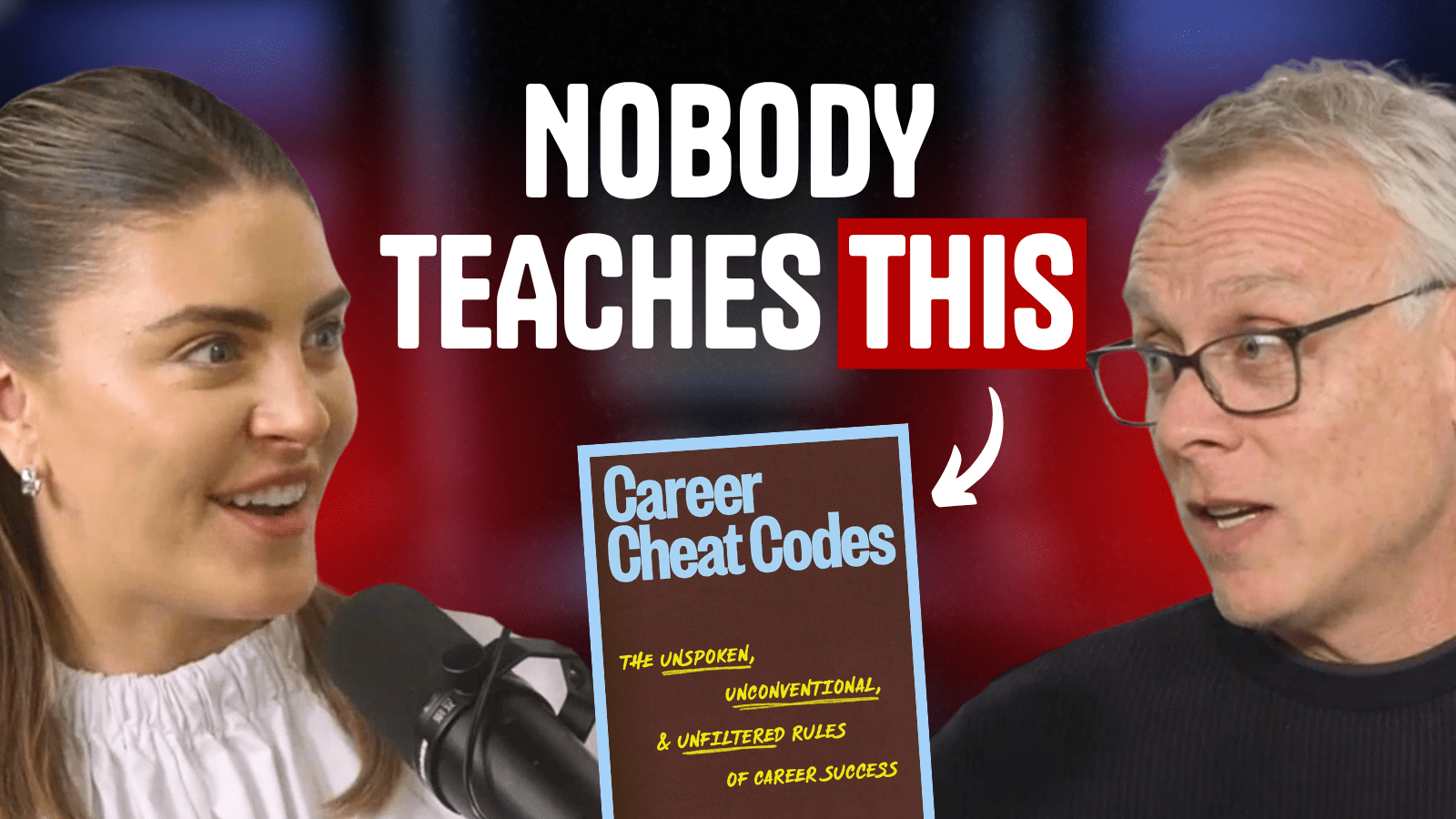
That’s why our guest today is Courtney Johnson. She’s got a brand new book out called Career Cheat Codes. She’s an absolute beast on the socials. She has built a huge following teaching a whole generation of job seekers how to not just land a job, but to get promoted and to get ahead.
She’s lived the journey. She’s been through the trenches herself. And I gotta tell you, she is really smart. I read her manuscript, and I have given it away to multiple coworkers and said, “You need to read this. There is real intelligence here, real tactical stuff around how to get ahead in the workplace.” Please enjoy this amazing episode with Courtney Johnson.
—————
Jay Papasan:
I am Jay Papasan. And this is The ONE Thing, your weekly guide to the simple steps that lead to extraordinary results.
—————
Jay Papasan:
Courtney, we’ve been talking about getting you on the podcast forever. Welcome to the show.
Courtney Johnson:
Thank you. Happy we’re making it happen.
Jay Papasan:
I know we’ve known each other quite some time. You’ve been in and around The ONE Thing, a fan, you’ve promoted it a lot. And guess what I’m holding in my hands right now.
Courtney Johnson:
My book.
Jay Papasan:
I know. Career Cheat Codes. You have built a career helping people with their careers. And now, you’ve got a brand new book that’s coming out, which we will link to in the podcast notes. And I’ll just say I had to read this on pretty short notice, right? It’s an advanced copy. And I read it on two airplane flights and one morning. Very readable. You’re very funny. And there’s so much actionable advice. And my aha was like, I want to give this to my son who’s a junior in college. And they tend to think about his internships a little bit more differently like you coach people to do. So, the young people in my life. And I also thought, as a business owner, this gives me a whole new perspective to think about the people that I want to be employing and how I can notice them.
So, can you just give our listeners, if you had to explain really quickly, you just bump into someone over coffee, tell me about your new book. How would you describe Career Cheat Goats?
Courtney Johnson:
So, there’s A players and B players in the career world. The A players, they grew up, their parents were in their corporate world, maybe their parents were entrepreneurs, they kinda learned everything by osmosis, right? They got into the corporate world. They knew these unwritten rules.
The B players, they didn’t know. Their parents had regular jobs, maybe a teacher, maybe retail. They got into the career world, they’re like, “Why are people talking like this? Why are you doing it like that?” They’re a little bit confused. They have to learn these skills on their own. So, what Career Cheat Codes does is it bridges a gap and helps B players learn how to become A players in the workplace.
Jay Papasan:
Well, like that immediately makes us redefine what a B player and an A player is. There are people that you might say they’re an A player, or they’re a B player based on their competence, their skills, all of those things. But one of the first things you’re talking about, a lot of times, the people who are seen as A players are less talented in many ways than the people who are seen as B players, but it’s the way they go about their work and talk about their work that makes the difference.
Courtney Johnson:
Yeah. It’s really this idea that putting your head down and working hard does not mean you’re gonna get results. It does not mean you’re gonna succeed at what you do. There is a whole chess game that happens behind the scenes. And I know some people are like, “I don’t wanna play the corporate game. I don’t wanna play the entrepreneur game. I wanna put my head down, work hard and everything will work out for me.” But unfortunately, that’s a lie that we’ve been told.
Jay Papasan:
Well, I mean, it’s like a good mentor told me, and I’m sure everybody’s heard it, if you argue for your limitations, you’ll get to keep them. I know a lot of what people will label as politics could also be seen as networking.
Courtney Johnson:
Totally.
Jay Papasan:
Right? A lot of what people would have seen as playing the game is just being strategic in approach to your work. So, like, you do a good balance. And just for those of you out there that are maybe an Enneagram one or whatever cheat codes, I believe, is you’re unlocking stuff that a lot of people unconsciously know or know. It’s not literally cheating your boss. So, just people know. But it is like a cheat code in a video game. These are the ways that you can get ahead faster. But you still have to work hard, you still have to be good at your job, but you shouldn’t just expect things to come to you when you can actually go out and get them.
Courtney Johnson:
Yeah. A big part of the book is just one visibility. Like making sure your work is visible, that you are visible. And then, relationships. Making sure you’re developing great relationships. And what I love about what you just said is you changed the languaging we’re using. So instead of, “Oh, this is politics,” this is relationship building. Instead of, “Oh, this crazy self-promotion,” this is marketing. These are parts of business. These are parts of a career.
And we get to change our perspective on them in order to move through them in an effective way because you can be right, or you can be effective. I can be right that, “Oh, this is politics and it’s annoying,” or it can be effective. I can help myself, my peers, my clients, and everybody around me. And I think this book really shows when you choose to be effective, then that’s when you can support yourself and others.
Jay Papasan:
All right. I’ll just play a card from our earlier conversation and we were talking about parenting, folks. And y’all know I’m a big fan of Dr. Becky, and I immediately go, “Two things can be true.” Politics can be exhausting, and they can be necessary for you to actually thrive in a workplace. So, yes, it can feel like, “Ugh, I don’t really wanna have to do that, but yeah, some of this stuff is kind of part, if you really are ambitious, you really want to get ahead, or you don’t wanna be the one always taking the notes in the meeting, you wanna be the person running the meeting, then you have to at least acknowledge reality.
So, I want to go through a couple of the stages. You’re walking people through, like, how to land a job. And so, my business brain, a lot of business owners listen to this podcast, I was thinking on two levels. This is all like basic marketing stuff. Like how do you stand out from the crowd? Which business owners need not only for their only generation, but also to recognize the quote A players, when they’re knocking on your door. So, what would be some of the core advice that you give to your readers here about how to get their foot in the door, whereas I think you put it, “a stiletto in the door”?
Courtney Johnson:
Make sure you’re going above and beyond. At least, taking one step above and beyond. So, if somebody’s applying to a job to work with you, and they also send you a Loom video explaining what they would do in the first 30 days of the role, or they also send you a LinkedIn message, or they go above and beyond by following up after the job interview, if you’re seeing them take these micro steps to show that they really want it, that is a huge green flag that this person’s gonna be an A player.
Jay Papasan:
I love that. And I mean, some of what you’re inviting ’em to do I see in my cold DMs from vendors. “Hey, I would be happy to recut that video for you.” It’s a small task that they can demonstrate their expertise on, and it’s not like unpaid labor so much as a demonstration of their competence. So, I see this in business to business all the time. So, our applicants could just show a little thought leadership, show some insight. You also tell them to do their homework.
Courtney Johnson:
Yeah. Absolutely, must do your homework. And not just around the company but about that person. Did that person and you go to the same university? Do they also love sports? What is it about that interviewer or the boss you’re gonna be working for that you can connect to? And if you can find that connection, if you’re interviewing someone for a potential job, and they’re immediately connecting with you on an emotional level, just something that you have in common even, maybe it’s somebody that you mutually follow or a book that you’ve mutually read, again, a massive green flag that they’re gonna be an A player because they really get that intuitive part of interpersonal communication, and they see you as a human instead of just a robot boss.
Jay Papasan:
Well, that’s a… I think it’s in like career development, right? Instead of just asking the VP of Finance like what the EBITDA was for that quarter, you’re doing this obvious suck up move, like notice that they’re human too. So, you’re doing that as you’re trying to apply. Like, who is the hiring manager? Like how does someone figure that out, by the way?
Courtney Johnson:
LinkedIn. Google.
Jay Papasan:
LinkedIn?
Courtney Johnson:
Yes. Easy peasy.
Jay Papasan:
Okay.
Courtney Johnson:
I mean, if you apply for a job on LinkedIn, it says “The hiring manager is…” And it has their LinkedIn picture and you can click on them and go to their page.
Jay Papasan:
Okay. And then, you look at… like, you Google them and find out the rest of their history.
Courtney Johnson:
Yeah. And figure out their…
Jay Papasan:
Stalking in a non-creepy way.
Courtney Johnson:
Stalking in a non-creepy way, exactly. You don’t need to find out their high school track and field stats but definitely stalk them and figure out what their goal is. Like as the hiring manager, what are you working on this quarter? What is your goal? Maybe it’s a personal goal. Maybe they’re working on running a marathon right now. Maybe it’s a goal of refining their hiring, I don’t know, process. But when you… I mean, that is, like, number one question of people asking this to you or if you’re asking it to an interviewer, “Jay, what’s your goal? Why are you here? Why are you even putting this job application out?” It’s so simple, but it makes such a big difference.
Jay Papasan:
And you were doing that in our pre-interview. You started asking me questions. Stop it. No, but it’s great. I think that people… I love it when I’m interviewing someone and they actually raise a thoughtful question that it looks like they’re actually interviewing the company. And almost no one does that.
Courtney Johnson:
Yeah.
Jay Papasan:
They might ask a generic, what’s the culture like? Do people go out on Fridays? They might ask some of those, but thoughtful questions about how the company works, it signals a level of confidence.
Courtney Johnson:
Totally. It gives you a bit of power as well. It’s almost like you’re going on a date. If I was on a date, I probably wouldn’t say… I probably wouldn’t only be like, “And this is why I’m so amazing,” right? I’d also be in the energy of, “What do you have to offer,” right?
Jay Papasan:
Yeah.
Courtney Johnson:
“Tell me about yourself. ” And we go into job interviews like, “Oh please, please take me, please hire me.” And that is not coming from a powerful, confident energy. So, again, pretend like you’re on a date, you’re mutually interviewing each other.
Jay Papasan:
Like I got my first two big jobs in publishing ’cause I went into the interview, I might be a little distractible, we’ve talked about this on this podcast. So, Robert Kaplan had a poster of Sherlock Holmes. And I’m like, “Who has a framed poster of Sherlock Holmes in their office?” So, I asked him about it and he’s a fan, and I’ve read every single short story, I’ve read and written papers around Sir Arthur Connan Doyle. Like I knew the lore. And then, we started debating who was the best character who played Sherlock Holmes in the movies. This is before Robert Downer, Jr. That’s how old I am. But we looked up and it’s, like, we stopped talking about whether I was gonna get the job and what we would do with the job.
And then, like, four years later, I’m interviewing with David Hershey. He’s got a picture of his daughter Emily up on the shelf. It looked like she was standing on Giant, the Giant stadium field wearing a soccer jersey. And I asked him, and he said he was a soccer weenie. And we had done a book called Training the Tiger when I was in another… working for Robert Kaplan. And I just said, “Have we ever thought about… have you ever thought about doing something with women’s soccer?” because I’m a soccer weenie? But now, we’re talking about soccer. And before we were done with the interview, we were planning to acquire Ham’s book. Just by looking around and treating him like human beings versus just coming in and asking the standard questions and doing the right thing.
So, interviewing them, making them feel real, it works all the way through the process.
Courtney Johnson:
Yeah, be curious. I think it all comes down to curiosity. And this works on the other side too. If you’re an interviewer or maybe you’re prospecting, you’re having some sales conversations, make sure your background is indicative to who you are. I had a client one time that was obsessed with collecting vintage guitars, and I said, “Hey, why don’t you move your desk from the background being this blank wall to your vintage guitar background?”
Jay Papasan:
Because everyone’s gonna ask you about it.
Courtney Johnson:
Everyone is gonna ask you about it.
Jay Papasan:
Yeah.
Courtney Johnson:
And that just totally humanized him. He was able to connect with his prospects so much easier. So yes, identify and be curious. What makes this person tick? And also, make sure you’re putting out your personality, and you’re putting out who you are so other people have something to latch onto and connect with you over.
Jay Papasan:
You go into that a lot, like Zoom backgrounds, picking it, curating it. And I see professionals make this mistake all the time. They are calling to get my business. And they are back lit by a window. They have a low quality camera. Don’t you give a stat, I don’t wanna put you on the spot. Like people who have high quality video and sound, aren’t they perceived as more competent or smart?
Courtney Johnson:
Yes, they are perceived. They’re perceived as more confident and smarter if you have a high quality background, if you have a high quality camera, a high quality microphone. Just think about it, you’re going, you’re interview… again, maybe you’re on a sales call. You see somebody that immediately looks really great. Their lighting is great. Your unconscious assumption is maybe they paid a lot of money for this, or they are important, they’re probably teaching webinars, or maybe they’re some sort of author or speaker, right?
Our brain works on these subconscious associations. So, the subconscious associations with good lighting, good camera, and good microphone are all very positive. The subconscious associations with your bed is in the background, it’s muffled, and you’re distracted is very negative. So, we can actually use these psychological triggers and create biases that work well for us rather than working against us.
Jay Papasan:
Well, I mean, I’ll just give you a shout out. We don’t have to go all the way down there, but you go really deep on applicants avoiding unconscious bias. Whether it’d be gender, ethnicity, you name it, there’s really priceless advice. And it’s good because you hate that the person who might be the victim of bias has to do extra work. Be real. The whole idea about bias is people aren’t even aware that they’re doing it.
Courtney Johnson:
Yeah, exactly. And that’s the first step in really understanding bias is the hiring manager probably isn’t going through these papers saying, “Courtney, that’s probably a girl. I don’t like girls. Bye.” No, no, no. It’s more of a subconscious association. Growing up, their cousin’s name was Courtney, and their cousin was super feminine. This role requires a bit more masculine and their unconscious brain is telling them that Courtney, something just doesn’t feel right. It doesn’t feel like a good fit for this really rigid role. And so, they put that resume aside. This is not conscious bias. This is happening subconsciously.
So, when we can see this neutrally and understand the reality of what’s going on, yes, it sucks, but that also gives us the tools and the power to make sure we’re not being discriminated against, that we don’t have unconscious bias negatively placed against us. And we’ll never be able to rid it completely but just by understanding it and understanding what’s probably going on and how you can lean into positive unconscious bias, you’re gonna gain a lot more power.
Jay Papasan:
Right. So, good lighting, good camera, good sound would be third. If you’re doing a podcast, sound matters a lot. But it’s not like we’re asking people to spend a fortune. Whether it’d be for them to get a job or to really look professional in the job, pay attention to what’s behind you, folks. It just takes a little bit of care to totally level up in any room.
And I see it all the time. I’m presenting to hundreds of people at a time. So, I’ll have 50 people on the screen. Guess who I notice? The people who have good quality, good lighting. Although those, I can actually see them. Like they took the time maybe to clean the lens on the camera, so they don’t look like it was like Vaseline over.
Courtney Johnson:
It is always those people on webinars, like it’s really dark, and they’re like muffling around. You’re like, “Are you okay? Are you in a dungeon basement?” You don’t take them as seriously. You’re probably gonna unconsciously give more attention to the people that showed up to your masterclass or webinar that are attentive, that are well ,lit that you can see, not because you are have a discrimination against dark basements but because you have positive associations with good lighting, attentive posture, and somebody who’s there to show up and work and be engaged.
Jay Papasan:
I like it. You’re just giving people the information they need to be more likely to be successful.
Courtney Johnson:
Yes.
Jay Papasan:
If they do the things, they increase the odds. They’re not doing Jedi tricks. They’re not manipulating, they’re not lying, and they’re being… they’re just playing the game that they didn’t quite know they were playing before.
Courtney Johnson:
Yeah.
Jay Papasan:
But now, they get to actually play by the rules, which I love that you set that up for people. I once read a study that if you were a business person, if you had a briefcase where the client could see it, they would negotiate harder against you; that the cue for the business element, versus the backpack or whatever, like a briefcase, very formal, little subtle clues. So, we have to be students of this game. We have to look up and ask what signals am I sending that I didn’t intend?
So, last bit. This is for business people, this is for business owners, and this is for people looking for jobs. Google yourself. Why?
Courtney Johnson:
Google yourself because people are Googling you.
Jay Papasan:
Yes.
Courtney Johnson:
People are Googling you, so you get to have visibility around it. You’re applying for a job, you are prospecting, trying to close that client, you are going for that speaking opportunity, the first thing that’s happening is people are Googling you.
Jay Papasan:
Yes.
Courtney Johnson:
And it doesn’t even have to be something bad coming up for you to have unconscious negative bias. It could be something completely irrelevant. It could be the only thing that’s coming up are your… I don’t know, your baking recipes, but this job is about fitness and so maybe that just throws ’em off a little bit, right? You don’t have to put squash down who you are, but we just wanna create more positive associations.
One that I see all the time is you Google someone and the first thing that comes up is like high school or college sports. It’s irrelevant. It’s cool that you’re an athlete, but if I don’t see anything about your real estate career or your speaking gigs that you’ve had before or your expertise, I might not see you as professional.
Jay Papasan:
Like I’m gonna do this from memory, and you can add to the list but, first off, if you’re gonna go yourself, go into incognita mode, so that you’re actually seeing how they might Google you. It’s not already biased. Where do you show up? Where do you not show up? You advise people whether you’re on X or not, go get X, get your LinkedIn. And actually get your name in the URLs like you’re supposed to, because those all are gonna rank really fast. So, whether you do anything on there, you can create your bio, have the same headshot that’s on your resume, so they know… Like, there’s a lot of Courtney Johnson’s. So, I’m scanning through there and going, “Which one is it?” ’cause I’ve actually seen people not get jobs because of a common name, they were mistaken for someone else.
Courtney Johnson:
I’ve seen that too. Crazy.
Jay Papasan:
Insane.
Courtney Johnson:
Yeah.
Jay Papasan:
So, think of like… I came from real estate. Your profile picture is like a yard sign. You want it to be recognizable. You want people to recognize it. And that’s the same across all these platforms. You get on those platforms, now, people can easily find you and you’re basically controlling your digital first impression because if they’re smart… Well, it’s actually funny. I don’t start Googling people until I’m actually getting serious.
Courtney Johnson:
Yeah, exactly.
Jay Papasan:
Right?
Courtney Johnson:
Then you’re like, “Oh.” And that’s gonna influence your decision. So, I love the example of real estate ’cause I just… we were talking about this earlier, but when it comes to real estate, there’s so much competition. There’s so many agents that you really wanna show your personality.
Jay Papasan:
It’s like 10- 15,000, just like in the seven zip codes around my house.
Courtney Johnson:
Yeah, it’s crazy. So, you wanna be able to stand out, but you wanna be true to yourself. If you are weird in whack… One of my favorite personal brands actually is this guy on LinkedIn with green hair? I actually don’t even remember his name. I know he is a sales leader.
Jay Papasan:
The guy with green hair.
Courtney Johnson:
But he is the guy with green hair. I see him at conferences. He is the guy with green hair. He’s really fun. He’s really rambunctious and I just… everybody knows who he is ’cause he’s the guy with green hair. He stands out. I’m not saying you have to dye your hair green at all. But don’t be afraid to be you and be true to you, whatever that means.
Jay Papasan:
Well, we had Jenny Wood on the podcast this summer, and she talked about the red shoe effect. Is there anything about you that stands out that becomes memorable? It might be the guitars in the background. It might be that you wore a pair of patent leather, red shoes to the office. It might be that you always do this thing, but that’s that personal brand. Is there anything that people can anchor out of the thousands of people they’re looking at and the hundreds they’re talking to. Whether you’re in sales, you’re trying to get business development or trying to get a job, is there anything that actually makes you memorable?
Courtney Johnson:
Yeah.
Jay Papasan:
That’s the key. Alright. I’m gonna cut you off right there because we have to go and take a quick break. And on the other side. We will wrap up the conversation of Career Cheat Codes. And I want to talk about your career. Because you’ve built a lot of it using The ONE Thing.
Courtney Johnson:
Beautiful.
———————-
Jay Papasan:
All right. Welcome back, everybody. Let’s kind of… we rambled a lot, and that’s because I like you talking to you, so apologies. But let’s recap some of that. When we think about whether, like, you’re a business owner trying to do business development, a salesperson trying to get the next client, or in the case of a lot of your readers, someone out there looking for a job, can we recap some of that? Like, go above and beyond. If a lot of people are reaching out, what can you do that little bit extra, a DM to the hiring manager, whatever that is? What were some of the other things we covered? Just so we can recap it for folks?
Courtney Johnson:
Yeah. We wanna DM the hiring manager. We wanna send a thank you note. We want to-
Jay Papasan:
Oh, we didn’t say that. Thank you for saying that.
Courtney Johnson:
Yes.
Jay Papasan:
Nobody does that anymore.
Courtney Johnson:
Nobody does that. It’s so important.
Jay Papasan:
Huge. Okay.
Courtney Johnson:
Send a thank you note. Give some sort of mini project, right? That could be, “I re-edited this video. I made some notes on what the 30 days would look like in this role.”
Jay Papasan:
Show your work.
Courtney Johnson:
Show your work somehow.
Jay Papasan:
Then, we think about how we’re seen online because that interview, that first impression might be on a Zoom meeting. What do we need to do?
Courtney Johnson:
We wanna make sure we have good lighting. We have a solid camera. We have a steady surface. We’re not wobbling, right? We wanna make sure that our audio is strong. And we wanna make sure we’re showing up confident.
Jay Papasan:
Right. And our background?
Courtney Johnson:
Our background is professional, but it also is fun. It shows who you are. It has maybe a picture of your favorite movie or a stack of your favorite books, something that the other person that you’re talking to can grab onto and really start a conversation around.
Jay Papasan:
Love that. I was interviewing Jim Kwik, and I saw he had Marvel comic book characters in the background. And that sparked, like, this whole long conversation around, he grew up reading comic books. And that’s what I remember about that conversation, not the business discussion but that we talked about his favorite character was Spider-Man. And like I know that about him. There you go.
So, that can spark real human-to-human conversations and make you stand out.
Courtney Johnson:
Exactly.
Jay Papasan:
Now, if my first impression might be in person or digital. What about the first impression when they’re just looking for me online? What are some strategies there?
Courtney Johnson:
We wanna make sure you’re visible. We wanna make sure you’re putting yourself out there and you’re consistent. So, this means you have social media profiles. Even if you’re not posting every day, that’s okay. We wanna make sure your profile picture is consistent. Your banner picture is consistent. Your bios are consistent with the messaging you’re trying to put out. And we wanna make sure we’re Googling ourselves in an incognito browser. That way, we can see the picture of what somebody is seeing and inferring about us once they’re committed to working with us. They’re making their decision, they’re doing their final research, we wanna make sure it’s supporting that decision rather than taking away from that decision.
Jay Papasan:
I love that. That works for someone in business development or someone looking for a job. Now, you very specifically said like on LinkedIn, like you don’t have the LinkedIn dot in slash the number. You’re gonna get your name. What if my name is John Henry or something? Like it’s super common.
Courtney Johnson:
Yeah. I mean, if it’s taken on LinkedIn, you can always add some sort of keyword to the end of it. So, it might be John Henry Marketing.
Jay Papasan:
There you go.
Courtney Johnson:
That way, that keyword… Google can pick up that keyword, and you’re more associated with the word marketing as marketing is probably in your bios or your about section of different platforms.
Jay Papasan:
Jay Papasan rights. Of course, there’s only one Jay Papasan according to Google right now.
Courtney Johnson:
Right now.
Jay Papasan:
Yes. But it could change.
Courtney Johnson:
There could be more.
Jay Papasan:
It could change. One of the cooler things I saw when we were trying to buy businesses, a friend turned me on, there’s a lot of tools. I think one was called name check. You can go and look for, this is the username, and it’ll go to all of the big sites and see if it’s available and show you where it is and isn’t. So, if you had a common name, you could use a tool like that, and then come up with different combos to see what you could claim throughout. And there you get more SEO.
Courtney Johnson:
Yeah. For me, I have a very common name, Courtney Johnson. So, a lot of my handles have the keyword of social media on it.
Jay Papasan:
Now, I’m gonna dovetail this into your career. So, a lot of your like reputation, not just on TikTok, but you were writing on LinkedIn. So, that was a part of your ONE Thing journey too. Do you wanna tell people a little bit about that?
Courtney Johnson:
Yes. Oh, my ONE Thing journey, it’s been a couple years, maybe five years now. And the very first time I read The ONE Thing, I committed to an entire year of posting on LinkedIn. Years two and three, I was already in the habit-
Jay Papasan:
Like posting every week? Posting every day?
Courtney Johnson:
Every single day.
Jay Papasan:
Wow.
Courtney Johnson:
Woke up before I got started on anything else, before I even opened my email, post on LinkedIn no matter what. Even if it was a bad post, even if I had nothing to say, I would post. I wasn’t so focused on the perfect post. I was focused on building that habit because posting on LinkedIn eliminates a lot of other functions, right? I don’t have to do outbound. I don’t have to go message people for clients. I don’t have to go find opportunities. I wake up, and they’re in my inbox because I post on LinkedIn every day.
So, The ONE Thing was such an aha moment because I realized, “Oh, this is the exact thing that makes everything else easier and several parts of my business function are completely unnecessary.”
Jay Papasan:
Love that. And you get that advice in the book. That’s one of the ways we develop thought leadership. And you give great cues. What are the problems that you solved? What is the tech stack that you use? Like a lot of people are like, “What the heck do I say?” And I think you created like 13 different cues in one little paragraph for people. If you are really getting started to do what you just did, you give them the tools to just fill in the blank.
Courtney Johnson:
Yeah.
Jay Papasan:
Very cool.
Courtney Johnson:
Yeah.
Jay Papasan:
All right. So, you posted-
Courtney Johnson:
Yeah, that was my first year. The next two years was delegation. So, I was still posting every day, but delegation was the thing that would make everything else easier or unnecessary. Obviously, I’m giving you the task. I don’t have to do it. But what I realized is delegation is really a skill. It’s not something that I just decided, “Oh, I’m gonna delegate overnight.” I had to learn and practice. The next year, my one thing was-
Jay Papasan:
But did you have employees to delegate to or were you finding other ways to delegate?
Courtney Johnson:
Oh no. At that time, I had a virtual assistant that I was practicing delegating to.
Jay Papasan:
Okay.
Courtney Johnson:
And I was also practicing delegating to my partner, even just little things. If I didn’t have anything to give the virtual assistant that day, I would say, “Hey babe, can you finish the dishes?” or “Could you take the dogs out to pee?” Again, just as a practice to get really comfortable with asking. I learned how to be specific in my ask. I learned how to give a deadline. I’m sure he was really annoyed at the end of this but it worked.
And then, the next year, my one thing was posting on TikTok every single day. After about 400 TikTok posts, I got an email in my inbox from Penguin Random House saying, “Hey, we really love this TikTok video. We’d like to turn it into a book.”
Jay Papasan:
Wow.
Courtney Johnson:
And that’s how Career Cheat Codes was born is from my one thing of posting on TikTok every single day when I woke up.
Jay Papasan:
That is so cool. I love that story. And like you used it to determine, what do I need to do versus what others can do. You start delegating, which is I think, the ultimate business goal. When you learn how to succeed through others, and there are all these little elements you have to learn, did I really communicate it clearly? Did I set expectations for all of those things? Wonderful business skill. And you build thought leadership. Along the way, how were you making money? Like you were giving this advice to people just for free or were you coaching them? What was that like?
Courtney Johnson:
Yeah, I’ve actually never really monetized my career advice. I’ve mainly just been helping people build personal brands, which is obviously part of a career. But how I was making money throughout that time was ghostwriting. So, I was ghostwriting LinkedIn posts and helping people with our social media, especially founders and CEOs because they saw what I was doing on LinkedIn and they said, “Hey, I want that attention. Can you help give me some of that?” So, I would interview them, write for them, and that’s how I made money during this time.
Jay Papasan:
In the… you have a section in here on the imposter syndrome, and maybe I’m connecting the wrong dots, but you were charging a hundred dollars a post. And you were asking like, “Am I charging too much?” or whatever. Then you realized your posts were making these people thousands and thousands of dollars.
Courtney Johnson:
Yeah.
Jay Papasan:
So, can we talk a little bit about the internal monologue that people have? They’re like, “I’m not worthy of posting, I’m not worthy of this because…” I think a lot of our audience has expressed in their pursuit of being bigger and better versions of themselves, they run up against this wall all the time.
Courtney Johnson:
Like who am I to be doing this? What do I know? Or there’s people in the world that know so much more than me, I’m never gonna know as much as they know. This is this imposter syndrome. And I think of imposter syndrome as there’s an infinite ladder in front of you. There’s always gonna be people that know infinitely more than you and infinitely less than you about your topic. The goal is just to teach people one or two steps below you on the ladder.
And I’ll give you an example. I had somebody in one of my webinars who was-
Jay Papasan:
Can we first highlight?
Courtney Johnson:
Yes.
Jay Papasan:
You create awareness. We tend to always be looking up and measuring the gap between us and the people we look up to and we forget wherever we are, there’s probably people looking up to us.
Courtney Johnson:
Yes.
Jay Papasan:
And that’s important. Like that’s it’s hard for some people I bet to digest that.
Courtney Johnson:
Yeah.
Jay Papasan:
Nobody’s looking at me. That’s not true. There is someone most likely going, “Man, I wish I had that person’s job.”
Courtney Johnson:
It’s usually, where were you one to two years ago? Who is that person? Quick example, in a webinar I did, there was a medical student. And he said, “Man, I really wanna start posting on LinkedIn. I have this passion for sharing with others, but I’m not a doctor yet. I haven’t got my degree yet. And I’m not an expert yet.” I said, “You’re an expert in studying and getting into medical school and finishing your undergrad in passing chemistry three, right? And so, can you go and can you share with younger students the study skills that you’ve been learning, on what it’s like to move across the country to go to a new school. You’re an expert on all of that. Of course, you are not the most accomplished doctor in the world, but you can teach people two steps below you on the ladder.”
So, to anybody listening to this, where were you a year ago? Where were you two years ago? And usually, that’s where your audience is, that’s where your clients are, that’s who you can help.
Jay Papasan:
I love it. And I had a coaching client, I remember asking them like, what is it that you’re not giving yourself credit for that everybody who works for you sees in you? And you give that advice when people are like, what is my superpower? Go to your best friends.
Courtney Johnson:
Yes. Oh my gosh. Like-
Jay Papasan:
They see in us what we don’t allow ourselves to see in us.
Courtney Johnson:
Yes. The whole reason why this book came about in the post… I created a post called Career Cheat Codes that was picked up into this book is because two of my friends kept texting me for career advice. And I was so annoyed. I’m like, this is so obvious. Clearly, it was not obvious. I realized, “Wait. If everybody is texting me for career advice and it’s not obvious, I’m gonna go make a post about it.” So, usually. people don’t find their zone of genius because they think that is so obvious. Everybody knows that. No, everybody probably doesn’t know that.
Jay Papasan:
And if we just ask the people who know us better, like go to your spouse, go to your best friends, I think you said like when you come to me for advice, what are you coming to me for advice for? You give some really good questions to help people unlock what they’re not capable of seeing in themselves.
Courtney Johnson:
Yeah.
Jay Papasan:
But anyway, that’s great. Did you struggle with confidence along the way?
Courtney Johnson:
Yeah I’ve definitely struggled with confidence before. Definitely struggled with comparison. And I think imposter syndrome really comes from comparison.
Jay Papasan:
Right.
Courtney Johnson:
So the challenge is not to get more accolades and more credentials. The challenge is to stop the comparison. Stop comparing yourself to somebody else. Compare yourself to where you were a year ago, two years ago. Again, going back to that ladder.
Jay Papasan:
Yeah, I love that metaphor. ’cause a lot of times the moment you ask the question, wherever someone is and how they feel about it, and you say if you went back five years, would the person you were then, how would they feel about how far you’ve come?
Courtney Johnson:
Yeah.
Jay Papasan:
And it just… you don’t really think about it unless you stop time for a second and you have to look back.
Courtney Johnson:
Yeah. The things we dreamed about three years ago are normal to us today.
Jay Papasan:
Yeah. And sometimes, it’s like that person wouldn’t have believed that you could withstand everything that you withstood because maybe you haven’t made the progress, but you’ve weathered an unbelievable storm without having to retreat.
Courtney Johnson:
Yeah.
Jay Papasan:
So, it’s just perspective matters so much. So, you use The ONE Thing to actually… it helped you get the book ’cause you were living it. You actually used it to write the book you shared?
Courtney Johnson:
I did. Yeah. I-
Jay Papasan:
There’s a lot of people that listen to this podcast that are on that journey, so they’re all like getting out their notepad right now.
Courtney Johnson:
Well, in The ONE Thing book, I believe the example of writing a book was a big example throughout, right?
Jay Papasan:
I know a few things about it, so I probably cheated.
Courtney Johnson:
I think you said four hours every single morning before you get started on anything else.
Jay Papasan:
We talked about your one thing, give it more time than anything else.
Courtney Johnson:
Yeah.
Jay Papasan:
And the reality is if someone blocked four hours, they’re not riding for four hours.
Courtney Johnson:
No, they’re not.
Jay Papasan:
They spend an hour getting ready to get ready. And they actually do an hour of work, and then they’re packing up their work. LIke it’s always some net less, but you have to have a big window for deep work-
Courtney Johnson:
Totally.
Jay Papasan:
… so that you have a chance to get into that zone, especially in the beginning, get something meaningful done.
Courtney Johnson:
Yeah.
Jay Papasan:
So, yes, we do talk about that.
Courtney Johnson:
Yeah. So, I wrote every single day and I did not write for an hour. I probably wrote for 10 to 30 minutes every day, but it was just making some progress. And then, what I also did is, about every month, I would go lock myself in a remote Airbnb far away, like Marfa.
Jay Papasan:
I think I saw you post about this. Yeah.
Courtney Johnson:
Yeah, I would go far away. And my one thing for that retreat was by the end of this week, I have X amount of chapters done. And what I love is all over the Airbnb, I would have little sticky notes that said three chapters or one section or whatever. And anytime I got distracted, I would see the sticky note. That is my one thing for this retreat. I’m coming back and working on it. And that was really helpful. I was actually on an accelerated writing track, so I wrote the whole thing in five months.
Jay Papasan:
Whoa.
Courtney Johnson:
Which is extremely tight.
Jay Papasan:
This is 300 pages.
Courtney Johnson:
I know.
Jay Papasan:
What is it, like 80,000 words or something? Do you remember?
Courtney Johnson:
Yeah, it’s something-
Jay Papasan:
A lot.
Courtney Johnson:
It’s something around that. But luckily, I started… this is so fun because, because of The ONE Thing and because I was posting every single day for years, I didn’t have to start from scratch. I already had blog posts, emails, podcast episodes that I could go back and use in the book. My book coach told me, if you have a hundred podcasts, you have a book. If you have 500 social media posts, you have a book. So, luckily, because I had dedicated so much time before I even got the book deal, it didn’t take as much time as starting from scratch.
Jay Papasan:
And that’s… again, your book coach was asking you to give yourself credit for the work you’d already done.
Courtney Johnson:
Exactly.
Jay Papasan:
You weren’t writing a book then, but you were writing the key things that would go into the book.
Courtney Johnson:
Exactly.
Jay Papasan:
Did you break it into cheat codes and then write like one cheat code at a time?
Courtney Johnson:
Yes.
Jay Papasan:
That’s cool. How many are there? Do you know
Courtney Johnson:
One hundred.
Jay Papasan:
Oh my gosh.
Courtney Johnson:
Yeah.
Jay Papasan:
Yeah.
Courtney Johnson:
It is like 140 and then we cut.
Jay Papasan:
So, this is the best of.
Courtney Johnson:
The best of the best.
Jay Papasan:
And the whole thing about writer’s retreats, have you read Misery by Stephen King?
Courtney Johnson:
No.
Jay Papasan:
Okay. It’s like the first-
Courtney Johnson:
Just on running.
Jay Papasan:
Okay. So, like, the first, I’m never gonna do a writer’s retreat after reading that book, right?
Courtney Johnson:
It’s actually fun. I brought a couple of girlfriends, and we all committed to a big project. And so, we kept each other accountable.
Jay Papasan:
You do this? You co-work with people just for company. Like, does anybody want to come to this place, co-work with me? It’s not gonna be chit-chatting. But we’ll have other people there. It’s kind of accountability.
Courtney Johnson:
It’s accountability. It’s because if somebody sees you on your phone or they you chitchatting or whatever, they can be like, “Hey, back to work.” So, we all keep each other accountable. It’s great. It’s great for ADHD.
Jay Papasan:
There you go. Well, I love that you also shared that you had some confidence issues like imposter syndrome ’cause you come across as a very confident human being.
Courtney Johnson:
Thank you.
Jay Papasan:
I think anybody who can do what you do on social and in TikTok, I think everybody’s assumption is, oh, that person’s just fearless. So, thank you for sharing that. ’cause I think some people need to hear that you did it despite.
To wrap all of this conversation up. If we were gonna give the listeners one challenge, we’ve been through some of your journey, we’ve talked a lot about your book, Career Cheat Codes, what would be one piece of advice that maybe they could implement this week?
Courtney Johnson:
Yeah, one piece of advice. Get visible in some way that’s uncomfortable for you. So, what you’re gonna do is you’re either gonna post something on LinkedIn, you’re going to maybe post something in your company channel about a project that you did, right? Post something in your internal communication. “Hey, we’re really celebrating this project. I accomplished these milestones and it’s awesome.” I know. Oh, it feels so scary. Or you’re gonna raise your hand and be in front of the crowd. You’re gonna raise your hand when you don’t want to at that conference that you’re at. You’re going to volunteer to be in front of people.
I think visibility and getting comfortable with visibility is a skill we just don’t talk about enough. So, whatever that thing is I said, maybe it’s raising your hand, posting on LinkedIn, bragging about your work, I use the word bragging, but just celebrating your work publicly, pick the scariest one, the one that you just heard and you’re like, “No, I’m not doing that.” And go do that this week.
Jay Papasan:
Yeah, stand out just a little bit. Get used to it. ’cause that is one of the cheat codes that runs through all of these. It’s not that you’re not doing good work. You’re not letting people know that you’re doing good work.
Courtney Johnson:
Yeah.
Jay Papasan:
And your humility, you’re being passed over for people that couldn’t serve your customers or couldn’t do as good of a job as you.
Courtney Johnson:
Yeah.
Jay Papasan:
Great advice, Courtney.
Courtney Johnson:
Yeah.
Jay Papasan:
Thank you for sharing this with us today.
Courtney Johnson:
Thank you for having me.
——————-
Disclaimer:
This podcast is for general informational purposes only. The views, thoughts, and opinions of the guests represent those of the guests and not ProduKtive or Keller Williams Realty, LLC, and their affiliates and should not be construed as financial, economic, legal, tax, or other advice. This podcast is provided without any warranty or guarantee of its accuracy, completeness, timeliness, or results from using the information.