Jay Papasan:
Maybe you’ve heard the story about Mr. Rogers when he was a child. When he would see things on the news that scared him, his mom would tell him, “Look for the helpers. You will always find them if you look for them.” And I love that sentiment. It’s something that I remember hearing a long time ago. And when bad things are happening, we can look for the helpers.
Today, I wanna talk about maybe taking it a step further, not just looking for the helpers, but becoming one of them. We all have a lot on our plate. We don’t need more things to do. But what if I told you that by becoming a helper, by giving from resources that you already have an infinite supply of, you would feel better and you’d also make the world a better place.
In this episode, we’re gonna talk about why some feelings, hope, a lot of the things that we need in the world right now, security feel kind of scarce and why they feel that way, and how maybe we can get more of them
—————-
Jay Papasan:
I’m Jay Papasan, and this is The ONE Thing, your weekly guide to the simple steps that lead to extraordinary results.
—————-
Jay Papasan:
So, why now? I mean, it’s no mystery if you’re listening to this, if you’ve been following the news, if you have a social media account, there’s a lot of glum news out there. It’s very easy to look up and wonder, “What’s going on? When is it gonna get better? How can it keep going on this way?”
And when people start to feel that way, and I don’t know about you, I have to just set limits. It’s very easy for me to get into a negative mindset when I see what’s happening in the world. There’s conflict everywhere it seems – at home and abroad – and start to get discouraged. And people tend to do one of two things. They either do more of the scrolling, right? The doom scrolling becomes more doom, scrolling becomes more doom scrolling. It becomes this loop. Or they just numb themselves out. And they cycle between those two.
And there’s a good friend of mine, Jen Davis. You’ve heard her on this podcast. She’s an amazing coach, and she always said, “In anxious times, productive activity lowers anxiety.” And it’s this idea that action is the path forward when we’re feeling bad. So, instead of doom scrolling, instead of numbing out, what can we do without really adding to our plate? What can we do to make ourselves feel better and maybe make the world a better place?
But right now, we need an anecdote. And I hope to share some with you in this episode.
—————-
Jay Papasan:
So, I’m gonna tell you a story that I remember from the very early days when The ONE Thing came out. I went to a conference, I was gonna deliver my keynote, and before me, there was a speaker named Bob Bodine. And he gave a speech that I never forgot. And I’m gonna share with you what it felt like to be in the room that day. And I’ve written about this in my newsletter, The Twenty Percenter. And we’ll link to it in the show notes as well. But it was this whole idea that we have infinite resources. And I first became aware of it on that day.
So, Bob told everybody in the audience, like 400 people, he says, “I want you to get out your phones.” And instead of telling us to put ’em on silent, which is what a lot of speakers will do, he actually said, “Can you take them off silent?” And I think everybody kind of looked at each other and go, “What’s about to happen here?” And he walked us through an exercise where he wanted us to text a friend. He goes, “Think of someone that you really, really appreciate, that you care for, that somebody you actually love. Get that person in your mind right now. It can be anyone, can be a friend, can be an old friend you haven’t talked to.” He really planted a lot of seeds, so that everybody wouldn’t automatically go straight to their spouse, their boyfriend, or their girlfriend, because I remember a lot of us kind of went into that thoughtful place.
And he says, “Great. I want you to get out your phones right now and started a text message. And I want you to write this very specific message. And you cannot change a single word. So, when you’re done, let me know.” And so, the message that everyone had to write was, “I was just thinking about you and wanted to let you know, I love you.”
And at this point, everybody in the room’s a little uncomfortable. And it may seem a little – I don’t know, it’s awkward to just, out of the blue, tell someone who may or may not… even your spouse, who might feel awkward to just, outta the blue, tell people that you love them. But he said, “On the count of three, you need to put the person’s name in there and you can’t say things like, “I love ya,” “I love you, bro.” Like, anything like that. “I love you, man.” He goes, “It’s gotta be, ‘I love you.'” Like a very clear statement of how you feel about the person. And then, on the count of three, we’re all gonna hit send at the same time.
And we’re all staring at each other. Everybody’s feeling a little bit uncomfortable. And I’m thinking, I just picked this like one of my best friends in the world and it’s not someone that I said “I love you” to maybe ever or ever before. And I’m really caught in this moment of “Am I actually gonna hit send?” But everybody’s doing it at the same time. And he said “3, 2, 1.” And you could kind of see everybody doing it at the same time. And we heard it ’cause there’s that whoosh sound. If you’ve got an iPhone and you have the sound on, you know the sound of someone sending a message. And the whole room got filled with that sound and you heard it a little bit more.
And then, we just sat there for a second. And then, we started to hear the little sound of people getting messages back, that little “bu-ling,” little “bu-ling,” and it just started going off around the room. And it was really kind of magical. ’cause what we realized, as weird as it can be for us to kind of out of the blue tell someone that we do care about that we care about them in such a specific way to tell someone I love you, it actually creates a whole different energy, not just in the room, but everywhere around us.
And people started sharing, crying, talking, and it was this moment where a lot of people realized that there were lots and lots of people in their lives that they did love that they didn’t share that with. And so, I carried that around for a long time. And after losing a couple of close people in my life, I managed to go a good 50 years without truly running into the word grief in my life, but I managed to lose a lot of people in a short period of time, and I just made a commitment. I went back to this story and I started telling myself, “I don’t care how awkward it is, I’m gonna start telling people. The people in my life that I love are gonna know I love them. I don’t care how awkward it is. I don’t care how weird it is. They might even call HR on me.” I’m just like, “Who cares? We’re gonna make this happen.”
And I can remember the first time I did it. I’m on the phone with someone, someone I cared about, and I just said, “Hey, I just need to tell you something.” And I said, ” You need to know I love you, and I just don’t wanna ever walk away from a conversation where you don’t know that I feel that way.” And there was this awkward silence and they just said, “Dude, that means so much. I love you too.”
And it was an amazing exchange, and I kept doing it. And I’ll tell you, it didn’t get an awkward fast, but over time I did get more comfortable with that conversation, and it got to be specific. But in general, it’s like nobody’s gonna call HR. No one’s gonna say, “Why in the hell did you say that?” 99 times out of a hundred, most people are moved and they express that love back to you in some form or another. And it’s not like, “I like your sweater,” “Oh, I like yours too.” It’s not that way. It’s too unusual when you tell people this all the time.
And so, that just became my mantra after that that if I really cared about someone, I was gonna tell them. And that Bob Bodine message, it was funny, after I wrote about that, I got a lot of people replying back to that email with “I love you.” And it was very powerful and it made the world a better place if just for a few hours for me. But it certainly, I hope it helped other people.
Well, all of this, I’m gonna wrap this little personal story up. One of the first short stories that really spoke to me, I was in a writer’s workshop in NYU trying to get my master’s. I was reading a collection of short stories. And Amy Bloom had written one that won an award that year. And we all read it together and talked about it. And I won’t go into it, but the short story was called Love is Not a Pie. And there’s a dialogue in there where the mother is talking to the daughter and saying, “Look, love is not a pie. If I take a slice away to give to you, I still have the whole pie to give to the next person.” It’s not reductive. It’s not a zero sum game. You can give all of your love to one person and still give all of it to another.
And that’s where this idea of our infinite resources first came to me. It’s like, “Oh, wow. Love is infinite. You can give it and give it and give it and you will never run out.” And that did get me thinking, what are the other infinite resources that we all have within us every single day that we could start giving away and start feeling better and making the world a better place? And I identified 10. I bet y’all can come up with some more, but I’m gonna share those 10 with you really quickly now.
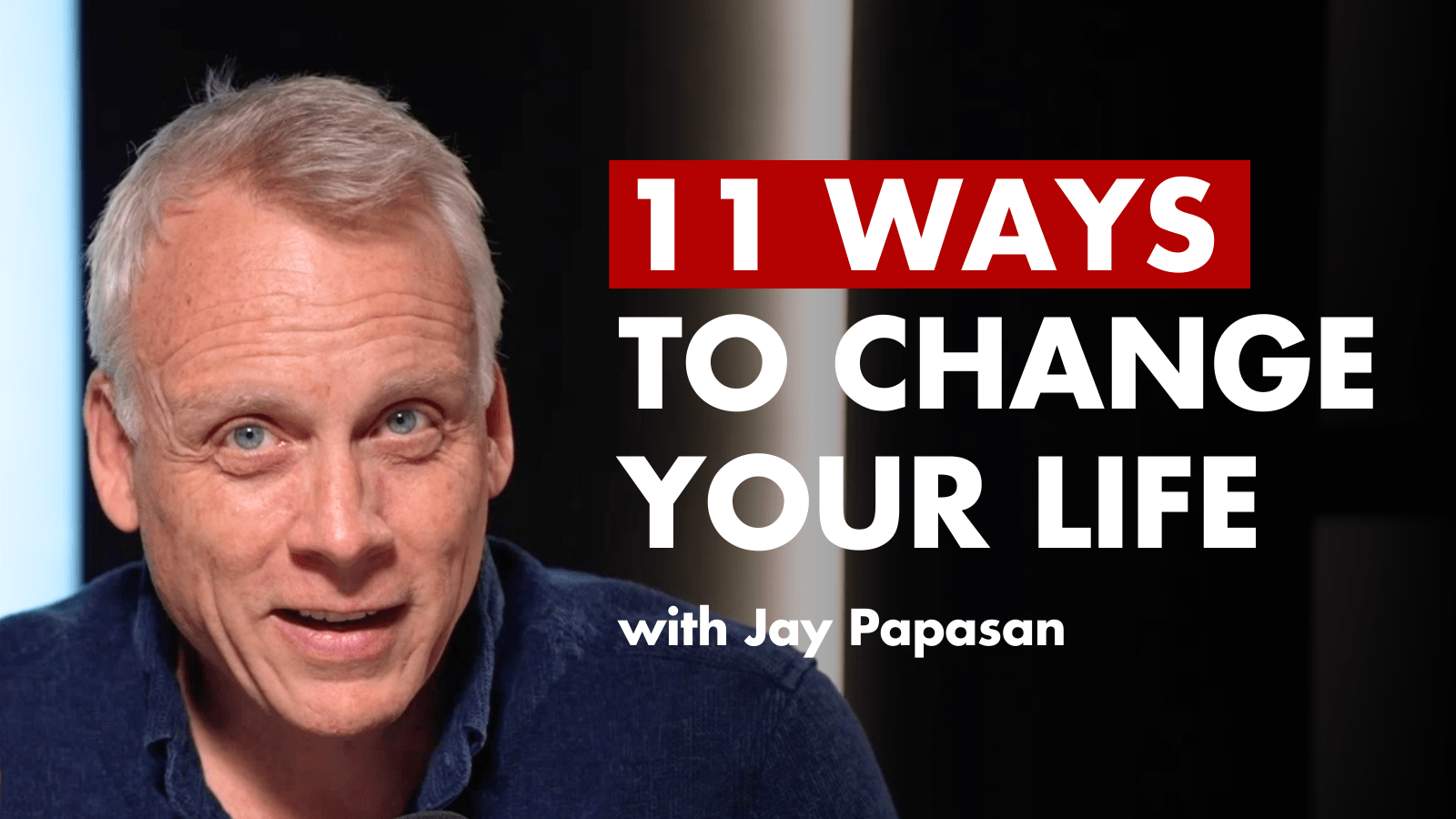
So, number one, love is an infinite resource. Let’s walk through 10 more. And if you want, in the comments on our podcast, whatever, let us know if you identified something that I just totally missed. But I’ll go through these. They’re not in any particular order and I’m not gonna linger on any of them for too long. But I do wanna hit each of these. And we’ll put them in the show notes ’cause if you’re listening to this, maybe you’re driving in the car, maybe you’re walking the dog, I know 10 is more than most of us can keep in our head, especially when we already have one more. So, it’s 11 total. So, now, we’ll put it in the show notes if you want to go back and say, “What was that third thing?” But I’m gonna walk through them now.
Number one, kindness. So, you can offer kindness to someone else, and it tends to inspire people and create a rippling effect. Again and again, you see it. Just be kind. Someone shows up, and they’re not being nice to you, 99 times out of a hundred, it’s got nothing to do with you. It’s got to do with something bad that happened in their day. So, if nothing else, if you could be anything in the world, be kind.
And it is one of those things that never runs out. It can be a little tiring some days if people aren’t reciprocating, but in my experience, when we show up kind, the world does show up and they thank us and it inspires others to acts of kindness.
Two, creativity. I’ve written about this, I’ve talked about this. I can remember when I took on the podcast, and then the newsletter, I was like, “I’m gonna be doing so much that my creativity will run dry.” But every act of creation sparks new ideas. And that was really radical for me as a writer. It was really radical for me on this show, the idea that the act of creation would always spark more. And it’s been true in my life that the more I do, the more ideas I have, and there’s more than I will ever get to in this lifetime at this point, so, creativity is another infinite resource. The more you use it, the more you’ll have.
Gratitude, right? Every single day. We have an opportunity to express gratitude to anyone and everything around us. I remember running into an old man, he was walking out of the building when I was walking in. He was probably in his mid-90s. That’s gonna be my guess. And I just said, “Is it a good day?” And he laughed, and he says, “Every day on this side of the ground is a good day, brother.” And I just cracked up and I was like, “Yeah.” So, at the very least, every single day, we woke up on the right side of the ground, we have at least one thing we can be thankful for.
But the more we are grateful, we tend to see more things that we need to be grateful for. It is one of those contagious things, and there’s lots of research behind it. At our recent event, Jay Shetty actually gave like a fifth of his speech to this idea that gratitude begets gratitude. As we express gratitude, we see more that we can be grateful for.
Connection. Authentic connection feels scarce. We’re more connected than we ever have been through the internet and everything else, but people feel isolated. So, how can you connect with another person? How can you reach out? As Liz Bohannan said last summer, “Be first.” Hey, do you want to do coffee? Do you wanna start a book club? How can we offer more connection?
Curiosity. This is a big one that feels scarce right now. But when we ask questions, like we tend to multiply our understanding, and right now we have a lot of judgment without curiosity. So, every day that we have a chance to be curious, that’s something. I can tell you, I am a very, very curious human being. I want to know how everything works. I wanna know the definition of every word I don’t know. I’m that guy. And that’s one of the reasons I’m a writer. But curiosity creates, like, this amazing thing where we get to know people and know people around us and the world around us. And what we know about, it’s really hard to dislike. So, curiosity begets curiosity. It’s infinite.
Hope. When we encourage other people, it actually creates more encouragement in the world. It spreads optimism and resilience. So, hope is one of those things that we may be waiting for and we just need to give it.
Inspiration. When you inspire others, it circles back.
Positivity. A positive outlook is contagious.
Encouragement. When we encourage others, when we offer words of encouragement, we plant the seeds of confidence for them and in ourselves.
And finally, number 10 or number 11, if we’re counting love, would be forgiveness. Like, forgiveness is something that may be hardest to do, but when we forgive others, we don’t just release them, we release ourselves. It is one of those things that compounds in its own unique way. We get to lay down a burden that we’re carrying that resentment. We also get to lift it from them. Simultaneously, we both benefit and we don’t have to carry it any longer. And it’s one of those infinite resources that, a lot of times, we don’t feel like we have any in our supply at all.
So, there’s all of these resources around us that we can tap into. And instead of waiting for them to show up, the real key here is to start giving them away. And when we give them away, they tend to multiply, not just for us but for those around us. So, one of the reasons I think a lot of us struggle to give more of these away, and then they feel like they’re in short supply, if you’ve ever been in a cold place and you’re actually wearing mittens, maybe you have to go back to your childhood or if you were born and raised in Florida, maybe you’ve never worn mittens, but imagine trying to open a door knob with mittens, it’s kind of hard. You have to grip really hard. It’s like this idea of opening a door with mittens. That’s what it can feel like to tap into these resources.
And so, after the break, I wanna dive into a little bit about why we, sometimes, can’t see them and why, sometimes, they feel more scarce than they are. If we can get past those things, then we can find them and give them away and get the benefits for ourselves and those around us. So, I’ll circle back to why they feel scarce right after the break.
——————
Jay Papasan:
So, welcome back. So, maybe it was a dubious metaphor, but the idea of opening a door with mittens, a lot of times you can tell people if you wanna feel more grateful, be grateful. If you want to have more hope, be hopeful. And it just feels like this circular logic and you’re like, “Wait. Stop telling me to do things.” That’s where I’m going. Like, it can feel difficult. Why does it feel that way?
So, I’ve studied Brene Brown. She’s an amazing researcher. Hopefully, you’ve read her work. She wrote a great book called The Atlas of the Heart. And I took a lot of takeaways from that book. And one of them is that she identified 87 distinct human emotions. And here’s the thing, 87 emotions, most people can only accurately name about three. They can only accurately name three emotions. A lot of times, we mistake frustration for anger. We mix them up, and we don’t know exactly what it is we’re feeling.
So, for me, when I look at this, like we have this amazing color palette of emotions, but we’re walking around seeing the world, kind of, in gray scale because we can’t truly identify the feelings that we want and feel like we want to feel more hope, but we really don’t know what color that is on our palette, and how to exactly identify it when it does show up.
So, the first piece may be that we don’t know how to clearly identify the thing that we’re seeking in the world. It’s one of those things like you’ll know it when you feel it, but like, how do I reach out and grab it?
The other finding that she found in that book is, a lot of times, when she would ask people about love, they didn’t talk to her about their loving relationships. They told her about the heartbreak. That when they talked about what is the positive emotion that they’re seeking, they would immediately think of the negative. I don’t know all of the mechanisms that go into this, but if she asked about belonging, they would talk about the time they were excluded. If she talked about connection, she talked about their feeling of disc… they would say their feelings of disconnection, that if they wanted to talk about anything in that realm, there was this underlying fear that when things that they wanted to experience, they would notice the opposite, and they were all afraid somehow that they might be unworthy of those things. That underlying all of it. And that goes into her shame research and all of the baggage that we carry around.
And so for many, many reasons, a lot of times, when we look up in the world, our focus is either we’re missing it ’cause we can’t name it or even more pronounced, our focus isn’t on the positive, it’s on the negative that that’s where our brain goes naturally. Like if she’s asking in a clinical area about, talk to me about the love you’ve experienced, and all they can talk about is the heartbreak, there’s some negative image that’s happening in our brain.
So, there is something out there that’s kind of getting in the way. And then we go back into this pattern of, “If I can only see the bad. I want love, but I can only focus on the heartbreak. If I want this, but I only see that.” We get back into that numbing and scrolling cycle and we really do wanna break out of it.
This is where this moment of action can show up. Like if we can identify something that we think will offer hope, then we can offer it. If we can offer gratitude, that’s the easiest of all of them. We can just say thank you. I’ve given whole episodes on that and the power of just being grateful and thanking people and how that actually accelerates so many good things for us in the world. They even talk about the act of giving, like when we give of ourselves, it’s not even altruistic. There are so many health benefits. It’s better than quitting smoking for longevity when we start giving more instead of waiting to be given to.
So, there’s so many reasons to go out there, but if you think it’s scarce, it could just be we don’t yet know on average, how to name the things that we want and recognize them when we do see them. And sometimes, when we’re focusing on the thing, we only see the negative image of it. So, don’t think that these things are scarce. What we haven’t learned how to do is identify them and see them for what they are. But the ultimate hack to get around it is if you want more of any of those emotions, start giving it away. If you want to feel more love, start telling more people that you love them, right? If you want to feel more connection, reach out and ask to connect. If you want to feel more forgiveness, start forgiving.
It is a weird thing, right, that we give in order to get, but it’s true. And it is one of those things where if we act from our hearts and we’re doing these things, the benefits come back to us full fold often in multiples.
At the end of the day, one of the other big takeaways is we cannot selectively numb emotions. And I can thank Brene Brown and some of the researchers that she studied for this as well, but the idea like, I want less of these things, like I can’t have less fear without also numbing my hope. I can’t have less heartbreak without also numbing my love. When we numb ourselves by scrolling with all of our addictions, right, whether it’s just social media or it’s alcohol or something else.
Like for me, I can tell you, when I went through my worst stage of grief, my numbing medication was work. And for months and months and months, I would work weekends, I would work nights, and I needed to stay in motion because I was afraid if I was still too long, the grief would just jump out and grab me. And that was a numbing procedure that I went through until, finally, I was able to break out of it. But when I was numbing my grief, guess what? I was numbing everything around me. If I was trying to make the darkness go away, I was dimming the light of everything else in the process.
So, we can’t selectively numb things. Realize that the numbing behaviors we’re doing to cope with how things bads are, we’re not just making the bad stuff go away, we’re making the good stuff go away too. That’s why I wanna point us back towards this positive action. How do we do a net positive action to get more of the net positive in our life.
And that’s where we come all the way back around to Mr. Rogers. I don’t want you just to look for the helpers. My challenge to you is to become one of them. What are the things, the emotions that you want more of in your life? What are those feelings that feel like they’re scarce right now? They’re scarce in your family. They’re scarce in your workplace. Guess what? You have agency you can do through simple act of giving them, create more of them in the world.
In your world and the world around you, you never know how that magnifies. If you go up to a stranger and you give them a compliment, “I really love that outfit. I don’t know if someone told you today, but you look great in that,” you’re not trying to pick ’em up. You’re just trying to make ’em feel good. We don’t know how that will go out into the world, right? How that individual might go to another place and express gratitude ’cause, now, they’re feeling good about themselves. Now, they have the capacity to pass it on. It’s a small thing but to give an act of kindness, we create more kindness in the world.
So, I’m gonna wrap up those 10 emotions really quickly. We’ll start with love, and I want to go through them really quickly just to refresh your memory ’cause then we’re gonna get to our challenge.
————–
Jay Papasan:
So, Jay’s very unofficial inventory of our infinite resources. We have number one love. We have kindness, creativity, gratitude, connection, curiosity, hope, inspiration, positivity, encouragement, and forgiveness. Any and all of those, I believe are an infinite supply and it starts with us giving them away. If we want more of that in our lives, we have to start by handing it out.
So, my challenge to you for this week is, which of those feels the most scarce to you right now? What’s the one that would be most welcome? My challenge to you is to identify the one, and then find one person to give it to. That’s it. Just see what it feels like. If maybe you were wishing people expressed a little bit more gratitude to you, that you just thought of one person who could really use some words of gratitude and you gave it to them. Start with just one simple act and see how it goes. I promise you, if everybody did this, the world would be a better place fast.
So, let’s stop doom scrolling. Let’s stop numbing. That’s not the answer. When we do that, all the good goes away too. Let’s start looking for the helpers and start becoming the helpers. And it only takes one act this week by you.
Disclaimer:
This podcast is for general informational purposes only. The views, thoughts and opinions of the guests represent those of the guests and not ProduKtive or Keller Williams Realty LLC and their affiliates and should not be construed as financial, economic, legal, tax or other advice. This podcast is provided without any warranty or guarantee of its accuracy, completeness, timeliness or results from using the information.