Jay Papasan:
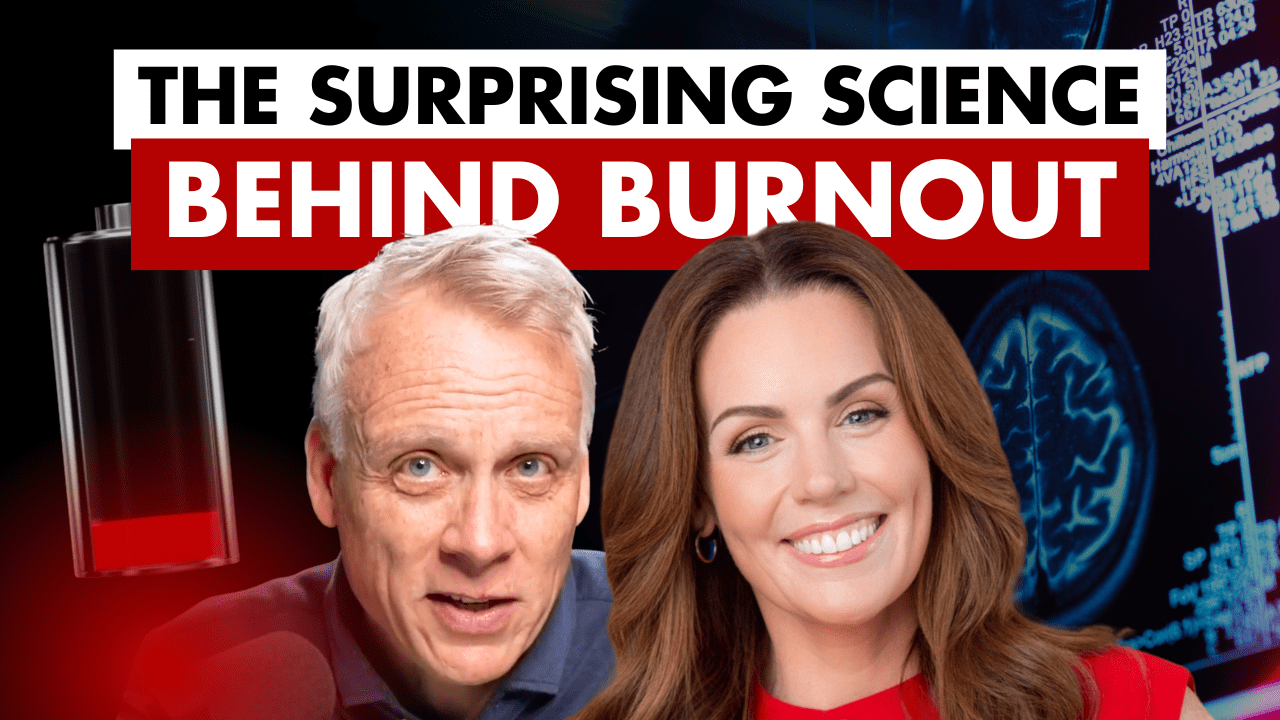
So, this week, we’re talking with Dr. Robyne Hanley-Defoe about the curse of the strong. What’s the curse of the strong? Burnout. The people that we look around, and we see as the top performers, the highest performers in every area, they’re often the people most at risk for burnout.
And Dr. Robyne, she’s a behavioral psychologist, she’s a published author. She wrote a book called Calm Within the Storm, another one called Stress Wisely. She is an expert on strategies around resilience and how we can grit through but do it in a healthy way that’s sustainable for the long term. And she works with high-performance athletes, companies around the world to solve problems all related to this idea of how do we avoid burnout and how do we get out of it if we’re there.
And so, we’ll walk through some strategies with Dr. Robyne today. I hope you find this helpful. If it’s not for you, I hope you’ll share it with someone that is also maybe in that season where they’re at risk for burnout and they just need to see the light at the end of the tunnel and have some really simple strategies for working their way past the curse of the strong – burnout.
——-
I’m Jay Papasan, and this is The ONE Thing, your weekly guide to the simple steps that lead to extraordinary results.
——-
Jay Papasan:
Dr. Robyne, welcome back to the show.
Dr. Robyne Hanley-Dafoe
Thanks for having me, Jay.
Jay Papasan:
It’s always a pleasure. Now, I want to talk about burnout today. And I love a quote I found from you on LinkedIn, and you refer to burnout as the curse of the strong. Why do you say that?
Dr. Robyne Hanley-Dafoe
One of the things we noticed that all persons who experienced burnout had in common is that they were exceptionally good at their lives. They were strong. They were people who were able to do amazing tasks. They experienced greatness consistently. And where they struggled and where they ran into that wall about burnout was trying to do a lot of it by themselves.
So, it was almost as this kind of what went along with it, that they were able to be high performers, they experienced mastery in so many dimensions of their lives, and eventually they just hit a point where it actually started to work against them.
Jay Papasan:
Wow. I see this in some of my work when we’re training and coaching folks that they have a muscle that is so strong that has been something they’ve been rewarded for and acknowledged for their whole life, their ability to do things at an exceptionally high level and a lot of it. You know, like they say, what’s the old saying? If you want something done, give it to a busy person.
Dr. Robyne Hanley-Dafoe
Busy person. Yes. Yes.
Jay Papasan:
And that holds true in business, right? You look around, and the people who are busy seem to be getting busier. That’s also how they get advancement in their careers. That’s how they get ahead as entrepreneurs. But it sounds like that’s a muscle that’s being overused. What are some strategies we can kind of tackle to try to maybe avoid burnout? Or if someone listening is already there, how, maybe, we can help them recover from that?
Dr. Robyne Hanley-Dafoe
Yeah, Jay, that’s such a big, bold question. I love it. And I think what’s really helpful to position this is that what you described, that hustle, do, perform, achieve, going that extra yard, that extra mile, there is a season in our professional development where that makes sense. It’s usually paired with a particular age. It’s a season. It’s with this kind of age where we’re able to go essentially above and beyond for a period of time.
But I think what so often happens is that that’s a practice and habit routine rituals that people use to be able to achieve success. And then, they just keep doing it because, obviously, it worked and they’re not necessarily thinking about the next evolution or perhaps the revolution that’s necessary to be able to sustain top performance. And as I often say, achieving greatness once isn’t actually that hard. It’s sustaining greatness in a way that’s well, which is actually the real question, the real challenge.
Jay Papasan:
I immediately go to people who are amazing at doing, sometimes struggle to delegate and say no. Are those the boundaries they need to have? Like, is this what I need to be doing because I’ve always done it? Or is my next evolution to lead and succeed through others? Like, where do we go once we have self-diagnosed? Like, that’s where we are.
Dr. Robyne Hanley-Dafoe
Yes, yes. So, I think, first and foremost, it’s helpful to know, like, what are we actually diagnosing? Like, what does burnout actually-
Jay Papasan:
Yeah. Like, what is burnout? I mean, we say it all the time. I mean, we can say it after a long, hard Saturday morning with two kids on the soccer field.
Dr. Robyne Hanley-Dafoe
Yeah. And so, interesting. The World Health Organization identifies burnout, and this is where there’s a wee bit of the complexity, they identify it as work-related experiences that bring upon three factors – cynicism, exhaustion, and decreased performance. So, the World Health Organization says this is something that happens in a work setting, and we’re gonna see cynicism, we’re gonna see exhaustion, we’re gonna see this idea of lower effort in terms of our performance starts to decrease. The reality though is that burnout isn’t within the confounds of just our professional work or the paid work that we do.
Jay Papasan:
Thank you. I was thinking that. I mean, people don’t get credit for everything else they’re dealing with. They’ve got aging parents. They’ve got kids going to college. They’ve got all of life around them as well.
Dr. Robyne Hanley-Dafoe
Absolutely. And that’s the big kind of where I think there’s a wee bit of a tension is that we talk about it in a particular way with a particular set of strategies. However, the focus is predominantly on the work. And one of the things that we found in our research, Jay , is that it’s not always about the work. Sometimes, as you described, it’s that ecosystem around the work. The elderly relative that we need to take to a medical appointment. And we, all of a sudden, aren’t able to, perhaps. And that creates this tension. This creates this almost like a wee bit of this idea that I’m not living in my values, and it creates this disconnect for people. So, we know it’s a lot of the factors outside of the work as well.
Now, when we think about looking at all of the pieces, all of the moving parts, the other variable is that it’s something when we think about burnout, Jay, it doesn’t happen overnight. It’s this slow, steady erosion where, all of a sudden, we get to this place and we wonder, how did we get here? Why does everything feel so hard? Everything feels urgent. We’re almost, like, plagued with this scarcity mindset that we don’t have enough resources, we don’t have enough of this, and we don’t even have enough sleep now, we don’t have enough strategies, and it creates this spiral effect.
Jay Papasan:
So, cynicism’s the one that kind of stopped me. Like the other ones I recognize, but I guess once you said it, I was like, “I can see that. You know, no one wants to be cynical,” but does it show up with this just kind of – and I know you’ve got a new book coming up on hope, this idea that it just doesn’t matter. Is that where it shows up? It’s like, “I’m working. It just doesn’t matter anyway. Like this is not going to amount to anything. I’m just doing it all, and it won’t matter.” That’s maybe aligning with values and our sense of hope for the future?
Dr. Robyne Hanley-Dafoe
Absolutely. So, we do see it takes this kind of idea about like, what’s the point? What’s the point? And it’s not going to work out anyway. Or when, for example, we’re popcorning new ideas around a boardroom table, and that person says, “We tried that five years ago, and it didn’t work then, so it will never work now.” Like, they just get this really pessimistic view about the future. And we know they start to get this sense of despair, this helplessness, which also ties into what we see in burnout when we don’t have the agency to think we can impact the future or be able to initiate and sustain change. And again, it’s like that chip on your shoulder that gets extra heavy.
Jay Papasan:
So, the idea of agency is really important. When we feel like we don’t have control anymore, it really affects our morale. And I know a lot of our high performers, they really index on whether they feel like they have agency in the moment, right? When they don’t feel like they have agency is when they’re most likely to give up hope, in my experience.
I remember a great story Morgan Housel told on his podcast about the young FDR. And when he was growing up in that age, it was maybe the 1920s or something like that, you know, you think about how regimented their life would have been. You know, he had to go to his tutor, and he had to do this, and he had to do that. And one day, he threw a bit of a tantrum, and he just says, “Well, why can’t I do what I wanna do?”
And his mom was probably kind of an enlightened one for that age kind of made a deal with him that for the next few days, he could just choose his own schedule. And the story as it goes, within a day or so of his newfound freedom, he started doing all the things he was doing before, but he did them happily because he got to choose to do them. And I’d never heard of this. You’re a psychologist, but like it’s called reactants, is that right?
Dr. Robyne Hanley-Dafoe:
Yes, that’s right.
Jay Papasan:
And it’s this idea that when we lose agency, it has a real impact on us as human beings about how our attitude about our work, our attitude about our life. Can you unpack that a little bit for us since you actually know what reactants means?
Dr. Robyne Hanley-Dafoe:
Yeah, absolutely. Well, again, I love that story. And again, it’s that notion of that locust of control. Like what is within my control? What is outside of my control? And the reality is none of us really like to be told what to do, right? We all have that kind of inner teenager who’s like, “No, I don’t like authority. I don’t like people telling me what to do.” And a lot of entrepreneurs, high performers go into this, like, unknown frontier where we don’t have the security, we don’t have the predictability perhaps of that nine to five because, ultimately, we want to be able to set our own schedule. We want that agency. We want to be able to have that flexibility.
And what’s quite interesting and an example of that that I can share with you goes back all the way to an amazing writer years and years ago, Barbara Colorosa, introduced this idea about, as adults, we struggle with being able to make decisions, for example. It’s one of those things. Imagine you all get together and be like, where do you want to go for dinner? It’s like, “I don’t know. Where do you want to go for dinner?” “I don’t know. What do you feel like tonight?” Right? And we play this ping pong match of none of us want to make decisions; although, we make very high-risk decisions in our jobs, in our careers every single day.
Jay Papasan:
Every day.
Dr. Robyne Hanley-Dafoe:
But some of these simple decisions, it feels overwhelming. And what Barbara Coloroso drove back to is this idea is, when we were little, people made the simple choices for us. We didn’t have agency. And her invitation when we’re little is to have a parent who says, “Do you want to wear red pajamas or blue pajamas?” The way we want to say, “Do you want carrots or do you want peas?” We have to learn that capacity to be able to make decisions.
And when we then do it, we actually have a different relationship with that notion of being given information. We start to have that sense of ownership around being able to make decisions. And also, we’re choosing to exercise our free will. And as people, that’s essentially one of those key components where we have to feel as though that we are choosing to engage in. Even if the struggle is difficult, even if that struggle is uncomfortable, we are the ones that are choosing to walk that path.
Jay Papasan:
I love that. I mean, you just triggered like five different memories for me. Our youngest child had a lot of skin sensitivity. So, if the socks didn’t fit perfectly, it was a struggle. If the shirt was too tight in the collar, it was a struggle. And so, as a working dad, I took the mornings. I would get both of our kids dressed, get their teeth brushed, get them breakfast, and I would take them to school because that was my chance to get more one-on-one time.
My wife, the entrepreneur, had the liberty to pick them up and could get them on the way home. And if you’re a parent, you know that a lot of the action happens on the way and from school. By the time you get to dinner and you ask your kids, “What did you do today?” “Oh, nothing. Nothing.” Right? You get that whole action.
And I remember, it would take me forever, and I would lose my patience with Edward. And finally, my wife just said, “While he’s in bed, lay out three outfits. And then just say, ‘You get to choose.'” And if he chooses a combination and that solved my mornings, instead of looking at – I mean, it’s only – I mean, if you added up maybe seven pairs of pants, seven shirts, what I mean, kids don’t have a giant wardrobe, but exponentially he saw all the options and would shut down. And if I chose for him, there’s that agency thing. That was a non-starter. But the moment I gave him choice, it mattered so much.
It’s one of the things I’ve learned from Gary, and he learned this actually from a coach. He just learned that people would hire these high-dollar consultants, and they would come in, and they would tell companies what to do, and they rarely implemented after spending hundreds of thousands of dollars on these consultancies. And the word we use or the phrase we use is “authorship is ownership.” When we give people some agency in choosing the work and the path to the work, how do you want to achieve this? The goal may be non-negotiable but how are we gonna approach it? And you might give them choices, A or B, right? As the leader, when they have authorship, they take so much more ownership of the work.
Dr. Robyne Hanley-Dafoe:
Absolutely. And Jay, just to really illustrate that point, I’d love to, what you just described, kind of show it on two ends of the continuum. So, yes. So, as a leader to say, you know, “Here are three strategies or three approaches that we can do, let me, and help me understand which one’s going to make the most sense.” So, yes, offer those three choices.
But let’s take another scenario that’s like on the other end of the continuum. Let’s say somebody has just gone through a really traumatic experience. Let’s say that somebody’s lost a colleague, lost a partner, lost something. Like they’ve just really gone through a really difficult moment. And so often, we’ll show up to that person and say, in a compassionate way, “Please just let me know what I can do for you. I want to help. What can I do?” What happens in that moment is this person is already in distress. This person is already in this very difficult place and it’s overwhelming. And usually, they say, “Yes, thank you,” and it’s polite, and life goes on.
There’s something powerful that happens though. If you show up to a friend who’s lost somebody and say, “I’m so sorry you’re going through this. These are three things that I can do for you. I can walk your dogs. I can order dinner for your kids, so your dinner is looked after tonight. Or we can just grab a cup of coffee and talk if you need somebody to listen.” As soon as we give people choice, what actually happens is that, all of a sudden, there’s that sense of relief because we’ve put some parameters on what we’re talking about.
And I can share with you, supporting families and groups and organizations who’ve navigated big heavy things, sometimes that is the kindest gesture to say, “Hey, these are the three things. What can I do? Pick one.” It’s so much easier than saying, “You just let me know,” because, now, we’re putting that ownership on them to try and generate ideas. So, it works at the extreme of elevating high performance, but it also works in this place of just deep compassion for somebody who’s caring a lot right now.
Jay Papasan:
And the thing we always say, and I’ve said it a thousand times, and I know this too, and I try to be better is, “Let me know if there’s anything I can do.” And we’re placing this kind of boundless offer, which actually makes them have to choose. And they have struggles. like they may struggle to ask for help. We may be diving into all of the other stuff that they deal with, and it just isn’t effective. So, I love that advice on both extremes.
So, before we wrap this up and go to a quick break, if I am not in a position where I can grant agency, maybe I’m an entrepreneur, the business is hectic, it’s a tough season, I’m also dealing maybe with parents or children and all of the other struggles that we deal with as modern people today, how do we find our own agency when we feel like we’ve lost it? Everything feels like an obligation. Everything feels like, “I must do,” not “I get to do.” Is there some sort of switch we can flip and how we view things to maybe help us through that?
Dr. Robyne Hanley-Dafoe:
Yeah. So, of course, there’s always just that power of our language. So, even though like, “I have to do this” versus “I get to do this.” I get to try and figure out a way to make all of these things work today. So, even just the language of using, “I get to do this” versus “I have to do this,” flips a switch.
The other kind of invitation I like to encourage people to think about is instead of saying, “You need to set 30 minutes for yourself every morning to get your little duckies in a row,” right? And I don’t care if they’re in a row. They can be just, at least, swimming in the same body of water at this point, right? So, there’s not a lot of expectation. Let’s just corral the chaos. Let’s corral the chaos just a wee bit. And if I said, “I need you to take 30 minutes in the morning just to get your ducks in a row,” for most people, that will feel like another thing to do.
How I like to phrase it, Jay, is to say, “Wouldn’t it be nice if you had just 30 minutes to figure out what matters most today and make sure you can make it matter most?” Wouldn’t it be nice just to have just a few minutes in the morning to set some intention, get clarity, to be able to know what’s your one thing today. And when you achieve that one thing, you know you’re on the right track. Just that invitation changes the vibe.
Jay Papasan:
In my experience, it doesn’t even take 30 minutes.
Dr. Robyne Hanley-Dafoe:
I know.
Jay Papasan:
Right? It just takes a calm moment. I used to coach some folks that I worked with to just set an egg timer for five minutes. I said, “You don’t need more than that. If you do, you’re overthinking it.” But just look at all the stuff that’s on your plate and just say, what’s the one thing that really matters here? What’s the one thing that I’ll feel good at the end of the day if I made progress on even if I don’t finish it? That identifying the priority that’s hidden among all the screaming stuff that happens in our daily life, and then just kind of starting there or just giving yourself a little bit of time to make progress. But if nothing else, that 30 minutes that we got to just be by ourselves might be the thing, the lotion that we need to kind of ease the pain in that moment.
Dr. Robyne Hanley-Dafoe:
Absolutely.
Jay Papasan:
All right, well, let’s take a quick break. And on the other side, we’ll dive into some other strategies that we can kind of help ourselves through a period where we may be approaching burnout or help others.
——-
Jay Papasan:
So, welcome back. We’ve really gone kind of deep into this idea of agency, Robyne. And I love it because it matters so much to high performers. It matters so much to the people that work with them, and serve them, and work in these companies that are trying to do their best. When we feel like we’ve got control, everything can be better. And sometimes, it’s just about the language we use, or how we approach the work, or how we prioritize the work by starting with something that we need for ourselves. Fill our cup before we start filling others. What are some other things that we can be thinking about as we may be navigating or trying to avoid this thing called burnout?
Dr. Robyne Hanley-Dafoe:
So, I wanted to share with your listeners strategies perhaps that they haven’t heard before. So, we’ve heard about boundaries, we’ve heard about saying no, about priorities and clarity. I really encourage people, first and foremost, when this ties into some of the beautiful work with The ONE Thing, is around our values. Because one of the pieces that we saw in our research, Jay, was this idea that it wasn’t actually the work, it was time outside of our values that was eroding our sense of efficacy, agency, and confidence faster than anything else.
So, I’ll give you an example. If I value being a present parent, like if, really, my identity is attached to me being a really hands-on, hearts-on, minds-on parent, and I have missed every basketball game because I had to meet with a client, or if I missed every football game, or I might be at Friday Night Lights, but I’m on my phone. Like if I’m doing those behaviors, that is what’s going to tax me in a greater way than just the volume of work.
So, we have to ensure we are living our values. So, again, and the really interesting thing I share with folks, if you’re ever in that situation where you have to pick between work or your family, always pick your family.
Jay Papasan:
Yeah.
Dr. Robyne Hanley-Dafoe:
Now, often, when I share that, it is the work who has brought me in to work with their teams, right? So, here I say like, yes, you’ve brought me in here and I’m telling them to pick their family over their careers. And the byproduct though, when folks have just a wee bit of agency to be able to show up for those games, to take that parent to the appointment or whatever it might be, the byproduct a high performer will turn in return for their employer is loyalty.
When people have just that little bit of flexibility, they will be loyal. They will go to the extra mile. They will keep showing up because it’s allowing them to live in alignment where they’re able to be successful, productive, prosperous, as well as value aligned, which makes a huge difference.
Jay Papasan:
I love, love, love that answer. And it’s so true. It rings true so much with everything that we do here at The ONE Thing. A lot of people think that like, “Oh, let’s identify your core values. It feels kind of airy-fairy or frou-frou.” It’s like, “Okay, great. We’ll put our mission statement on the wall.” They don’t understand how deep that current runs in our hearts and how important it is that we feel like we’re operating in some alignment with the things that matter more.
And I’ll give you an example. I learned the hard way. I remember one of my first employees that she had just had her second child. Her name’s Vicky. I miss having her around. She’s working with one of my friends now as a researcher. She’s a fabulous employee. But she was really struggling with the demands of the work that we do here working for a self-made billionaire and writing best-selling books. And it was hard work. And we kind of sat down, we talked through some of the struggles she was going through, and we just came up with a plan.
We figured out together that if she could get home by a certain time, and the thing that she really wanted to make a stand on was that she would get both of her dogs leashed up, she’d get both of her kids, and she would go for a walk with them in nature. And sometimes, she would put her mom on speakerphone or a family member but just 30 minutes, making sure that she had space for that 30 minutes allowed for everything else to be unmanageable at times, because that one thing was a guarantee.
And I would just manage her. I’d be like, “Hey, you need to be out the door. You’ve got an appointment with your kids right now.” And that little negotiation changed the trajectory of that work relationship. It was a small concession from a work point of view, but the work product that she produced when she finally found some center, it allowed her to do so much more. So, the payoff for the business is huge if we allow ourselves to make these small concessions to let people be real where they are.
Dr. Robyne Hanley-Dafoe”
Absolutely, Jay. I love that example, and you’re absolutely right. And again, I just really wanna reinforce that this doesn’t have to be monumental, but the byproduct for the person who’s having just that little bit of flexibility or that little bit of that shifting of how we’re doing the work, that is monumental for them.
Jay Papasan:
Yes.
Dr. Robyne Hanley-Dafoe:
So, it’s not a big deal as the owner, as the founder, as the president. But let me tell you, to them, it makes the world of difference. And that’s why you will get the loyalty. That’s why you’re gonna have this strength and commitment to integrity in terms of good practice, because they know that’s special. They know that this matters, and you see them as a person, not just as a product.
Jay Papasan:
There’s no promotion, there’s no raise, there’s no bonus that’ll ever truly make someone feel better about the idea that maybe they’re not being the best parent they can be, or the best husband, or the best child. Whatever that role is, we have these bigger roles in our life in terms of our duties or our responsibilities to our family and loved ones. And when we feel like we’re failing them, we feel like we’re failing everyone.
And so, just finding an accommodation around those small things can be huge. There’s a quote that I keep taped up, and I share sometimes from Simon Sinek, and I’ll just read it. It says, “Working hard for something we don’t care about is called stress. Working hard for something we love is called passion.” And I’ve found that when we work with people and work with organizations to align their current work with their values, they might be surprised that there is already alignment, but they can’t see it.
Like how is what you’re doing actually serving those relationships in a bigger way, even though it doesn’t feel like it in the moment? And I’m not talking about forcing things, right? I’m not trying to fit a square peg into a round hole. But almost always, the choices we’ve made to be where we are today, we made them unconsciously in alignment with our values, but we’ve gotten lost in the woods. We can’t see the path anymore. And it takes a coach or a leader or a mentor or a friend that can just help us see, “Hey, you’re not that far off the path. Let’s just get back on it and remind ourselves why we were here in the first place.”
Dr. Robyne Hanley-Dafoe:
Absolutely, I love that. And what it reminds me of and brings to the top of my mind is this idea that, you know, when we’re working with groups and high performers, especially again, that hustle, do, achieve, perform, that beta brainwave state, which we know it’s that little bit of a buzz, like it feels really good. And when we’re in like the right dose of it, it feels awesome. However, that also sends us this kind of misconception that we think we have more time than we do.
And what I often hear is what we call the when-then trap. When I just get this sale, then I’m going to show up and live in my values. And then, I’m going to do all of the things. However, what we see is that we need to exercise those behaviors, especially in the sticky seasons, especially in the heavy seasons.
So, there’s a wee bit of that notion that, you know, if you feel like, “Oh, I don’t have time to go for a walk. I don’t have time to go outside,” you actually have to go out for two walks because this idea that we will just try to push through, because that has served us well. As you said at the beginning, that’s got us those promotions. It’s got us this sense of security.
What happens though is that there’s only so long that we can operate in that state of high performance without arrest and recovery. And what I share with high performers is if we look at athletes, for example, when I’m interviewing Olympians or I’m working with world-class performers, and I ask them, “Do you feel bad when you take a rest day, or when you go for a massage, or you go to see a therapist, a counselor, a chiropractor, do you ever feel bad?” And they look at me like I’m just out of my mind. They’re like, “Of course I don’t, Robyne. That’s part of high performance. It’s injury prevention. This is how I’m able to stay at the top of my game.”
However, in how we do our work, I don’t think we view ourselves quite as athletes in the sense that we feel guilty if we take time to look after our needs. And what happens is that we’re thinking that we have more time to be able to do all this recovery on maybe our evenings and our weekends. However, as entrepreneurs, we know we don’t ever really sign off.
So, my invitation for high performers is I want you to think of burnout the same way an athlete thinks around injury prevention, because the injury we’re trying to prevent is burnout for high performers, and this is the key, Jay, it is so preventable. It is absolutely so preventable. We don’t have to get ourselves painted in that corner.
Jay Papasan:
Where can we start? Is it just that 30 minutes to analyze, like, maybe one thing today that we truly control, and we know for a fact is aligned with our values? Like I like to start small. Like I interviewed Chris Tucker earlier this year and he was like he’s gotten to a place where he takes Fridays off. He works four day weeks. He uses Friday to do just big thinking, creative work, and reward work, and just recharges batteries, so that he can be even more present the following week. Even I was like, “Oh, man. That feels extreme.” But like, what’s like a small island? Is it just maybe that 30 minutes that you mentioned earlier just to step back and just kind of assess our real priorities?
Dr. Robyne Hanley-Dafoe:
So, that would be lovely, the 30 minutes, if we’re afforded that. I think where we can start even smaller than that is actually just the practice of self-awareness. Getting to know ourselves. We have to know who we are and know who we are not. Right now, there’s so much noise in terms of what we’re supposed to be doing, ought to be doing, could be doing, to the point where it’s just so distracting. The question is, am I doing it for the right reasons? Are these actually things that I want to be pursuing?
So, the first one is just slowing down and taking inventory, and also noticing ourselves in the moment. Noticing if we are in a place of panic, right? And a lot of our high performance, it’s not feast or famine, it’s feast or panic, right? Like it’s not that we’re going to go hungry but, all of a sudden, things get really scary. So, just again, noticing. “Wow. I notice I’m having some anxious thoughts. What’s something that I can do in these 30 seconds to ground, to catch my breath and choose wisely?”
So, again, just catching ourselves. And the more we catch ourselves, the better we are going to be in a proactive way of addressing it. And I’ll give you a really quick example. Just this week, I’ve had a very, very full week, and I happened to be pouring some cereal. It was like midday snack, realized I hadn’t eaten enough calories, I’d under-eaten,so I grabbed some cereal and I was about to pour it, and I’m pouring the jug of water on the cereal instead of the milk.
And I love at the same time, all three of my teenagers, they just kind of yelled different sounds. Like nobody said, “Mom, stop.” It was literally like just these iterations of different sounds these people make. So, obviously, I stopped.
Jay Papasan:
Ahh!
Dr. Robyne Hanley-Dafoe:
Exactly. So, I stopped. And I was like, “Whoa.” And I was like, “Yeah, my bad.” And I switched out the milk carton for the water carton, vice versa. Anyway. And I shared that story with somebody and they said, “Wow, you must have felt like such an idiot.” And I paused and I said, “Not at all.” I met myself in that moment with just this big wave of compassion and thought, “Wow, I need to just slow down.” I said, “No, I didn’t call myself an idiot. I didn’t feel like I’d done something wrong.” It was just this perfect data point that I was moving to quickly. And all I needed to do was find my feet.
That’s one of my strategies, just find my feet, notice where I’m standing, notice what’s in front of me, what is mattering most in this moment, and just make the next right move. So, again, how we meet ourselves, that self-awareness, I really think is a super skill of what will make a big difference for people.
Jay Papasan:
Give ourselves just a tiny bit of grace, right? Instead of beating ourselves up to say, “Hey, that’s a sign maybe I need to just take a beat, take a deep breath.” I know last year, Carly, my chief of staff and I were going through a stressful period and instead of sitting in my office and doing our quick syncs of the day, we’d just take a 15 minute walk around the building and just changing the venue a little bit, getting outside, a little sunshine. It was amazing how just the act, I mean, I would calm down walking down the stairs to go out of the building. Just the transition from this place that we’re in.
And I know I do it, and I think a lot of our listeners do. A lot of times that busyness is a place to hide from those messy emotions, and some of those kind of self-doubts and fears that were maybe not enough or that panicky feeling. And so, we dive into, again, that muscle we may be overusing and just get busy because, wow, that’s when we’re “the best.” And I say that in quotes for a reason. When we really just need to stop for a second, step back. You said, find your feet. I immediately imagined you like standing barefoot in the grass for some reason, right? Get grounded quite literally and say, “Okay, take a deep breath, I’m gonna start over again.”
Dr. Robyne Hanley-Dafoe:
Absolutely. Just to unpack that experience you shared with Carly, there are so many things happening in science in that moment. And I would love just to take a second to unpack it. So, first, we’re doing a pattern interrupt, right? So, we’re interrupting sitting in the same space in the same area. Also something that happens, we have this cognitive overload, Jay, and it actually is associated – there’s research that talks, it’s about exposure to 90-degree angles. So, even just take a moment wherever you are right now-
Jay Papasan:
Wow!
Dr. Robyne Hanley-Dafoe:
– and notice.
Jay Papasan:
There’s everything in my background that’s 90 degrees except for this microphone.
Dr. Robyne Hanley-Dafoe:
Absolutely. So, there is just an abundance of 90-degree angles. So, think about it this way, for our brain to register our environment, that means it is going to be on repeat, processing 90-degree angles, 90-degree angles, the screens, the squares, like our buildings, our offices, our windows, our doors, like our tables. It’s just this abundance of 90 degrees.
So, imagine that’s a neurological pathway. And the same little neuron is firing back and forth, back and forth, back and forth. Brain-to-brain waves are fully at function.
And as soon as you go outside, as soon as you step out that door, there is just all of these other types of shapes and angles. And so, our brain starts activating other parts and this oxygen rich blood is going to other parts of our brain, which is just giving that one part a little bit of a break. It’s giving it just a wee bit of reprieve. So, being able to step away from just this abundance of our brain in these repeated patterns, it drains us cognitively. So, there’s the 90-degree component. The other is-
Jay Papasan:
You’re telling us not to be square.
Dr. Robyne Hanley-Dafoe:
We’re trying not to be square all the time. There’s a time and a season for squareness, but just not all the time. The other piece with Carly is you’re having an ear-to-ear conversation. So, when we have ear-to-ear conversations, it just allows us to feel safer. It helps us to feel like they’re on the same team, we’re on the same side versus this eye-to-eye conversations that we have so often, even in technology because what happens, our brain is perceiving this as a threat. Even though we know we’re smiling, and it’s a safe space, safe people, our brain is just noticing it’s on an acute state of what’s exactly in front of me, which causes stress on our nervous system.
And then, the last one, as soon as you go outdoors, it’s that experience of nature. We jokingly call it vitamin N. Our body naturally starts to re-regulate. And there’s even research that shows, Jay, being outdoors for an hour, not to say you have to take an hour break every day, but just being outdoors for a prolonged period of time boosts your immune system for up to seven days.
Jay Papasan:
Wow.
Dr. Robyne Hanley-Dafoe:
So, just getting outdoors builds up so our immune system is ready, and it’s steady to be able to fight any of those viruses and the bacteria. So, simply just getting outdoors. What you’re doing with Carly in those 15 minutes, you’re giving your immune system the boost, you’re giving your brain patterns a rest, you’re resetting, you’re in connection and community, and no wonder that 15 minutes feels so recharging.
Jay Papasan:
Wow, I love that. That’s so interesting. And like my brain was going back to like where I was going with the whole thing. I mean, everybody says just get out in nature. But when our second child was colicky, and someone gave me a book called Trees Make the Best Mobiles.
Dr. Robyne Hanley-Dafoe:
That’s right. Yes.
Jay Papasan:
You know that book?
Dr. Robyne Hanley-Dafoe:
Yes, I do.
Jay Papasan:
And the title was everything, but like I could take Edward out and just stand under a tree, and just the light going through the trees would just have this amazing calming effect, and it just felt like a magic trick. Just to step outside, get out of the room where he’d been crying or whatever and just that struggle. And it was so stressful. Just stepping outside, the transition itself on a baby, like you can just see it happening, immediate calming effect. And we can do that for ourselves. We don’t have to, like, have someone to hold us in our arms and stare up to the light. But like getting out in nature has a magnificent effect.
So, one last thing before we wrap up, because we are running out of time, and I could talk about this for hours with you because it’s so interesting, and you know so much about this topic with all of your past work. If someone’s already there, they’re already feeling the cynicism, they feel like they’re just out of alignment and burnt out, how do we try to climb back out of that dark place?
Dr. Robyne Hanley-Dafoe:
Yes. So, that’s the all stop button. We have to stop. We want to minimize the blast radius because what we’re doing is we’re just burning relationships, we’re hurting ourselves, we’re decreasing productivity, and sometimes we’re making choices and decisions that we can’t have do-overs for. So, you actually have to stop. Like, if you’re at that point where you’re just like, “Robyne, I’m numb. I can’t keep doing this,” please just stop. And I know that sounds like easier said than done, but the alternative, it’s likely that you will get sick and your body will pick the day for you. So, again, just please stop.
And then, what I encourage people to do is to just see where you can simplify. Like simplification. And the simplification means perhaps you’re going to have takeaway for dinner that night, right? You’re just going to take away that decision making because there’s a decision making fatigue that we know that it’s associated with for burnout. So, if you’re hurting, just please stop. Figure out what’s my next right move and figure out, what is it that you need to do or who should you talk to? What’s my next right move? Just again, simplify, stop and again, minimize the blast radius because if we think that, “We’ll just get through this and then we’re gonna be okay,” the reality is we want you to have your agency back, and you’re gonna get it back by slowing down and figure out what’s the one thing right now that will make the biggest impact.
Jay Papasan:
My friend, Jen Davis, teaches us a lot. She had been in a high powered career running a giant organization, and then kind of stood back, was kind of experiencing some of this. I don’t want to speak for all of it, but she calls it giving yourself permission to pause. Not to stop. She called it a pause very intentionally. And she kind of coached me and some other friends. She goes like, “Pause where you can.” Maybe it’s just you’re taking one Friday off a month. Just giving yourself that extra space.
If you can’t take a week off, or you can’t take a month off, or you can’t take a sabbatical, we hear about the big ones, can you give yourself permission to pause just for a moment in time and regather your energy, so that you have more to offer, that you have more to give, and you’re not just pouring from an empty cup. Because if you don’t take those regularly scheduled breaks, you will get a breakdown. Life will stop you eventually, and it will not be by choice, and you won’t be able to control how long you stop.
So, those pauses, intentional pauses, going back to your metaphor of the high-performance athletes, they know they have to get rest. They know they have to kind of stretch and do the body work, so that they can perform at the highest levels. But for some reason, we don’t equate our modern work, and being a high performer and entrepreneur is hard work. We need to take those pauses to restore our energy. I love that, I love that, I love that.
Dr. Robyne Hanley-Dafoe:
Jay, can I add one other piece because I want to give somebody else-
Jay Papasan:
You got it.
Dr. Robyne Hanley-Dafoe:
-another tiny piece. If you’re like, “Robyne, I can’t slow down enough. You don’t understand what my world looks like right now,” my gentle invitation for another strategy, so we can do an A or B to go in this kind of the energy of our conversation of giving people choices. Okay. So, one, please pause if you can. Two, if that’s unavailable to you, my invitation is to think about information and the decisions that we’re making. Like, we are essentially playing poker, not chess. Chess is perfect information. Chess is this amazing, sophisticated way of having perfect information to be able to make decisions.
The majority of the time, Jay, we are literally playing poker. We don’t know what the other variables are. We don’t know what this is. There’s so many variables outside of our control. And I think so often we get tangled up as high-performers that we have to have perfect information when, really, we’re working with good enough information to make a good guess. And giving ourselves permission that we’re allowed to do a do-over. It doesn’t mean it has to be perfect.
And again, this isn’t lowering the bar, it’s recognizing that what we’re trying to achieve in an outcome is actually in some ways contributing to the burnout because we put so much pressure on ourselves that we have to get this perfect. This is a big game of poker. We do the best with the hand we’re dealt. Stop trying to play chess with poker cards.
Jay Papasan:
Every poker champion will tell you the best strategy for winning is knowing when to fold. So, strategic quitting, you know, stopping the things that are not serving you in this season, pausing them, if we want to use that language, you have to fold some of those hands.
Dr. Robyne Hanley-Dafoe:
That’s right.
Jay Papasan:
And know that that’s, maybe you lost the battle, but not the war, right? This is a bigger picture. You’re not just trying to have a great year, you’re trying to have a great career. And that is a bigger frame to look at. So, maybe we have to step down from the PTA council or whatever we’re doing. You have to step back from that volunteer position, or maybe have to hand some of those responsibilities to someone else, even though we really want to do them.
But in this season, we do need to just kind of take a little break. We don’t have perfect information, but I do find that when people make the first move, maybe delay a commitment. Say, “I can’t do it now, but I could do it maybe after this period is over,” or “Sorry, I can’t do it now.” They just kind of put a little stop sign out. They regain their agency through that simple act, no matter how small, that they are getting control back in their environment again, and that they can make decisions to move forward.
Dr. Robyne Hanley-Dafoe:
Absolutely.
Jay Papasan:
All right. Well, we’re at the end here. As I said, I could keep going forever because you’re just a font of knowledge. Between your two books that you published and the one coming out, they all align around this, and you’ve dealt with so many high performers and helped them navigate similar challenges. What’s a challenge we can give our listeners, a tiny challenge that they could implement this week?
Dr. Robyne Hanley-Dafoe:
So, my invitation is, first and foremost, look at your to-do list. Look at whatever is on your to-do list. Now, if you have more than three things on your to-do list, you’re now writing fiction. So, get that out of the way. So, I want you to look at your three things on your to-do list, so to speak, but my invitation is just take one thing off. Let’s take one thing off the list that you can say, as Jay said, you might delegate it, you might delay it, but just give yourself permission to just let one thing go.
Maybe it’s that perfect holiday table that you think that you have to create for your family or you think it’s that thing, you think it’s going to make a big difference, but it likely won’t. What I want you to remember is just the feeling of just giving yourself permission to release something, let something go, it will serve you very well.
Jay Papasan:
Love that, Robyne. Thank you so much for sharing your wisdom and your knowledge with us today. And you do it all with such heart and compassion. It just makes it so much easier to receive coming from you. So, thank you so much for your gifts and what you give to the world.
Dr. Robyne Hanley-Dafoe:
Jay, thanks for having me.
Disclaimer:
This podcast is for general informational purposes only. The views, thoughts, and opinions of the guests represent those of the guest and not ProduKtive or Keller Williams Realty LLC and their affiliates and should not be construed as financial, economic, legal, tax, or other advice. This podcast is provided without any warranty or guarantee of its accuracy, completeness, timeliness, or results from using the information.