Jay Papasan:
In the summer of 2024, I had my first and only panic attack. I was in a hotel room in Nashville. My heart was racing. I felt miserable. I had enormous anxiety because so much of my life was coming apart. And the worst part of it is that I felt very, very alone. I was imagining that I was losing relationships and that there wouldn’t be anybody there to help me out of this mess. And it was the loneliest I’ve felt, and it was a very long night.
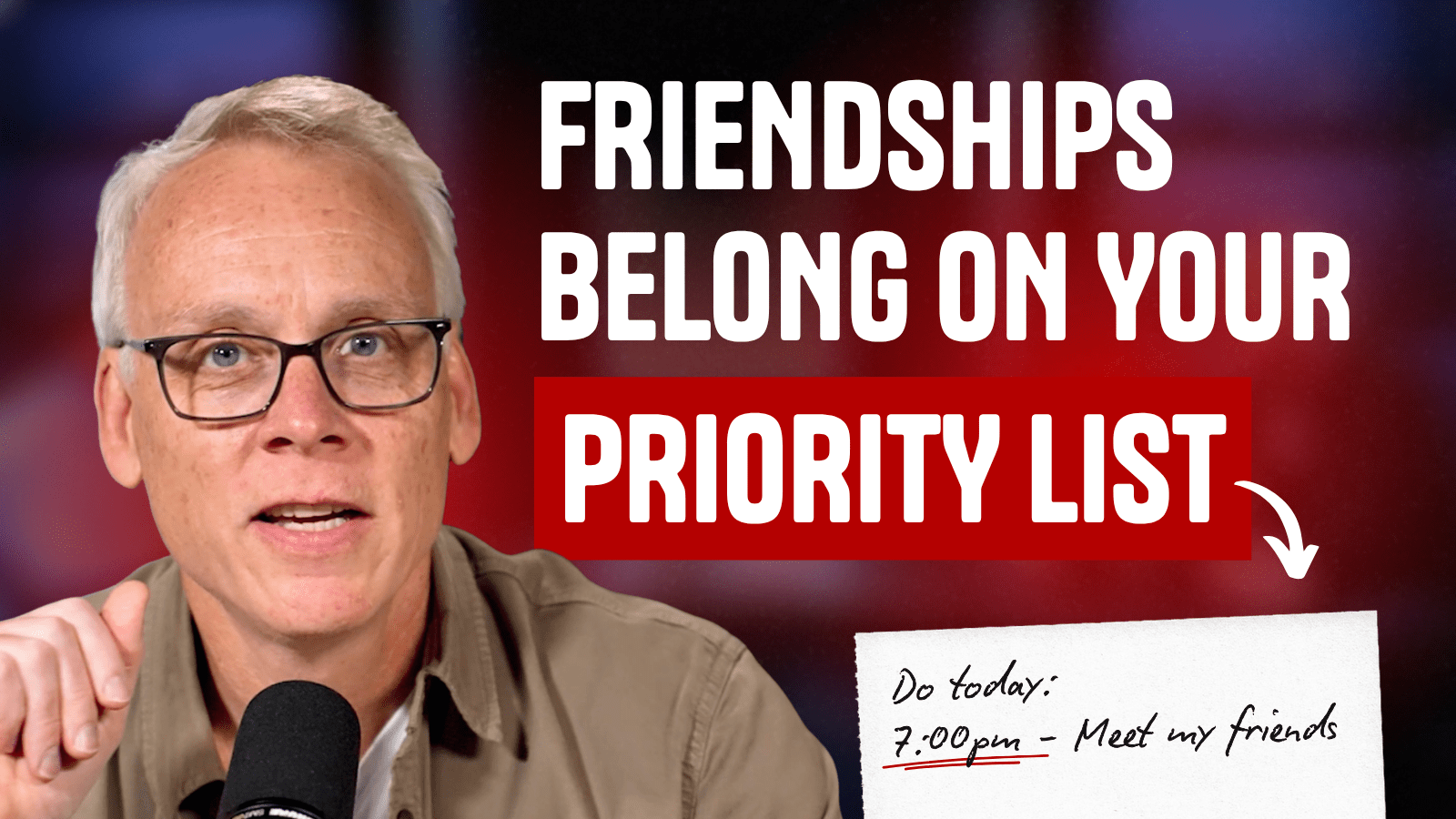
Two years later, I am walking on a trail in rural Japan, a trip that I never imagined I would take, with three great new friends. And what I want to talk to you about is the journey from that hotel room in Nashville to the trail in Japan, and how I got there, and what it taught me about the one thing I believe most high performers are neglecting: friendship.
———————-
Jay Papasan:
I’m Jay Papasan. And this is The ONE Thing, your weekly guide to the simple steps that lead to extraordinary results
———————-
Jay Papasan:
All right. So, let’s go to that hotel room and talk about what happened and how I got there. I was at a mastermind for authors, really big-time authors. I had been invited to speak the next day, kind of. impromptu. And I mean, frankly, I was nervous. And I’m sure that accelerated the feeling. But I got back to my hotel room the night before I was gonna present, and just kind of everything started falling apart. I realized in that moment when I was catastrophizing, if I’m honest. Like, if you’re having a panic attack, it could be real or it could be imagined, and I think a lot of mine was imagined, if I’m honest, but I sure didn’t know it then.
But I was looking up and I felt like the people that I relied on the most, it was too small of a number. I could really count on two people, and I’d been leaning on them so hard, I felt like one of them I might be pushing away. And if you’ve ever leaned back in a chair, like people say it takes at least three legs on a table to let it stand. Well, if you balance on your chair on two legs, you can make that work, and I felt like that was the balancing act I was doing in my business life. I had two sturdy legs that I was leaning on, but if you’ve ever played that game, we’ve all seen people tip over backwards. It’s pretty easy to do. So, it felt precarious and scary.
And what was going through my brain is if one of those two people left me, and that’s what felt so scary and felt so lonely about that night. And I recovered. My coach,I think he called it my night of fever dreams, right? Like when you sweat off of a fever and it kind of sucks, but you’re also going through something. And I made it through the next day.
Before I kind of tell you how I believe I got there on reflection, I’ll just say I know now that I’m hardly alone. When you look at the research, there is like an epidemic of loneliness, and it is very concentrated among business owners and founders. And you look at the people who are leading organizations, and they have to put a brave face on every day. They may not feel like they can be vulnerable with everyone. And a lot of times, they haven’t built a proper support community around them. So, you look up, and you just see it everywhere.
If you remember my episode with Liz Bohannon – we can link to it – she built a big part of her speaking engagements around this idea that entrepreneurs are lonely, and it’s an epidemic proportion. So, chances are you feel it too.
I chatted with my wife. She’s built this amazing business for female leaders with her friends, and I asked her one day, like, “Ultimately, what are y’all solving for?” And they thought they were solving for community and tactics and strategies, like businesswomen wanting to come together and learn from each other. And she said, “Fundamentally, I think we’re solving for loneliness.” They do want all of the other stuff, but what they’re yearning for is a peer group of friends that they can lean on and count on.
And so, the more I’m aware of it, the more I see it, and you’re probably feeling it, and I see it with my coaching clients, a lot of business owners just feel alone. So, I don’t know how you got there. I can tell you how I think I got there. If you follow this podcast, you know my values – impact, family and abundance, and I’ve even got tattoos around the family part. I made a real commitment to be the best husband and father I could be.
And I leaned into those roles when we went from just being a couple with friends and jobs to being a couple with two kids 16 months apart in a town where we had no family to support us and also still had big careers. And we indexed around being there for each other – me and Wendy – being there for our two kids. And then, also you look up and like a lot of you, I also have my duties as a business owner. I’ve got to be there for my employees. I’ve got to be there for my clients. And you check those boxes. You know, I’m being a great husband, I’m being a great spouse, depending on who you are. I’m being a great parent, and maybe you’re also being a great child to your aging parents, and then you work on your business. You have your coworkers, your staff, you have your clients. What I see very common is there’s not a lot left over to be building friendships.
You have prioritized the right things, but you’ve left out a real critical part of your support group. And I break down friends into two groups. You probably have old friends. You see them at the holidays when you go back home, right? Those people that have known you most of your life. The question I have for you around those old friends, have they been growing at the same rate that you’ve been? If you were really struggling, would you pick up the phone and call them? You could tell them how you feel, but they may not quite understand why you feel that way.
I started to see the difference. I had some longtime friends. I’m pretty decent at staying in touch because I’ve got a pretty small group of people to stay in touch with. But what I realized, there weren’t a lot of people that I would call close friends that truly understood the struggles I was facing at work and at home. They could love me and appreciate it, but they also weren’t going to be able to participate in those conversations. And I found that some of them actually shied away from it. So there was a real support group that I was missing.
My friend, Anna, talks about, you know, she had – the code word, and I think she learned this from Simon Sinek, “Do you have eight minutes?” Who’s that person that if you just texted them, “Do you have eight minutes?” They know it’s the bat signal, “I need help,” and they can pick up the phone wherever they are and help you out. How many people could you text that to right now? If it’s a short list, it doesn’t feel good. And that was what I was feeling in that hotel room. And I realized it was because I had neglected to be purposefully building friendships along the way. I was carrying the old ones forward, but I wasn’t building them as I went, and that was a real gap.
So, I came back from Nashville, and that became the subject of my very next coaching call. We get into the coaching call, and at that time, I’m coaching with Jordan Freed. You’ve heard him on the podcast. He’s also been the head coach at The ONE Thing organization. And we kind of scrapped our normal agenda. We worked my 4-1-1, we had some ongoing projects, and I just talked to him. I was like, “I had this horrible experience in Nashville,” and he helped me unpack it.
I had some real tough business losses. I had lost three really strong professional relationships. I had one leave the organization, another one basically betray me, and another one that was becoming increasingly estranged. And he talked about, like, if you’re already feeling like you might be alone or even worse, kind of abandoned, it makes all of this really acute. And he just said, “I think what you need to do, Jay, is you need to re-engineer your village.”
And that language really stopped for me. It’s like it’s very specific, right? We all talk about “It takes a village to raise a child.” Well, it also takes a village to keep us together as we’re building these businesses. It’s hard, and we want to have a village, a support group to grow, but it’s not just about having one. It’s about engineering one. And I like that language. Maybe that’s the way my brain works ’cause it invites you to be specific.
And so, I immediately jumped all over it. I created a note on my phone, and I started listing, like, who are the people that are already acquaintances that, man, they would be great friends. They may not be in town, but they’re people who would check a lot of boxes. So, I wrote down my friendship criteria if I’m gonna build a new friend group, and it was five things. I wanted them to be talented. I wanted them to be kind. I think the way my friend, Sean, defines it, when you talk about kind, well, how does that show up? They’re net givers. Your friends can ask stuff from you, but they also give stuff to you. And we all know those people that are out there that can be amazing to hang out with, but on the net, they’re taking more than they give. So, I wanted someone who was kind. I wanted someone who was talented. Those are the first two, and that net giver is a big part of the kind for me.
I wanted them to be a leader, and that just said they’re leading something, so they will identify with my struggles as a business leader. I’m leading organizations. They are too. It might just be a division. It might just be their small business, but they face those similar pressures. And so, that makes them not just a friend group, but kind of a peer group as well. I want them to be values-driven. Like, come on. We don’t wanna hang out with A-holes. And the definition of an A-hole is often someone who doesn’t share your values. Like, they’re going to get under your skin, and you’re not going to like it. So, I want them to be values-driven and a match for me. And frankly, I want them to be not boring, right? I’d like to go and have fun with my friends. I’ll share some research later that a lot of my intuition about what I was looking for actually does line up with the stuff that makes for better friendships.
But I created that. Then, I created a list. I started reaching out to the list, and I started saying yes a lot more often. I created a lot of– And we talk about time blocking. I’m really good at saying no. I’m really good at prioritizing my date night with my wife and my time with my kids, but my kids are getting older. We’re almost empty nesters now. I did have more free time, but I wasn’t using it purposely. And so, I started saying yes. I started going to more masterminds. I started following up with more of the cool people I was meeting. And frankly, I just started saying, “Hey, if you lived in the same town, you know your wife would probably kick me out ’cause I’d be showing up every Saturday with a cigar or a six-pack of a beer wanting to hang out.”
So, let’s just be purposeful, and you start building rituals around connecting with them even if they’re not in the same town. That is one of the ahas I found. They don’t have to be your neighbors. It’s awesome if they are, but today we can be connected and we can create occasions even if we have to get on a plane or drive a car to go see people that are truly valuable and meet those criteria.
So, that summer, it was August 8th, I believe, was the date of the coaching call, ’cause I wrote all of this down. I created my criteria, and I started actively identifying the people I already knew that there was an opportunity for me to build deeper friendships. So, I wanna connect the dots. That’s in the summer of 2024. It’s gonna be about six months later when I get a call from my publisher, Todd, who’s also been on this podcast, and he asked me a very curious question, and I said yes. Absolutely said yes, because I was re-engineering my village.
But before we go there, let’s take a quick break. I’m gonna see you on the other side and we’ll unpack exactly how we connect the dots between that hotel room and hiking in Japan.
———————–
Jay Papasan:
So, I wish I could pinpoint the date, but I think it was pretty early in 2025, my publisher, Todd, called me, and he asked me a question. He said, “Jay, do you know how long it takes to make a best friend?” And I looked up at the ceiling. I was like, “I have no idea, but I have a feeling you’re about to tell me.” And he shared some research from a guy named Jeffrey Hall. It came out in 2018, but it was recirculating. And Jeffrey Hall had surveyed two groups – college students and adults – and asked them questions about how they were spending time with people and how they felt about them.
And he was able to draw some pretty interesting correlations, and so I’ll have to look at my notes here, but basically, what he determined is it takes about 40 to 60 hours for someone to go from acquaintance to a casual friend. And the 40 to 60, I’m gonna give you brackets on most of these, for college kids, it was 40, and for adults it was 60. And it makes sense. If you’re going to a new college, you’re really on a quest to build your friend group, whereas most adults aren’t as consciously doing it. So, younger people tend to move through this faster than older people. Just noting that when I give you these ranges.
So, 40to 60 to go from acquaintance to casual friend. It takes 80 to 100 hours to go from casual friend to what we would call is, “Hey, that’s one of my friends.” Now, you look up, and it takes over 200 hours, no matter who you are, to go from friend to close or best friend. And that’s what Todd was getting at. He said, “Jay, it takes about 200 to 250 hours.” I think he gave a range too. And it matters what you’re doing. And so, I’m trying to design a trip to create some best friends. And I remember just saying, “I’m in. I’m in. I don’t care where it is, but you’re talking…” He was saying it was a year from now. I was like, “I’m in. Where are we going?” And he laughed and he said, “There’s a trail in Japan. It’s an old mail trail that runs from Kyoto to Tokyo. I mean, it dates back to samurai times before Tokyo was even the capital of Japan. And it runs through the mountains, and it was a mail route. It was how they got from Kyoto, the old capital, to the new capital. And they have trails there, and I want to spend about a week hiking along that trail with a small group of people and trying to build deeper friendships.”
And so, that actually happened in April of 2026. I said yes immediately and followed up, and it ended up being Todd, another acquaintance that I had, a guy named Tim, and someone I barely knew named Charlie. And what I can tell you is we hiked, oh gosh, I think 2000 steps a day, about 40 flights of stairs a day. It was a lot of hiking, but we were barely on our phones, we were all present and not looking at our businesses. And so, you end up having all of these weird conversations. If you’re walking with someone, it’s like a road trip, but you’re walking, you run out of things to say that are easy. You’ve already talked about what they’re reading and what shows they’re watching. You’re now kind of going deeper into topics.
And this also lines up with the research from Dr. Jeffrey Hall. He talked about the fact that it matters what you’re doing with those hours. So, think about it. You’ve probably worked with people for five, 10 years, and honestly, they’re really just acquaintances or casual friends. They’re not your do-you-have-eight-minute kind of people. It’s a different sort of thing. So, there are people at your church, there are people at your gym, and you know a lot about them, but they still fall very far down the range as acquaintances or casual friends at best because you’re not doing the right activities. It’s not just time together, it’s what you’re doing in the time.
And they identified three things. There is this idea of unstructured time. So, you’re together, but you’re not necessarily doing something specific where you get lost in the work. So, unstructured time, just hanging out, basically. Identifying what it is you want to do with your time. Joking around and being silly. And I don’t know if this is a chicken or an egg thing for me. Like, I kinda have to be more than casual friends to get really silly with people, but the act of being silly with people and vulnerable makes me feel closer and safer with them. So, joking around seems to be a big part of it.
And the last one, and it’s probably the one that had the highest correlation, it’s this idea of having meaningful conversations. So, it’s when you get with that person and you ask the question, “How are you doing? What’s going on in your life?” And you really actually wanna hear the answers to that question. You’re following up, and, “How are the kids?” And, “How’s your wife doing?” Or, “How’s your husband doing? Well, tell me more about that.” So, this intense curiosity to understand more about the other person’s life and talk about big things.
Well, guess what? Road trips, hiking through the mountains of Japan without phone reception, you have a lot of time for that sort of stuff. So, when you think about building your friendships, I’m gonna circle back, hopefully, you have your criteria. Hopefully, you start saying yes to the people who meet that criteria, but then it matters what you’re doing with them, right? A book club is great but build in some unstructured time. Take some time to actually ask the bigger questions. How are you really doing, right? You ask someone how they’re doing, they always say, “Busy” or “Fine.” No, how are you really doing? And you try to get to the deeper stuff because that’s where the bonds actually get built, and you feel that closeness, and you get to the place where you’ve earned the right to pick up the phone and call them when you’re actually in trouble, ’cause that’s when you really need them. But it has to be earned, and it has to feel safe.
So, that research lines up with a lot of stuff. So, a year later, we did the hike. We had a lot of fun, and I’m happy to report back that we came back, and I do feel like we made that journey – I was already friends with my publisher. I’ve known him for a long time, but I would definitely call him a close friend today. Tim and Charlie and I had different journeys. I’ve known Tim casually, but we both kind of… He was one of the first people I said, “Hey, if we lived in the same town, we’d be hanging out a lot.” We had already started doing a weekly call, but man, we were rooming together and we actually shared a bed together one night because that was the only option, and you get to know someone at that level, you have a lot of fun, you joke, and you really do become closer to best friends. And Charlie went all the way from acquaintance to close friend ’cause, man, we had some deep conversations.
So, it wasn’t just the time, it was what we were doing with the time. So, those would be kind of the three steps. Figure out who it is that’s missing from your life, go ahead and start reaching out to them, be the one to make the ask. Don’t wait for them to call you. And then, build in some unstructured time, some fun time, and some meaningful time, so that those relationships have a chance to flourish. That would be the formula if you’re feeling lonely, how to kind of bridge that gap and start building a community outside of your immediate family and your work, the people who work with you.
And it’s been huge for me, and I definitely want that for you. One of my big ahas at the end of the walk is there’s lots of people that know all the bits about us. They might know where we went to college, they know our kids’ names, but they don’t know how they fit together. And I remember that was, like, a big thing with Tim. We’re talking, and I’ve been on two big backpacking trips before this one, and you’re hiking, so you talk about hiking. I went after high school for about 60 days. I went backpacking with two close friends, and we went to twelve countries and had all these adventures. And then, when I got married to Wendy, we went backpacking for about four and a half months.
And so, he kept saying, “Well, which trip is this?” And I remember him saying, “Oh, he knows I went backpacking, and he doesn’t know how to connect the journey.” And we stopped, we paused, he asked a few questions, and finally he– I could see it click for him. Oh, there’s the thing you did before you were married, and there’s the thing that you did after you’re married, and that’s how it all fits together in your life. And when those things click together and the people who really know that about you know not just what you do, but why it’s what you do, they start to see the bigger picture and know you on a deeper level.
So, I love that, and I love that the walk itself was successful, and I want that for you. So, before we get to the challenge, I’m just gonna ask you a question. You’re a high achiever, you’re a business owner, you’re a business leader, what would your life look like today and how would you feel if you were as purposeful in building your friendships as you are in building your business? I think that it is the one thing that high achievers tend to neglect the most is building this village, engineering it so that they have the support group when they need it.
One thing I will guarantee you, if you’re gonna reach for extraordinary results in your life and in your business, you’re going to run into walls, you’re going to face obstacles, and it really matters who’s around you when that happens so that you’re able to persevere and get to the other side.
So, wrapping this up, I’m gonna give you your challenge. I talked to you about the three steps. I just want you to take the first one. If you are feeling a little bit alone, and you would like to engineer your village, what are the three to five things that you’re really looking for? So, when you think about those three steps, that would be my framework for fast-tracking friendships, right? And the goal here is not just to have friends, it’s to avoid that feeling of loneliness that’s following you around. And maybe you’re clear about what you don’t want, right? “I don’t want someone who only talks politics,” whatever. That’s fine. But get clear about the three to five qualities you’re looking for, and then start saying yes to those people or reaching out to them. But getting the criteria is the way to make this work, so that’s your challenge for the week. I hope you’ve taken something away, and I hope you’ll take action on it, because there is an epidemic of loneliness out there, and there is a way to solve for it.
———————-
Disclaimer:
This podcast is for general informational purposes only. The views, thoughts, and opinions of the guest represent those of the guest and not ProduKtive or Keller Williams Realty LLC and their affiliates and should not be construed as financial, economic, legal, tax, or other advice. This podcast is provided without any warranty or guarantee of its accuracy, completeness, timeliness, or results from using the information.